From telling algae blooms apart from metal oxidation, to the chemical and procedural fixes that align with European standards UNI EN 16713-3, UNI 10637, and the BPR.
When pool water suddenly turns green, most people reach for one thing: a heavy dose of shock chlorine. But this is often the wrong move. It can waste chemicals. In some cases, it can even make the water quality worse.
Green water needs a proper diagnosis first. That’s because the color doesn’t always mean algae.
Spotting the Difference: Cloudy or Clear?
Start with two simple checks. Look at the water. Then touch the walls.
Algae (Chlorophyta) makes water cloudy. You won’t be able to see the bottom of the pool. The walls and lining will also feel slippery, thanks to an organic biofilm.
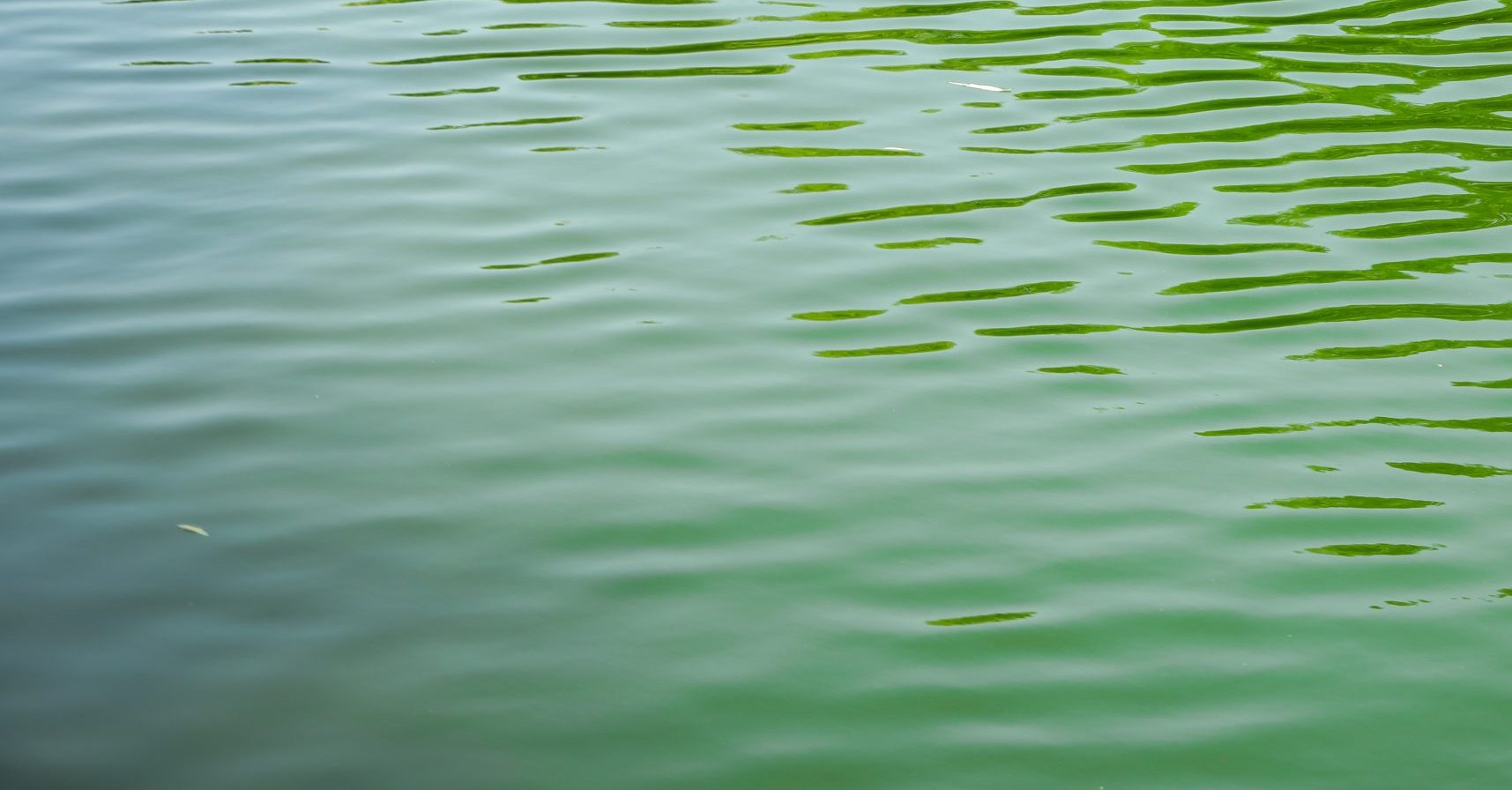
Dissolved metals behave differently. They cause what’s known as “apparent green,” where the water stays perfectly clear. Yet it takes on a distinct emerald tone. In this case, the walls stay smooth. No slippery film forms. The color comes only from copper or iron salts, which bend light differently as it passes through the water.
How to Treat an Algae Bloom
Two European standards guide this process: UNI EN 16713-3 for private pools, and UNI 10637 for public facilities. Together, they set out a clear sequence of steps.
Start by balancing the pH. Aim for a range between 7.2 and 7.4. Industry sources agree that hypochlorous acid, the active disinfecting form of chlorine, loses roughly 50% of its effectiveness at a pH of 7.8, compared to 7.2. So anything above 7.8 will noticeably weaken every oxidation treatment that follows. That’s why pH correction always comes before chlorination.
Next, check the cyanuric acid level. The ideal range for stabilizing chlorine against UV degradation sits between 20-30 and 50 mg/L. True “chlorine lock”, where added disinfectant stops working no matter the dose, tends to show up between 70 and 100 mg/L, according to the most reliable technical sources. In Italy, public pools face a legal cap of 75 mg/L for cyanuric acid, set by the State-Regions Agreement.
Once levels turn critical, there’s really only one fix: a partial water change. Cyanuric acid doesn’t break down, and it can’t be removed chemically.
Only after these two parameters are stable should you move to shock chlorination. Raise free chlorine to a high level, typically 10-20 mg/L depending on the product and how bad the bloom is. At the same time, add flocculants that comply with the European Biocidal Products Regulation (EU) 528/2012 (BPR). These help clump together the neutralized organic particles. Keep the filtration system running non-stop for 24 to 48 hours.
How to Treat Metal Oxidation
Shock chlorine is the wrong tool for clear green water. Using a strong oxidizer where copper levels are high, often from untreated well water or copper-based algaecides, triggers rapid precipitation as copper hydroxide. The result: dark, permanent stains on the pool lining.
Clear green water calls for a different approach: sequestering or chelating agents. Aminotrimethylene phosphonic acid (ATMP) is one common choice. It binds metal ions into stable, soluble complexes, which stops the color change and prevents precipitation. From there, specific metal-targeting flocculants and high-efficiency filter cartridges remove the metal complexes from the system for good.
Image by atlascompany on Magnific
Sources: uni.com, eur-lex.europa.eu, acqua-spa.it, it.beatbot.com, acquaspecialist.it, quimipool.it, lo-chlorchemicals.com, vanninipiscine.it, cyelo.it, professioneacqua.it