3. De Europese zwembadsector ervaart een paradoxale situatie omdat de bestellingen zich opstapelen terwijl bedrijven moeite hebben om operationele technici aan te nemen. Deze spanning op de arbeidsmarkt komt niet voort uit een gebrek aan interesse van klanten, maar uit de toenemende technische complexiteit van moderne installaties.
Vandaag de dag verandert het beroep radicaal, terwijl we overgaan van het tijdperk van de veelzijdige installateur naar dat van de hooggespecialiseerde technicus die tegelijkertijd precisiehydraulica, laagspannings-elektriciteit en fijne chemie beheerst. Deze ingrijpende mutatie dwingt Franse en Belgische marktspelers om hun aanpak van kennisoverdracht volledig te herzien, zodat de groei van de industrie niet wordt belemmerd.
Het Franse CFA-model, een essentiële motor voor de opleiding
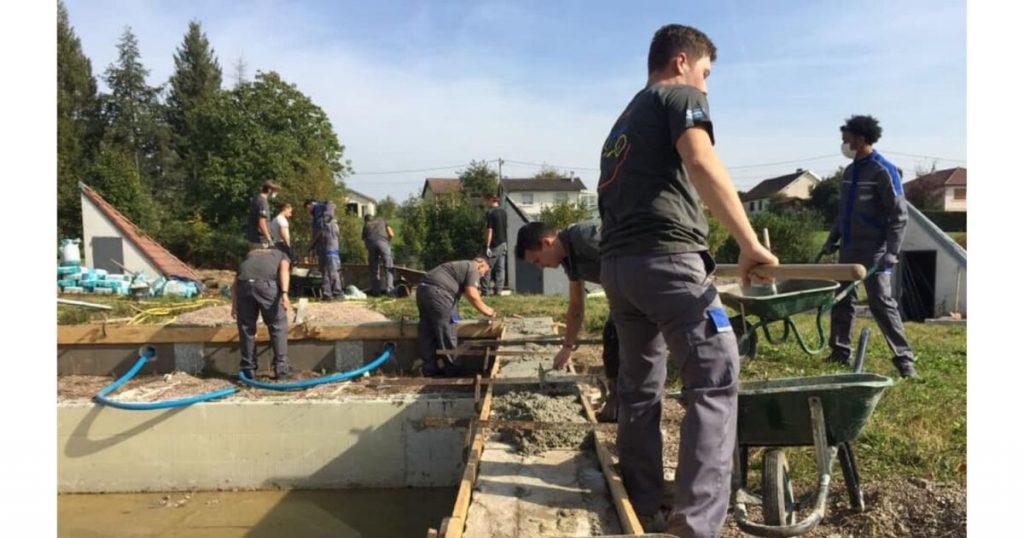
In Frankrijk is het systeem sterk afhankelijk van het netwerk van Leerlingopleidingscentra, die proberen de sector met toenemende strengheid te structureren. Deze instellingen spelen een cruciale rol omdat ze het uitreiken van overheidsdiploma's mogelijk maken, zoals het Professioneel Certificaat in zwembadberoepen, dat op Europees niveau als referentie dient.
Ongetwijfeld toont dit model onmiskenbaar succes met beroepsintegratierates die dicht bij honderd procent liggen, maar het ondervindt structurele beperkingen door de versnelde innovatie. Professionals in het veld merken soms een kloof op tussen pedagogische kaders en de realiteit van nieuwe verbonden apparatuur, die zeer scherpe vaardigheden vereist in het beheer van draadloze netwerken.
Om dit gebrek aan reactievermogen te compenseren, Franse bedrijven worden steeds meer betrokken bij directe mentoring binnen het bedrijf om ervoor te zorgen dat jonge medewerkers de uitdagingen van predictief onderhoud en remote troubleshooting begrijpen.
De Belgische strategie
Aan de andere kant van de grens neemt België een pragmatische aanpak om haar actoren te professionaliseren en het serviceniveau te verhogen. Professionele groepen zoals de BSPA werken actief aan de homogenisering van certificeringen om blijvend vertrouwen op te bouwen met eigenaren van luxe zwembaden en architecten.
Aangezien de Belgische markt steeds meer gericht is op complexe projecten zoals spiegelzwembaden of binnenbaden, worden kwalificatiecertificaten onmisbare differentiatie-instrumenten om premium tarieven te rechtvaardigen. Deze wens tot certificering maakt het mogelijk de markt te filteren en ondernemers te onderscheiden die echt investeren in de voortdurende opleiding van hun medewerkers over nieuwe veiligheidsnormen. Door op deze manier te handelen, versterkt België de geloofwaardigheid van de hele sector en beperkt het de impact van tijdelijke bedrijven die vaak de reputatie van de sector schaden door een gebrek aan technische expertise.
Het transformeren van het werkgeversmerk om toekomstige experts aan te trekken en te behouden
Bovendien moeten ondernemers vandaag hun vindingrijkheid verdubbelen om talent aan te trekken in een zeer competitieve economische omgeving. De transformatie van het werkgeversmerk beperkt zich niet meer tot een eenvoudige kwestie van beloning, maar omvat nu ook de kwaliteit van leven op het werk en het gebruik van belonende technologieën.
De massale integratie van digitale tools voor siteplanning of tabletgebaseerde diagnostiek vereenvoudigt ondankbare taken en spreekt een generatie digitale natives aan. Door duidelijke loopbaanpaden aan te bieden en het seizoensgebondenheid op een slimmere manier te beheren via winterdiversiteit, slagen MKB-bazen erin hun personeel te stabiliseren.
Bovendien trekt het benadrukken van de ecologische dimensie van het beroep profielen aan die gevoelig zijn voor waterbeheerkwesties, wat een nieuwe betekenis geeft aan het beroep. Deze wereldwijde mutatie is de noodzakelijke voorwaarde om de duurzaamheid van Franse en Belgische bedrijven te waarborgen in een markt waar hoge menselijke competentie de enige echte bescherming blijft tegen lage-end concurrentie.