Energy, water, staff: operating costs in the hotel industry have been rising for years. Many hotels look for savings in the kitchen, the rooms or purchasing. Yet one of the biggest consumers is often found in the spa area – and it loses most of its energy when nobody is swimming.
Where the costs arise in the pool area
A heated pool loses heat through its water surface – around the clock. According to the German Society for Bathing (DGfdB), by far the largest loss is evaporation (Swimming pools in the energy crisis). Every litre that evaporates takes thermal energy with it, which the heating system has to replace.
This results in four cost blocks that reinforce each other:
- Heating energy for the pool water, which constantly has to be reheated
- Fresh water to make up for evaporation losses
- Water treatment and chemicals, because every litre of top-up water has to be treated again
- Ventilation and dehumidification in indoor pools: the evaporated moisture has to be removed from the hall, otherwise condensation and structural damage are the result
Hotels are particularly affected. The pool is usually used for only a few hours a day, but has to be kept at temperature 24 hours a day.
The biggest lever: covering the pool when nobody is swimming
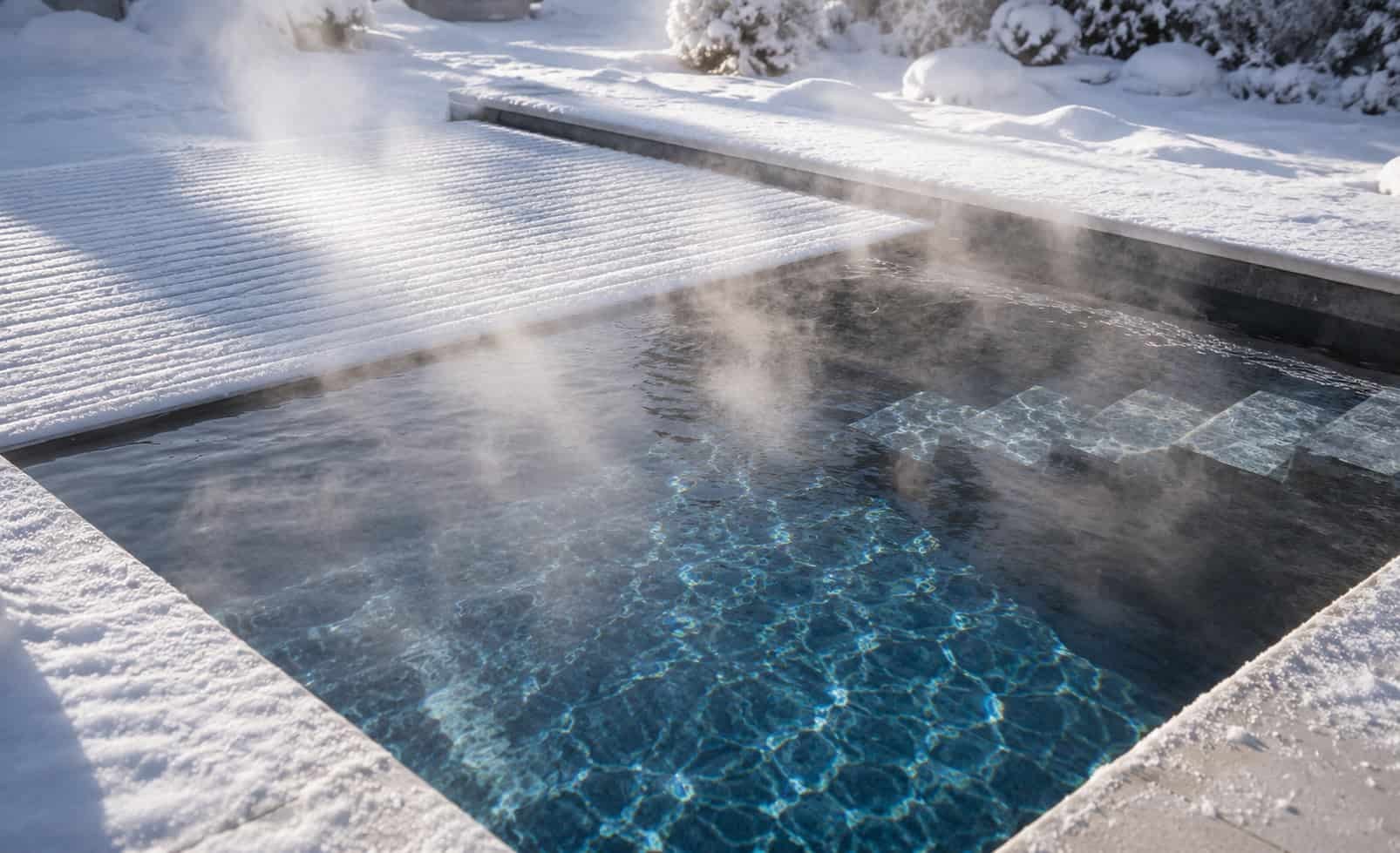
Stopping evaporation tackles the problem at its source. The Bavarian State Office for the Environment (LfU) notes that a pool cover can sometimes halve a pool’s energy requirements. The reason: it slows down evaporation, the largest source of heat loss (LfU Bavaria, DGfdB). At the same time, the need for top-up water and water treatment products falls (ÖVS/WKO).
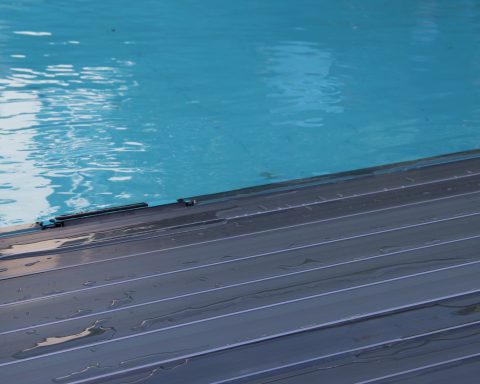
For hotel operations, one thing matters above all: the cover actually has to be closed in everyday use. A tarpaulin that two members of staff pull over the pool by hand in the evening often stays open in practice. Automatic slatted covers open and close in a few minutes with a key switch or control system – without any additional staff effort.
What hotels should look for when choosing a cover:
- Insulating effect of the profiles: multi-chamber profiles trap air and insulate the water surface. ROLLO SOLAR’s design profiles have four hollow chambers for insulation, buoyancy and stability.
- Solar gain outdoors: solar profiles with a transparent top and a dark underside absorb solar energy. According to the manufacturer, this can warm the pool water by up to 3 °C on sunny days.
- Installation situation: below floor level in the pool, in a niche or above ground – retrofitting is also possible for renovations and special shapes.
- Appearance: in a hotel, the pool is part of the overall guest experience. Profiles in many colours and finishes blend into the architecture instead of disrupting it.
- Durability and service: a cover runs every day. Manufacturing in Germany and an accessible service team reduce downtime.

Further levers at a glance
The cover is most effective in combination with the rest of the technical equipment:
- Linking ventilation to the cover: when the pool is closed, the hall ventilation can switch to economy mode at night.
- Speed-controlled circulation pumps: outside bathing hours, a lower flow rate is often sufficient.
- Efficient heat generation: a heat pump or heat recovery from the exhaust air further reduces energy requirements.
- Checking the water temperature: even one degree less makes a noticeable difference to the heating bill.
The order is important: first reduce heat loss, then size the heat generation. Otherwise, equipment is designed for losses that need not occur at all.
Reference: Hotel Stanglwirt, Going am Wilden Kaiser
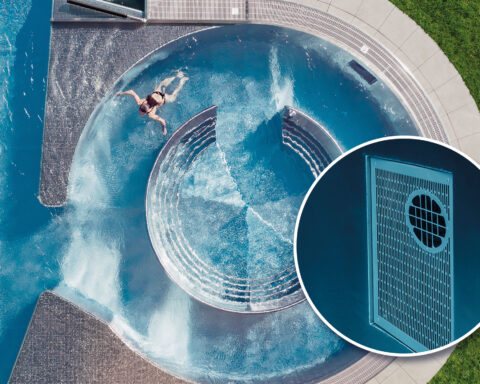
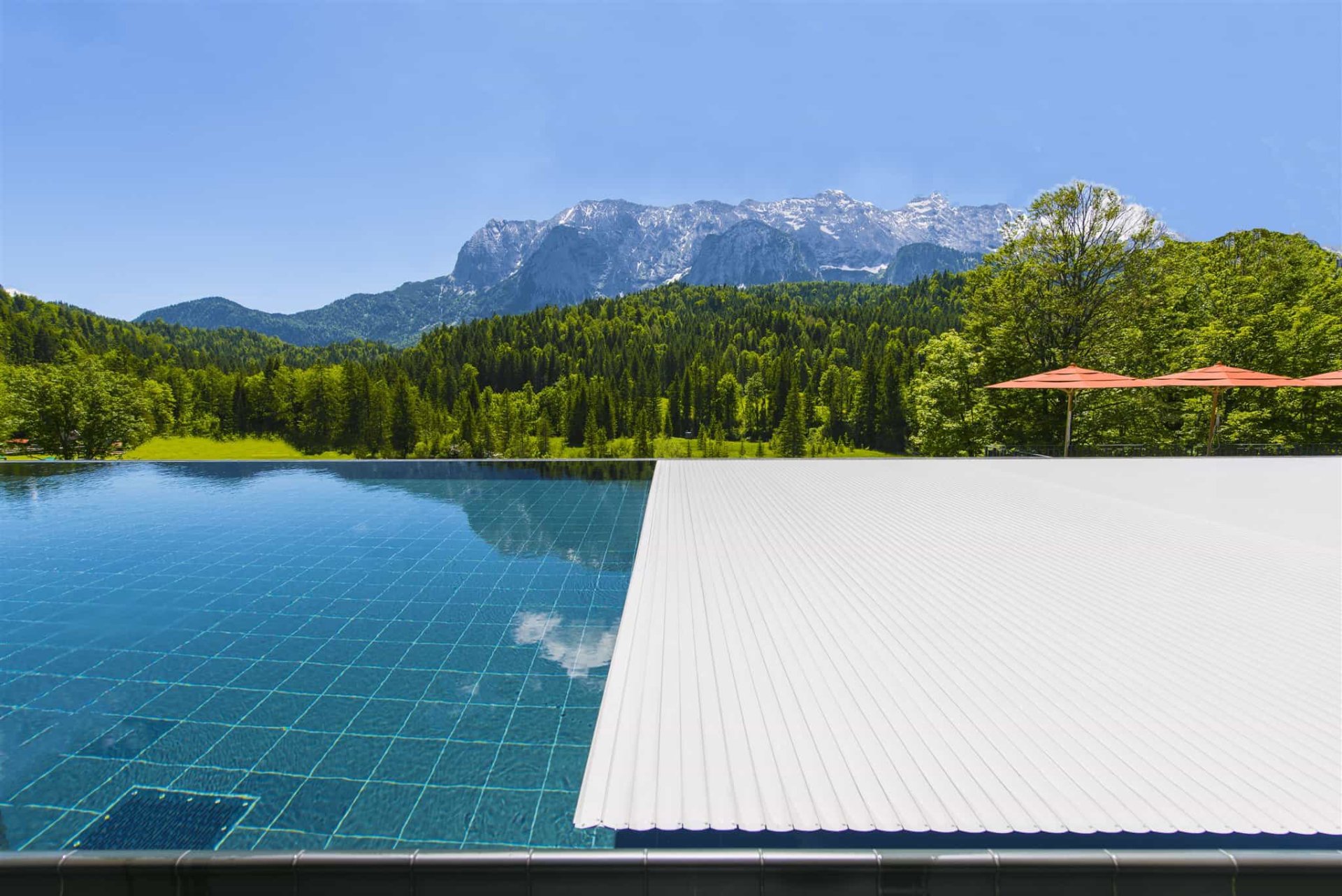
Hotel Stanglwirt in Tyrol shows how energy efficiency and architecture can be combined. A Design Pool Cover from ROLLO SOLAR is in use there.
What makes it special: the pool does not have a straight standard shape. The cover follows the curved contour of the pool and thus blends into the overall look of the facility. Outside bathing hours, it lies closed on the water and keeps heat and moisture in the pool.

The pool measures 6.80 × 25.10 m. That is around 171 m² of water surface that lies under the cover outside bathing hours instead of evaporating in the open.
A calculation for year-round operation with 8 hours of bathing time per day and a water temperature of 28 °C shows the effect. For the remaining 16 hours, the pool is closed:
Hotel Schloss Elmau also relies on a cover from ROLLO SOLAR. Both hotels stand for top-class hospitality, where technology has to work reliably in the background without disturbing the guest experience.
Conclusion
For many hotels, the pool is a flagship – and a constant consumer. An automatic cover tackles the largest source of loss directly: evaporation. It reduces heating, water and chemical costs, relieves the ventilation in indoor pools and requires no additional staff in everyday use.
ROLLO SOLAR has been developing and manufacturing pool covers in Bad Tölz for more than 40 years and, together with its dealer network, carries out projects for hotels, public pools and private customers.
Planning a new build or renovation in your spa area?
Get in touch: rollo-solar.de · Phone: +49 8041 792650