Italy’s environmental certification programme has introduced specific rules for measuring the impact of pool tanks. Manufacturers can now scientifically quantify the ecological footprint of their installations.
The market’s push toward verifiable sustainability criteria called for targeted standardisation in the aquatic sector. The process officially began on 1 April 2025, when EPDItaly announced it was launching work to define shared rules for life-cycle assessment applied to pool tanks.
The public call to form the technical committee closed six days later. It brought together industry players and the certification body ICMQ, which co-proposed the standard alongside A&T Europe.
Timeline, Technical Details and Materials
The draft standard, identified as EPDItaly049 – SUB PCR (Tank for swimming pool) and developed within the CORE PCR for construction products ICMQ 001, went through several stages of review. Work began in June 2025, and the process formally closed on 10 November 2025 with the official publication of the standard. Its validity runs until 10 November 2030.
The calculation requirements are directly anchored to the overarching framework standard EN 15804+A2. This link requires manufacturers to account, in a standardised way, not only for the materials used in the tank itself, but also for the impact of protective surface treatments and the end-of-life recyclability of structural modules.
In terms of product classification, the standard adopts the international product categorisation system to map pool components, linking them to CPC code groups 422, 4221 and 42210. EPDItaly describes this as a non-exhaustive list, since no single CPC code uniquely identifies swimming pools.
Because tanks are built using different technologies — steel, concrete or fibreglass — the PCR requires manufacturers to contact EPDItaly to add the correct CPC string whenever the structure is not primarily made of metal.
Digitalisation
The new parameters turn environmental data on swimming pools into structured datasets, ready for digital integration into building design software. The rules make it possible to map the impacts of the product’s entire life cycle, from initial production to disposal.
Alongside the main standard for construction products, the programme has also approved EPDItaly 055 – CORE PCR (Tank for swimming pool – Not construction product). This rule extends the same environmental traceability criteria and the same CPC codes to tanks classified as non-construction products.
Consolidation Through 2026
Industrial adoption of these rules gained traction at the start of the new year. On 29 January 2026, EPDItaly published an interview with the quality manager at A&T Europe, the company behind the Myrtha Pools brand, which helped develop the PCR alongside other industry players.
The interview highlights how the new rules make it possible to define uniform calculation methods and specific environmental indicators for pool tanks. This, in turn, makes EPDs more transparent, comparable and reliable, and eases dialogue with markets and clients that are increasingly focused on ESG criteria.
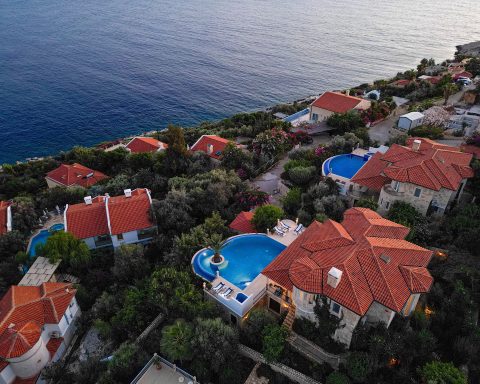
Image by lifeforstock on Magnific
Source: epditaly.it