Financing options to reduce water waste in Italian public swimming facilities, and how to access them.
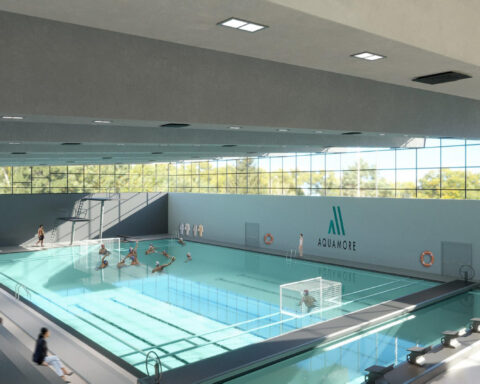
Water waste in Italy’s public swimming facilities is not inevitable: practical tools already exist to fund the technological transition of these structures, without waiting for a sector-wide reform.
In a country where freshwater availability is in steady decline and distribution networks lose an average of 42% of the water they carry, upgrading sports facilities is an intervention with immediate, measurable impact.
Sport Missione Comune 2026: The Main Instrument
The most significant funding opportunity currently available is the Sport Missione Comune 2026 programme, promoted by the Istituto per il Credito Sportivo e Culturale (ICSC) — Italy’s public institute for sports and cultural infrastructure finance — in partnership with ANCI, the national association of Italian municipalities.
The programme makes 250 million euros available to local and regional authorities in the form of fixed-rate loans. For financing up to ten years, interest is fully waived; repayment plans can be extended up to 25 years for larger investments.
Eligible bodies include Municipalities, Municipal Unions, Metropolitan Cities, Provinces and Regions, for projects ranging from the construction of new facilities to the renovation and energy upgrading of existing ones.
Who Can Apply and for How Much
Financing caps are scaled by population size: 2 million euros for municipalities up to 5,000 inhabitants, 4 million for those between 5,001 and 100,000, and 6 million for larger entities and for all Provincial Capital municipalities, regardless of their population.
Applications must be submitted through the ICSC Client Portal, accompanied by a favourable technical and sporting opinion from CONI, the Italian National Olympic Committee, by 30 September 2026.
A Structural Programme, Not a One-Off Measure
The 2026 call is not a standalone intervention but part of a long-term commitment. Over the past four years, ICSC has disbursed a total of 954 million euros to Italian local authorities, with annual volumes growing from 194 million in 2023 to 266 million in 2025.
The stated ambition for the current edition is to generate a significant leverage effect: every euro of direct funding is designed to mobilise more than two on the ground, for total investments exceeding 600 million euros.
The Relationship with the NRRP and National Funding
On the NRRP front — Italy’s National Recovery and Resilience Plan, financed under the European Union’s NextGenerationEU programme — Investment 3.1 “Sport and Social Inclusion” under Mission 5 allocated 700 million euros to the regeneration of sports infrastructure, including the renovation and energy upgrading of existing facilities.
With the reporting deadline set at 30 June 2026, NRRP-funded construction sites are now in their final phase of completion or financial reporting, and the available resources are largely already committed.
In this context, the ICSC programme becomes the most relevant instrument for bodies seeking to launch new projects or cover additional costs in this final stretch, complementing regional programmes and the measures of the Department of Sport to fill the funding gaps that PNRR allocations alone cannot address.
How to Apply
Those wishing to submit an application should start from the official ICSC platform, where all technical documentation is available. The institute also provides project development support, assisting administrations in building proposals that are technically sound and financially viable from the outset.
Image credit: Freepik
Sources: ICSC — Istituto per il Credito Sportivo e Culturale: Sport Missione Comune 2026 (March 2026); Il Sole 24 Ore: Dal Credito Sportivo plafond di 250 milioni per gli impianti sportivi pubblici (March 2026); BibLus/ACCA: Bando Sport Missione Comune 2026: 250 milioni a Comuni ed enti locali (March 2026); Dipartimento per lo Sport — Presidenza del Consiglio dei Ministri: PNRR Investment 3.1 “Sport e inclusione sociale”; ISPRA (November 2024): National Hydrological Balance Report (2023 data); ISTAT (March 2024): Statistics on Water Resources and Distribution Infrastructure.