An iconic hotel in Marylebone has turned its spa into an independent destination to attract, beyond its guests, an external audience. The project reshapes the role of luxury hospitality wellness, where the average dwell-time and spend — as well as loyalty — work as KPIs.
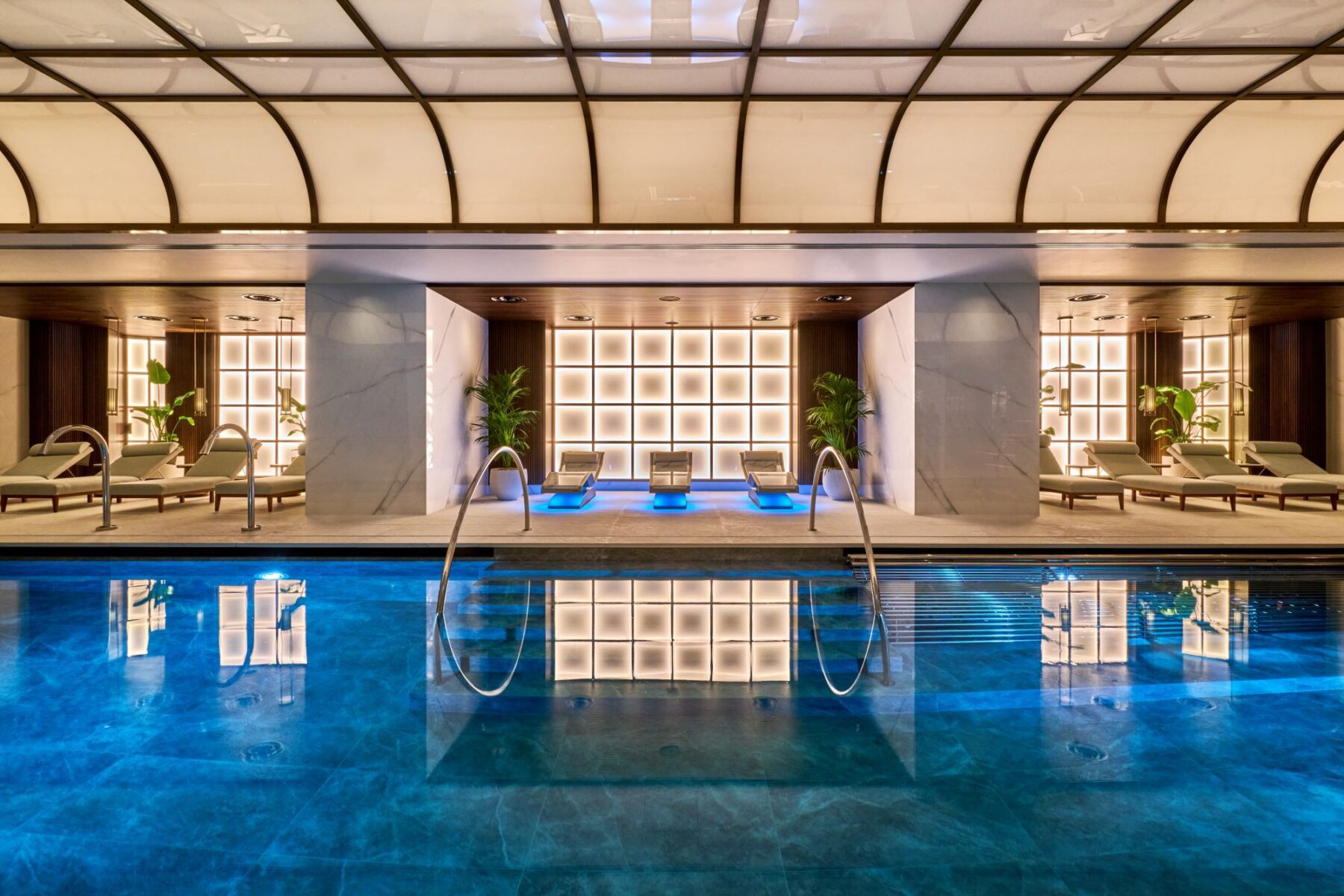
The Landmark London hotel has launched its new 710 square meter spa, resulting from a 4 million pound investment. The July opening marked a pivotal change in how a hotel conceives wellness. It is no longer a space for guests only, but a destination that also attracts a broader audience. This means generating income and acting as a lever for the whole hotel.
The thermal space that meets any need
The core of the project is the thermal suite, which features a 34°C vitality pool equipped with Swan Neck hydrotherapy jets, aromatic steam room, Finnish sauna, ice fountain, heated marble loungers, and multi-sensory showers. On top of that, five new treatment rooms, a relaxation zone, a retail gallery and a 24-hour gym, as well as a 3D scanner based on AI.
A range of daily bundles has been conceived for any kind of user: from access-only to richer rituals that include treatments, dining, and even an overnight stay at the hotel. The result is to improve the average spend.
Targeting multi-generational individuals
For the first time, the spa introduces a treatment range that targets families and teenagers. They include facial and scalp massages for parent and child within the double suite, as well as a specific facial treatment to mitigate adolescent hormonal breakouts.
Further personalization entails custom teas and a nutritional menu developed to support skin health from within.
From cost to revenue generator, the new face of wellness
The investment by The Landmark London highlights a deliberate shift in how the hotel positions wellness. Not just an accessory to the hotel experience, but a standalone destination that addresses city users, too.
Such strategy is supported by membership options for non-guests, who can access the thermal suite, gym and treatments on a daily basis. In this way, the spa can generate recurring revenues, no matter how many hotel rooms are booked.
On the one hand, the renovated area was designed in an elevated style to match the hotel’s sophistication through additional space for private treatment rooms, an architecturally striking entrance, and a strong focus on the thermal experience. On the other, the rich spa offer turns it into an independent space whose life does not depend on the hotel itself.
The Landmark London case shows a new, clear direction for luxury hotels: the spa is no longer linked to the rooms. It addresses its own audience, features its own rates and brand identity. This makes it a tangible tool to boost both the guests’ stay and the returning rate of those living in the city, with a potential increase in average spend.
Sources: Hospitality Interiors, European Spa Magazine, The Landmark London
Image credits: The Landmark London