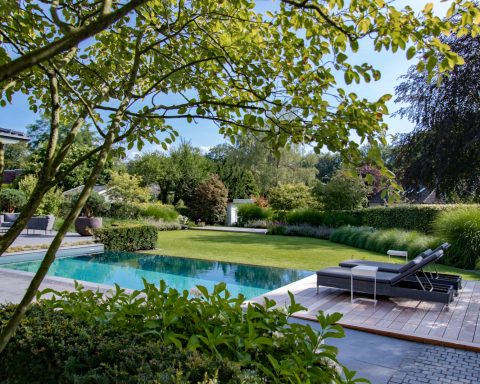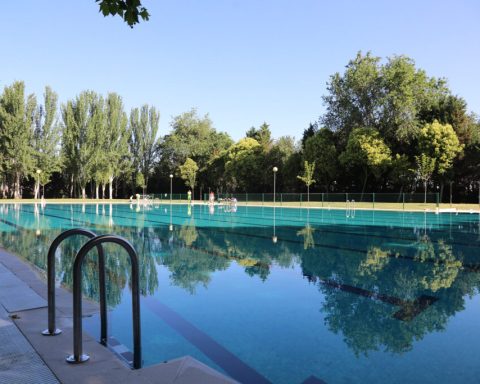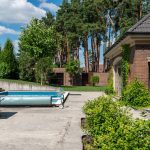
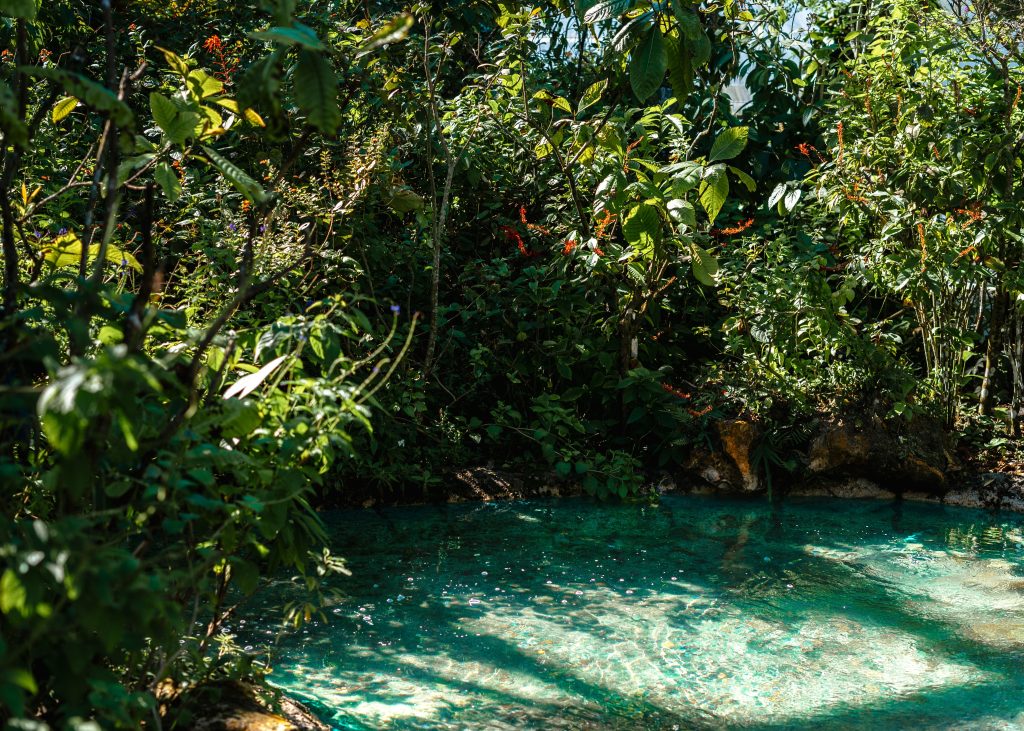
Clear water, no chlorine smell, surrounded by water lilies and reeds, where you’re more likely to spot a dragonfly than an inflatable ring. Ten years ago, this kind of pool was seen as a quirky choice for a handful of die-hard believers willing to trade comfort for the sake of the environment. Today, natural pools are drawing in a much wider crowd, and the current context certainly has something to do with it.
A system that owes everything to living organisms
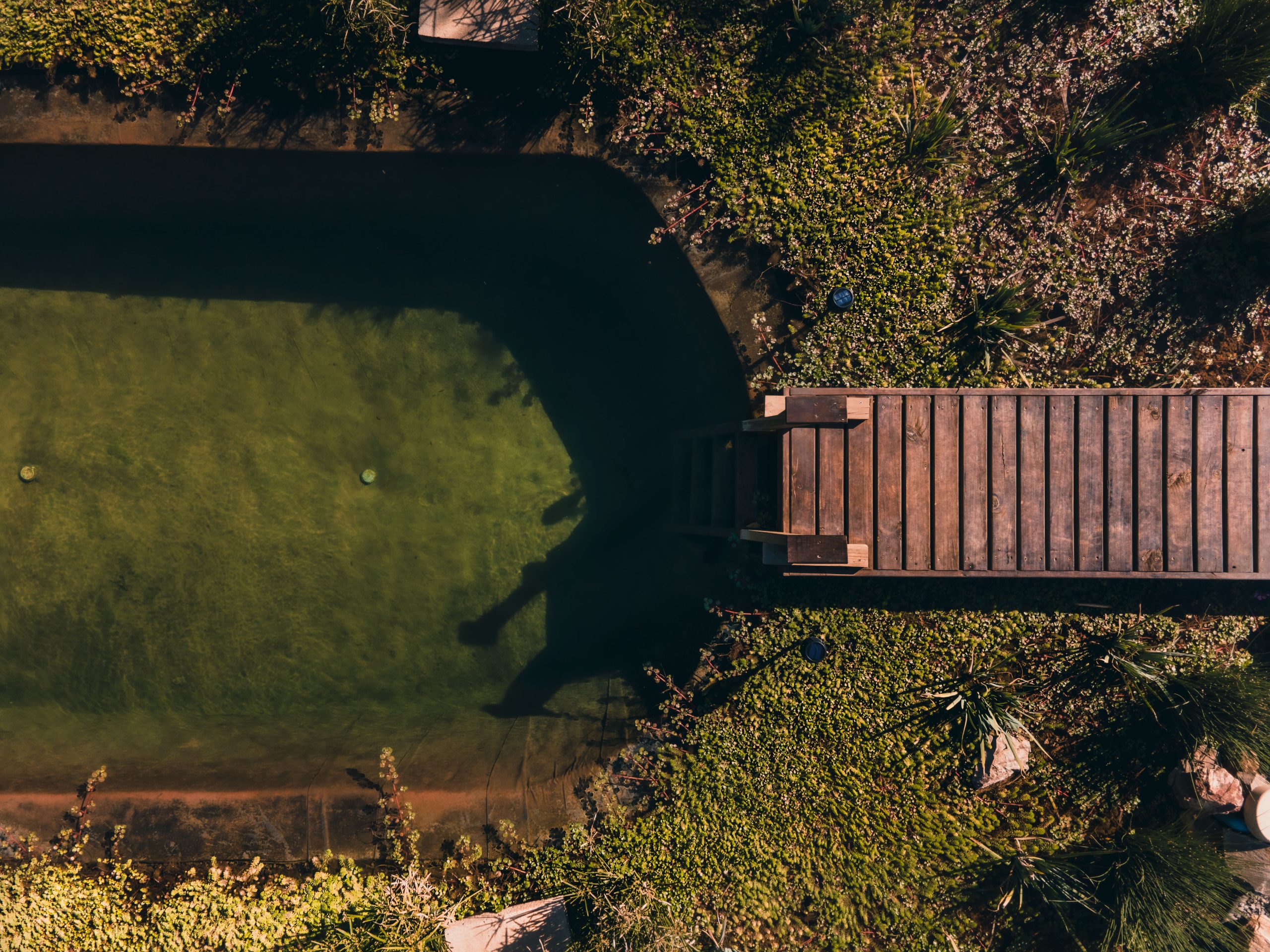
Officially known as an artificial bathing area in regulatory terms, the natural pool turns its back on chemical treatment altogether. It relies on three zones working hand in hand. The swimming area sits alongside a regeneration zone, where aquatic plants and micro organisms take care of purifying the water, sometimes topped off with a small waterfall to oxygenate it.
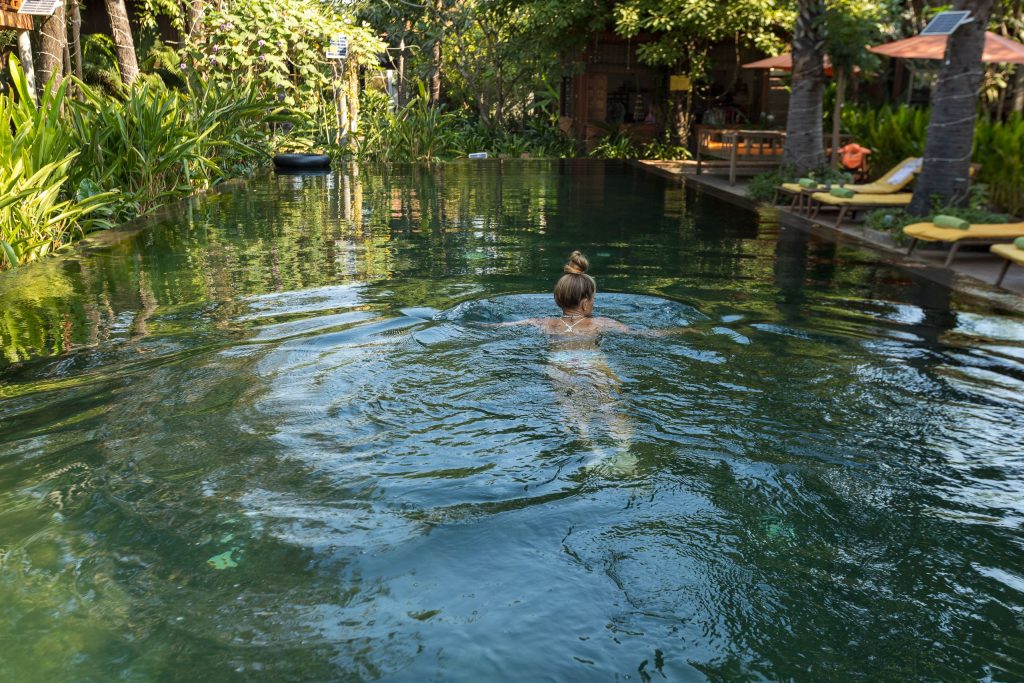
The result is water free of chlorine and salt, gentler on skin and eyes, which many owners spontaneously compare to a mountain stream. Around the pool, a small ecosystem takes shape, with plants and occasionally a few frogs or dragonflies, a far cry from the sanitized image still too often associated with the traditional pool.
Why now, and not sooner
Several factors explain why this trend, long confined to the margins, is finally taking off. The first, unsurprisingly, comes down to water itself. Between summer restrictions that keep multiplying year after year and a growing awareness around water as a resource, more and more prospective owners are looking for solutions that reduce their reliance on chemicals and on demanding technical upkeep.
Then comes the question of day to day maintenance. Once the ecosystem has settled, it generally requires fewer human interventions than a traditional pool, where keeping an eye on pH and chlorine levels quickly turns into a constant chore. Finally, there’s the aesthetic appeal, which shouldn’t be underestimated. A natural pool blends into the garden rather than dominating it, worlds away from the big blue rectangle bordered with paving stones that has long defined the French idea of a swimming pool.
What clients need to hear before they get carried away
Selling the dream is one thing, but a good professional also knows how to set the right boundaries before the client signs on the dotted line. Budget comes first, and it sits well above that of a comparably sized traditional pool, generally between thirty thousand and thirty five thousand euros, largely due to the more complex sizing of the biological filtration and the landscaping work involved.
Time also factors into the equation. Unlike a traditional pool, ready to use as soon as construction wraps up, a natural pool needs several weeks, sometimes longer, for its biological balance to properly settle in. This calls for a fair amount of hand holding, otherwise the client is likely to call within the first week worried that their water looks a bit cloudy.
Temperature deserves honest treatment too. Once water climbs past twenty seven degrees Celsius, algae and micro organisms tend to multiply faster, which seriously complicates the system’s balance. Put simply, a natural pool probably isn’t the best fit for clients dreaming of thirty degree water from morning to night. The same goes for heavy use, plenty of swimmers or kids constantly stirring up the bottom bring more organic matter into the system than it can always handle smoothly.
Finally, there’s the regulatory side, something many owners discover a little too late. An in-ground or partially in-ground natural pool is subject to exactly the same safety obligations as any other unenclosed private pool, a barrier, an alarm, a cover or a compliant enclosure. Some assume that a more natural look exempts them from these requirements. It clearly doesn’t, and it’s far better to make that clear at the first meeting than to leave any doubt hanging.
An expertise that’s only just starting to take shape
The market remains modest in volume, but it’s growing, and more importantly, it’s already attracting players who have made it their specialty rather than just another line on their catalogue. In the Gironde region, Aquanov has been building this type of pool since 2013 and has built its reputation on exactly this niche. On a national scale, the Les Créateurs Aquatiques network brings together landscapers specifically trained in these ecological water feature challenges, proof that a genuine trade is taking shape around this kind of project, far from improvisation.
For companies willing to invest the time in this still rare expertise, natural pools represent a double bet. One on meeting a demand that keeps growing season after season, and another on carving out a position in a market where the head-on competition so common in the traditional pool segment has yet to really show up.