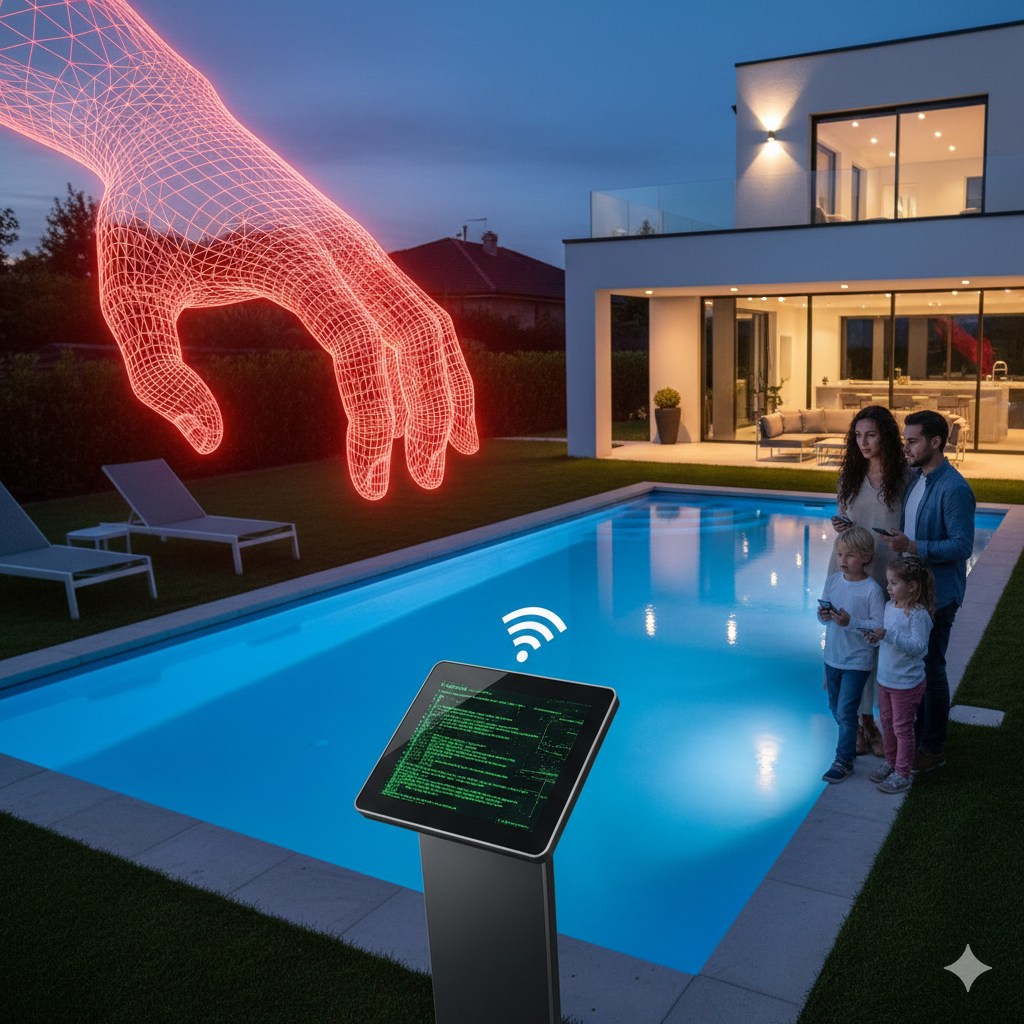
As the industry evolves, cybersecurity for connected pools has become a top priority for modern home automation. The advent of the smart pool is transforming daily life for both users and installers. Mobile interfaces now offer unparalleled management comfort and ease of use.
However this hyper connectivity also opens a back door to digital risks that the industry can no longer ignore today. With the multiplication of remote management systems the risk of hacking pool fleets is becoming a central concern for large installers who now pilot entire fleets of basins.
For French and Belgian professionals mastering cybersecurity is no longer a technical option but an essential component of contractual responsibility and customer safety.
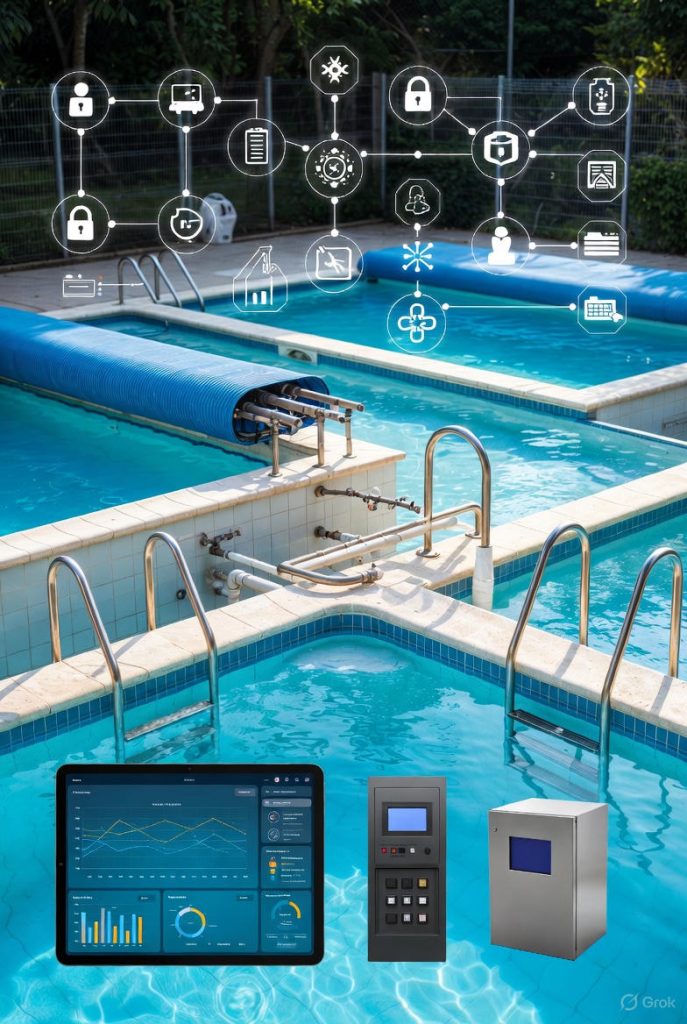
Physical vulnerabilities behind digital interfaces
The hacking of a connected pool is not limited to a simple theft of personal data but can cause direct physical consequences on the installations. Malicious access to the control system would for example allow for modifying chlorine or pH dosages thus creating an immediate health risk for swimmers.
Similarly remote manipulation of heating or filtration pumps could cause massive energy overconsumption or even irreversible equipment damage through overheating.
Given that many home automation protocols use domestic Wi-Fi networks that are sometimes poorly secured each pool becomes a potential weak link in the global security of a home. Installers must therefore now integrate concepts of network segmentation and data encryption from the project design phase.
Managing basin fleets a challenge for large installers
For companies that maintain hundreds of basins via centralized platforms the danger is multiplied by an alarming scale effect. A security breach on the installer server could theoretically give a hacker simultaneous control of all pools under contract.
This perspective requires professionals to adopt computer security standards comparable to those in the banking or industrial sector with two factor authentication and regular firmware updates. In France as in Belgium the protection of these infrastructures is becoming a selling point because high end customers now demand guarantees on the resilience of their installations against cyberattacks. The ability to audit the security of a connected system thus becomes a skill as precious as traditional hydraulic know-how.
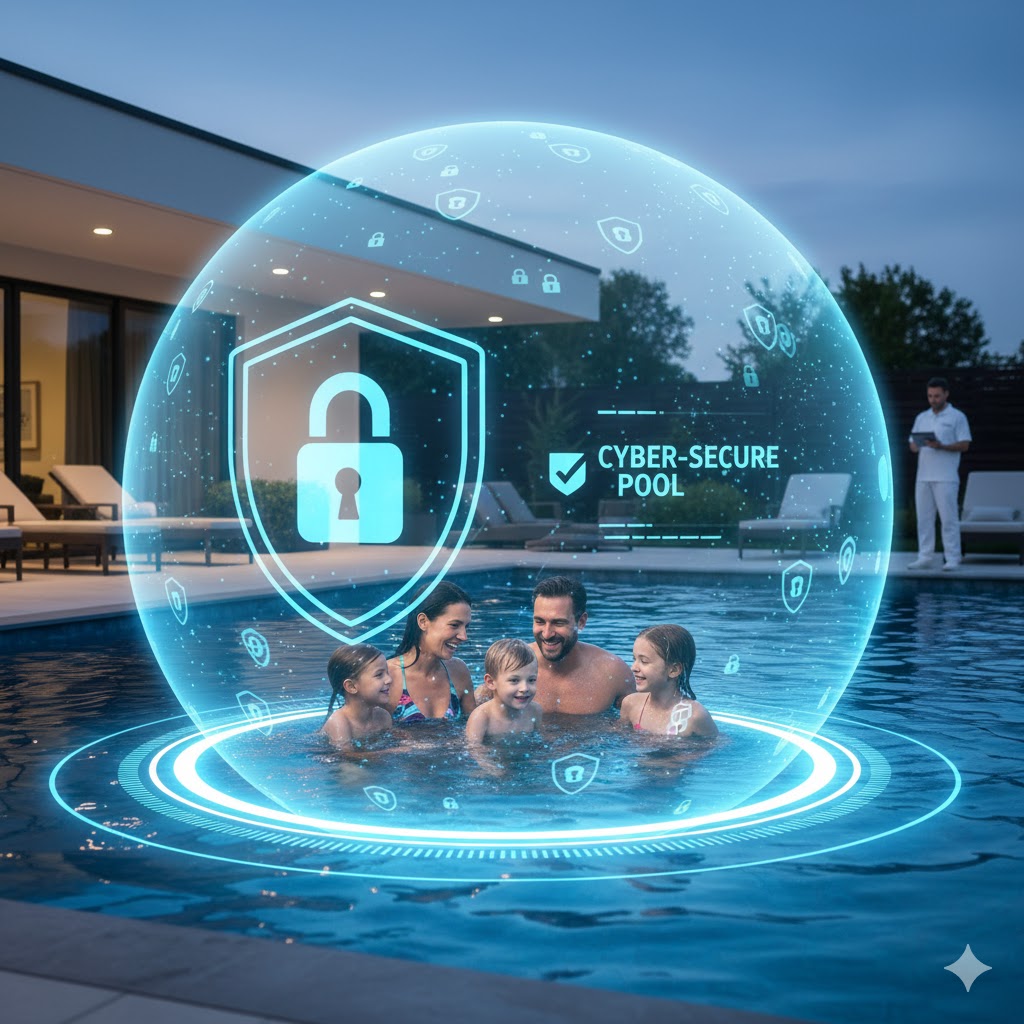
Towards a cyber certification for the sustainable pool market
Faced with these emerging threats the profession is beginning to organize to establish good cyber hygiene practices throughout the entire value chain. Equipment manufacturers are increasingly requested to design products that are secure by default by limiting unnecessary access and protecting communication flows.
Furthermore the training of technicians in the field must include specific modules to learn how to configure routers and gateways in a hermetic manner. By making owners aware of simple gestures like regularly changing default passwords professionals strengthen overall trust in connected solutions.
This transition towards a digitally safer pool is essential to sustain technological innovation and ensure that home automation remains a tool for serenity rather than a source of vulnerability.