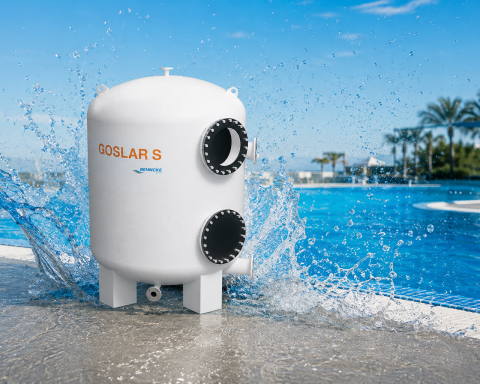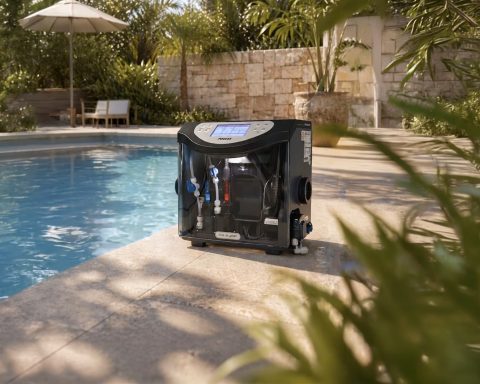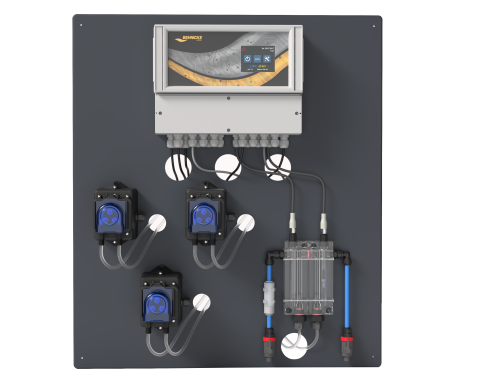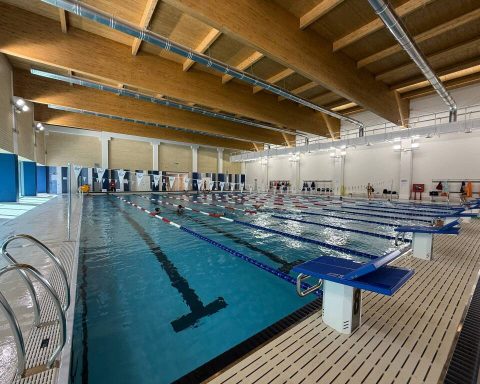
Keeping pool and spa water clean has always required a careful balance between hygiene, user comfort and sustainability. Traditionally, this has meant relying on chlorine or salt chlorination systems, both of which require ongoing maintenance and can cause discomfort for bathers while also affecting pool equipment over time.
Today, more sustainable alternatives are emerging, and one of the most innovative comes from Geodesic, a Spanish company specialising in advanced water treatment, conservation and regeneration. Its technology disinfects water without the need for added chemicals, while significantly reducing both water and energy consumption.
What Is Geodesic?
Based in Madrid, Geodesic develops cutting-edge water treatment solutions designed to improve water quality more efficiently and sustainably than conventional methods.
Although its technology is used across a variety of industries, one of its main areas of expertise is swimming pools and spas, where it helps maintain clean, crystal-clear and hygienic water without relying on chlorine or other chemical disinfectants.
Today, Geodesic systems are installed in sports centres, hotels, wellness facilities and public swimming pools across Spain and Portugal, proving that high water quality and environmental sustainability can go hand in hand.
How Does the Technology Work?
Unlike conventional treatment systems, Geodesic does not rely on the continuous dosing of chemical products.
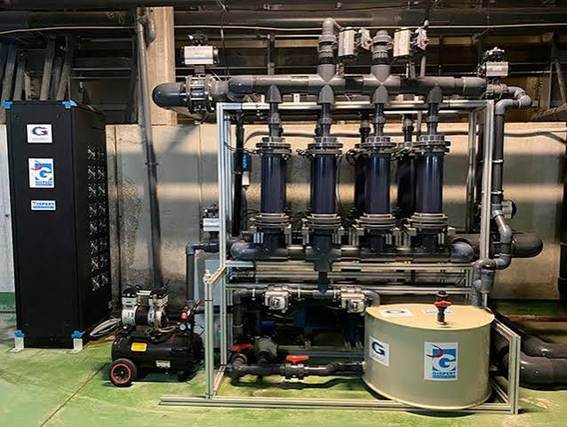
Instead, it combines several electrochemical and electrophysical processes that act directly on the water to eliminate microorganisms and organic matter.
These include:
- Electroporation, which uses electric fields to disrupt the cell membranes of bacteria and other microorganisms, effectively destroying them.
- Advanced oxidation, a process that breaks down organic matter and significantly improves water quality.
- Natural generation of active chlorine, using the chlorides already present in the water, eliminating the need to add chlorine or salt.
Together, these technologies provide continuous, automatic water disinfection while greatly reducing the need for conventional chemical treatments.
Benefits for Pools and Spas
The most noticeable difference for users is the quality of the water itself.
Without the constant addition of chemicals, the water feels much more pleasant. Chlorine odours are eliminated, irritation to the eyes and skin is significantly reduced, and swimmers avoid the dryness often associated with traditional pool treatments.
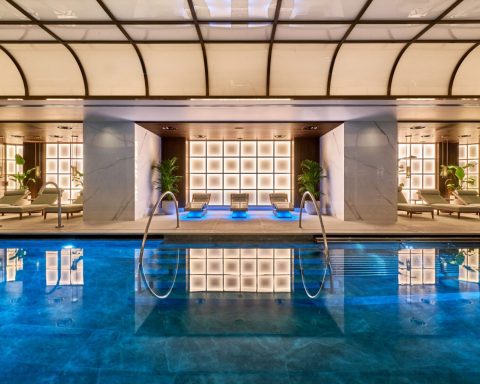
These benefits make Geodesic an ideal solution for hotels, wellness centres, spas, gyms, public swimming pools and sports facilities, where delivering an exceptional bathing experience is an important part of customer satisfaction.
For facilities where water quality plays a key role in the overall guest experience, a system that maintains hygienic water without the continuous use of chemicals represents a significant advantage.
Significant Water Savings
One of Geodesic’s greatest strengths is its ability to reduce water consumption.
Traditional pool systems require regular water replacement to maintain health and safety standards. With Geodesic’s technology, water remains in optimal condition for much longer, dramatically reducing the need for renewal.
According to the company, water savings can range from 70% to 90%, particularly in heavily used indoor swimming pools.
At a time when water conservation has become increasingly important, this represents both an environmental and an economic benefit.
Lower Energy Consumption
Reducing water replacement also has a direct impact on energy use.
Every time fresh water is added to a heated swimming pool, it must be brought back up to the desired temperature. By minimising water replacement, Geodesic also reduces the energy required for heating.
As a result, facilities benefit from lower operating costs and a smaller environmental footprint.
Smart Real-Time Monitoring
Another key feature of Geodesic’s technology is its CB-OPCON (Cloud Based Operation & Control) platform.
Integrated sensors continuously monitor water quality and send data to a cloud-based management system, allowing operators to supervise performance, water quality and energy consumption in real time.
The platform can also detect irregularities before they become serious issues, making preventive maintenance easier and improving operational safety.
Pool and spa managers can access all this information remotely via a computer or mobile device, simplifying day-to-day management.
Protecting Pool Equipment
Reducing the use of chemicals doesn’t just benefit swimmers—it also extends the lifespan of pool equipment.
Traditional disinfection methods can accelerate corrosion and wear in pipes, pumps, heat exchangers and other system components due to the effects of chlorine or salt.
By eliminating these products, Geodesic helps reduce corrosion, lower maintenance requirements and minimise long-term repair costs.
Applications Beyond Pools and Spas
Although pools and wellness facilities remain one of Geodesic’s primary markets, its technology is also used wherever high-quality water treatment is essential.
Its applications include:
- Cooling towers
- Food processing facilities
- Metalworking industries
- Reclaimed water networks for irrigation
- Livestock farming
- Industrial washing and cooling systems
Thanks to its modular design, the technology can be adapted to a wide range of water volumes and flow rates, making it suitable for both small installations and large industrial facilities.
A Spanish Innovation Driving Sustainable Water Management
As efficient water management becomes increasingly important, technologies like Geodesic offer a compelling alternative for the pool and spa industry.
By reducing water consumption, eliminating the need for chemical disinfectants, lowering energy use and improving the overall bathing experience, Geodesic demonstrates how innovation can support more sustainable aquatic facilities. Developed by a Spanish company, this technology also highlights Spain’s growing role in advancing water treatment solutions that address today’s environmental, operational and public health challenges.