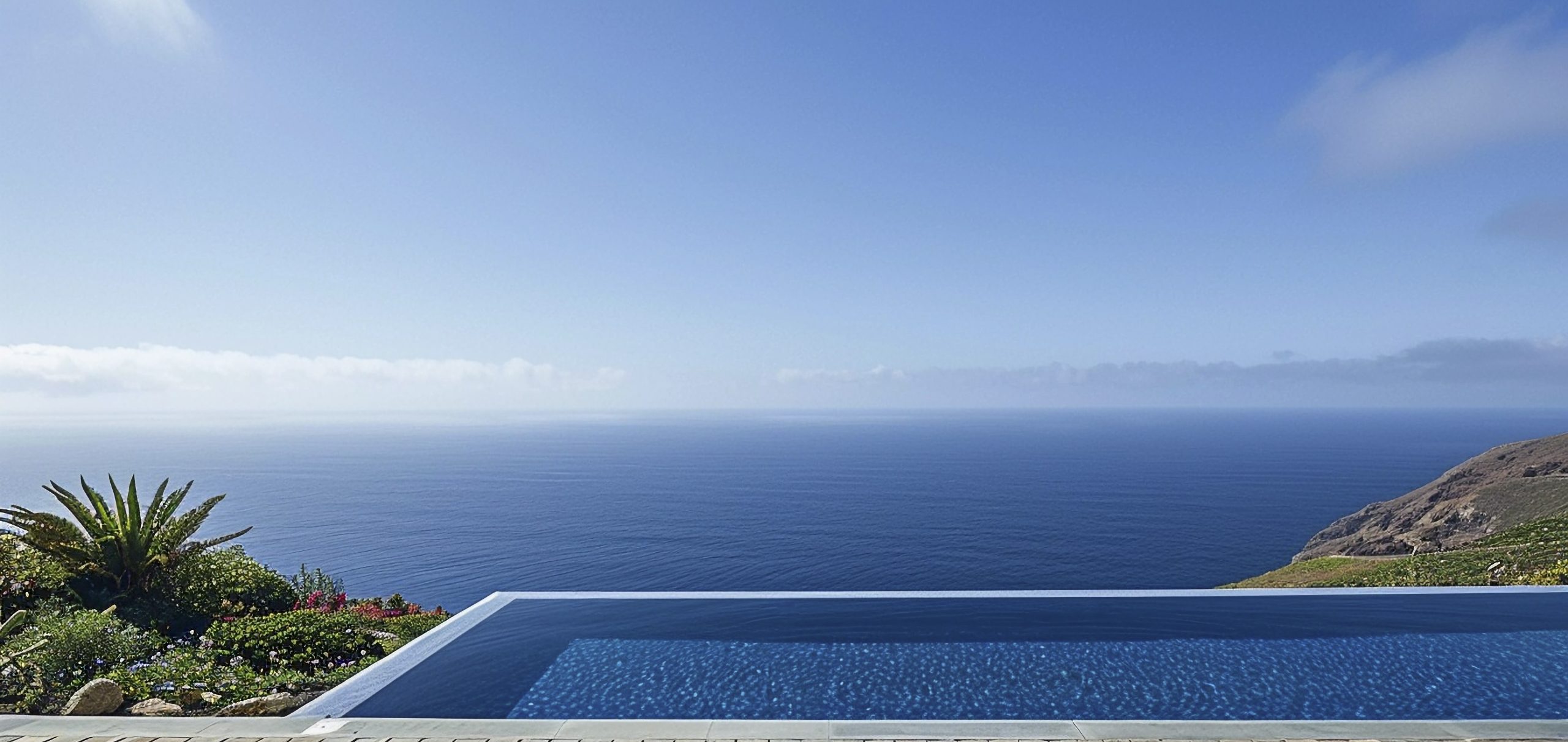
The keyword is integration: here’s how to design lasting pools in coastal settings, from concrete standards to stone finishes and salt-resistant systems.
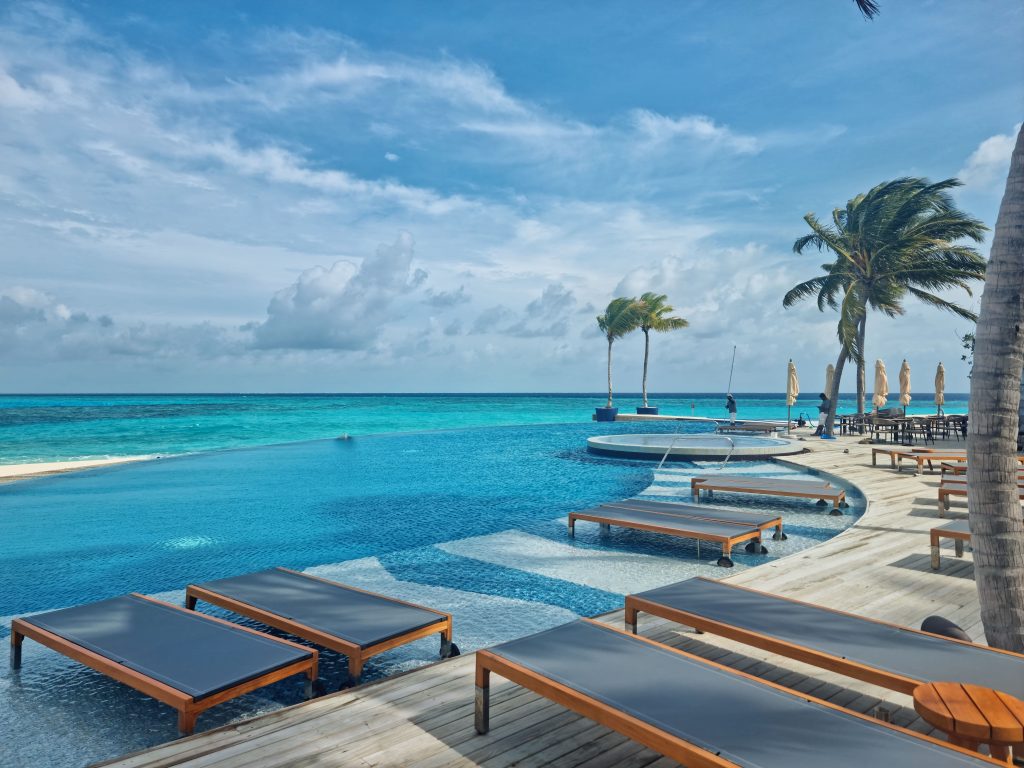
Building a pool by the sea means facing one of the harshest environments for any construction project. Wind loaded with chlorides, constant humidity and sharp temperature swings put pressure on every part of the system, from the foundations to the finishes, all the way to the water treatment equipment.
Effective design in these settings starts with understanding how salt affects materials, so builders can plan for it from the earliest technical choices.
How Salt Affects Building Materials
Sodium chloride carried by sea wind settles continuously on exposed surfaces, forming a thin but persistent layer. In porous materials, and in reinforced concrete especially, chlorides manage to penetrate all the way to the internal steel bars, breaking down the protective coating that normally shields them from oxidation. The result is a gradual weakening of the structure, which can lead to concrete cover detachment and a loss of load-bearing capacity.
To limit this risk, Italy’s Technical Standards for Construction and the European standards UNI EN 206 and UNI 11104 set out several environmental exposure classes, distinguishing chloride attack of marine origin from that caused by other sources. Depending on the assigned class, the standards specify the type of cement, the water-cement ratio and the minimum concrete cover needed to ensure the structure lasts.
Waterproofing the Structure
In reinforced concrete pools, waterproofing the surfaces in contact with water is a step that can’t be skipped. The most up-to-date treatments rely on water-dispersed polyurethane resins, able to withstand both the chlorine used for disinfection and the surrounding salty air, keeping the pool structure intact over time.
The Role of Stone Cladding
Beyond the structure itself, the finishing material also contributes to how well the whole project holds up in a marine environment.
Among the natural stones used in Italy for this purpose, Piasentina stone – a compact limestone quarried in the Julian Prealps – is often chosen for its low water absorption and good mechanical resistance even after repeated freeze-thaw cycles, qualities that make it suitable for pool edges and outdoor flooring.
It’s worth noting, though, that this is a largely calcareous material: acid-based cleaning products should be avoided, as they would damage the surface over time.
Water Treatment in Salt Systems
Alongside the structure and finishes, the technical systems also need to be designed with the marine environment in mind. In salt electrolysis systems, a cell installed in the filtration circuit converts the salt dissolved in the water into active chlorine, cutting down on manual dosing.
Running the system does require constant monitoring, though: pH tends to rise during the process and should generally be kept between 7.0 and 7.4, while salt concentration needs to stay stable within the values set by the manufacturer. The metal components of the equipment, unless specifically treated, also remain at risk of corrosion and need regular checks.
Protection on Multiple Levels
Defending a seaside pool from salt spray calls for an integrated approach, one that brings together design choices, materials and system management:
- Correctly classify the environmental exposure according to current standards, and size the concrete and concrete cover accordingly
- Use waterproofing systems designed to withstand both chlorine and marine chlorides
- Choose stone cladding with low water absorption, paired with maintenance that avoids acidic products
- Rely on filtration and electrolysis systems with regular pH and salinity monitoring
Only by combining these elements can a seaside pool keep the performance and appearance planned at the design stage, even under the harshest environmental conditions.
Image by Magnific
Sources: ingenio-web.it; Ordine degli Ingegneri di Ravenna; edilportale.com; winklerchimica.com; Consorzio Produttori Pietra Piasentina; Friulana Marmi; Gaverini; alcachimica.it; natare-piscine.it; zodiac-poolcare.it