Flanges are among the less visible components in swimming pool construction. Yet they perform an important technical function: they enable components to be securely attached to the pool wall while providing a defined surface for reliable sealing.
At grando, different flange solutions are used depending on the pool structure, material and waterproofing system. Developed and manufactured in-house, these flanges are precisely tailored to each application. All grando flange sealing systems are manufactured in-house and comply with the applicable national and international standards and guidelines.
Flanges as an interface between component and pool wall
Wherever components are attached to or pass through the pool wall, a secure, permanently watertight connection is essential. The flange provides a structurally defined interface between the component, pool wall and waterproofing system.
Its purpose is to provide a suitable sealing and mounting surface. This allows the component to be securely fixed in place and correctly integrated into the pool’s waterproofing system.
This combination is particularly important in swimming pool construction. A mechanically stable connection alone is insufficient. Water must also be prevented from entering the structure at the junction between the component and the pool wall.
At grando, flanges are therefore regarded as integral parts of the overall system. Their design and dimensions are matched to the component, fastening method and waterproofing system used.
A wide range of applications
At grando, flange solutions are used wherever components need to be securely connected to the pool wall and reliably sealed.
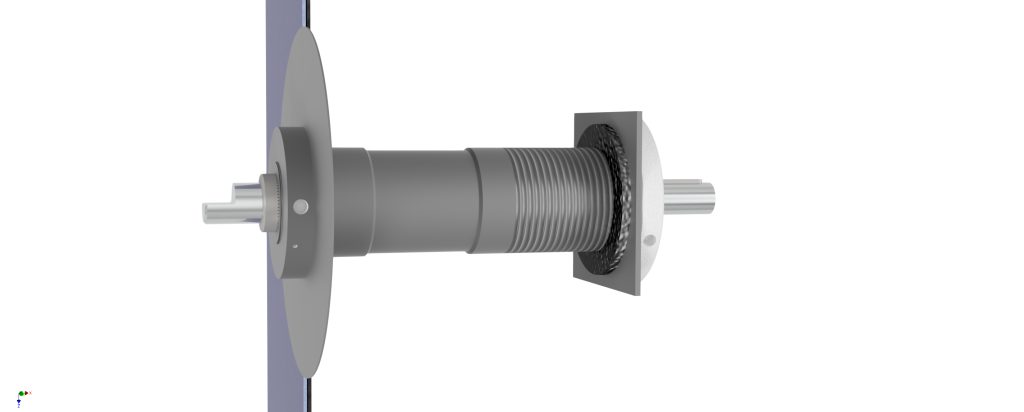
Applications include the grando pool cover winding mechanism and various accessories and additional elements. Flanges also play an important role in securing cladding and other components that are attached to or pass through the pool wall.
These solutions, developed and manufactured in-house, create a defined connection between the component and the pool wall. This allows both the mechanical fastening requirements and the sealing requirements to be addressed specifically.
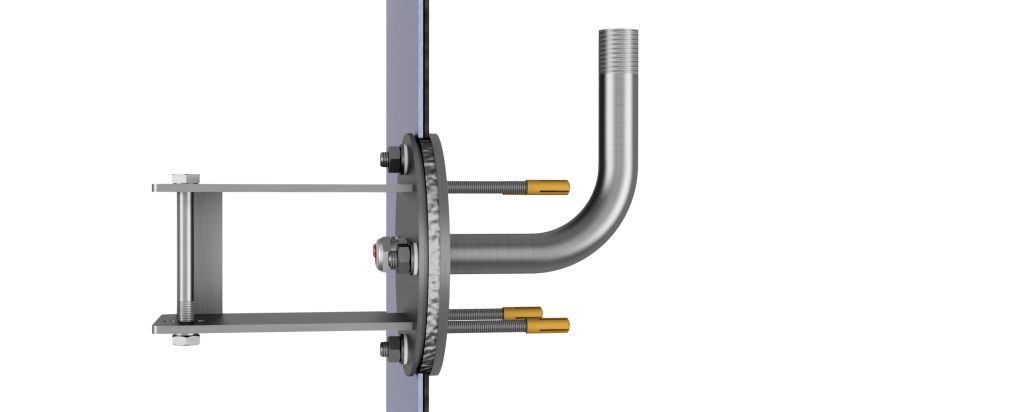
Different flange solutions for different waterproofing systems
The flange design depends largely on the waterproofing system. Pool liners require different structural arrangements from pools with liquid-applied waterproofing.
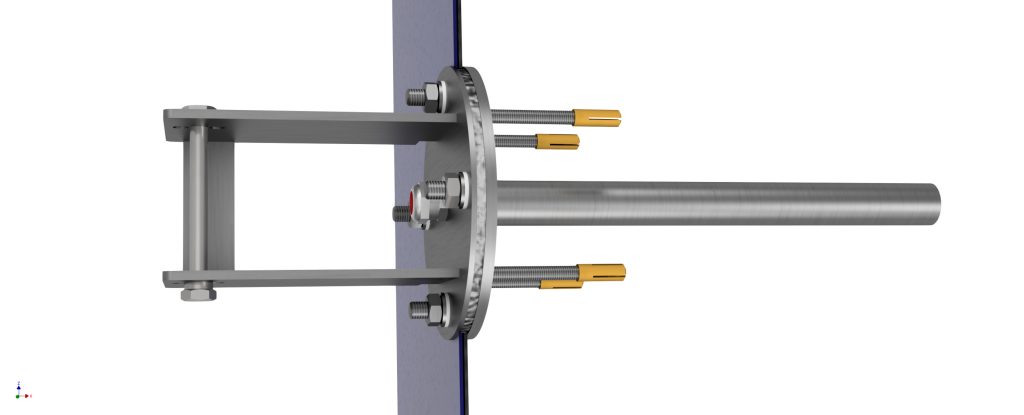
In a liner pool the flange generally matches the size of the corresponding mounting bracket. The seal is formed by clamping the liner between the flange and the component.
The flange provides the defined clamping surface required for this connection. This allows the liner to be securely connected to the component while creating a watertight seal against the pool wall.
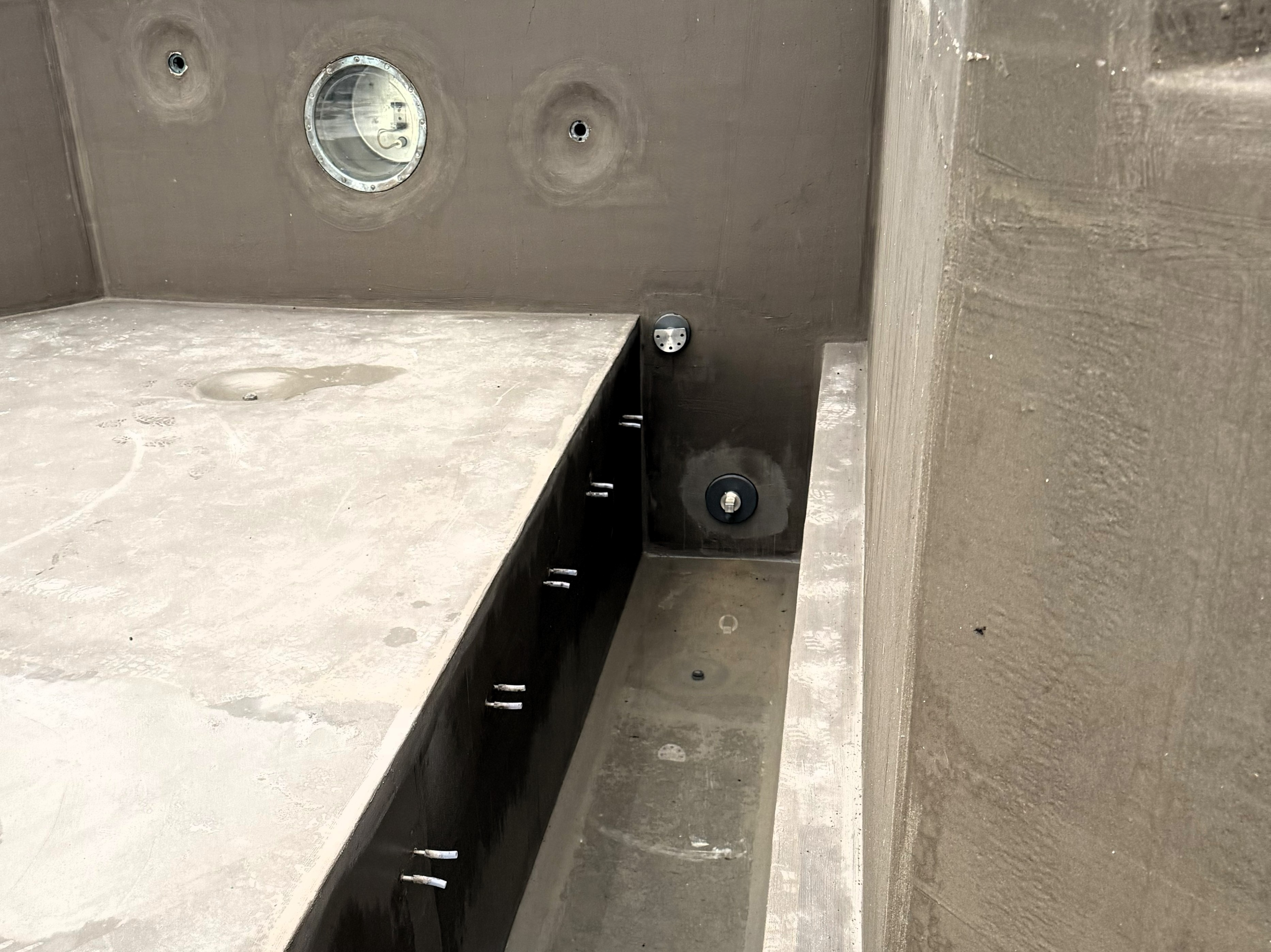
In a pool with liquid-applied waterproofing, a larger flange surface is required. A minimum distance of 50 millimetres must be maintained between the threaded stud or threaded sleeve and the edge of the flange plate.
This larger flange area is necessary because the waterproofing material is applied over the flange plate right up to the studs or threaded sleeves. The design therefore provides the surface area needed for correct application of the waterproofing.
Both versions serve the same fundamental purpose: combining secure mechanical attachment with a lasting, reliable seal.
Correct installation is crucial
Alongside the flange design, installation plays a key role in the connection’s subsequent performance.
For both pool liners and liquid-applied waterproofing, the flanges are fitted or installed before the respective waterproofing layer is applied. First, the flange is secured in accordance with the intended design. The waterproofing is then installed.
Precise positioning and secure attachment are particularly important. The subsequent waterproofing must form a complete, correctly executed connection to the designated flange area.
Careful installation therefore provides the foundation for the flange connection to perform reliably over the long term.
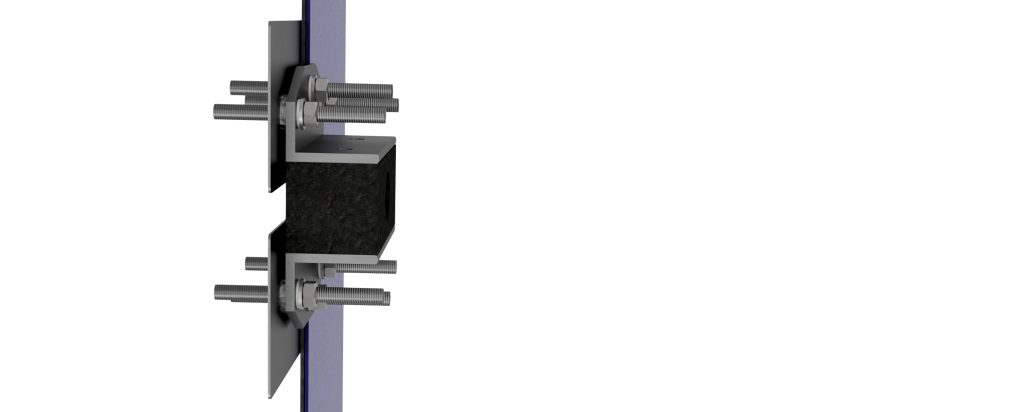
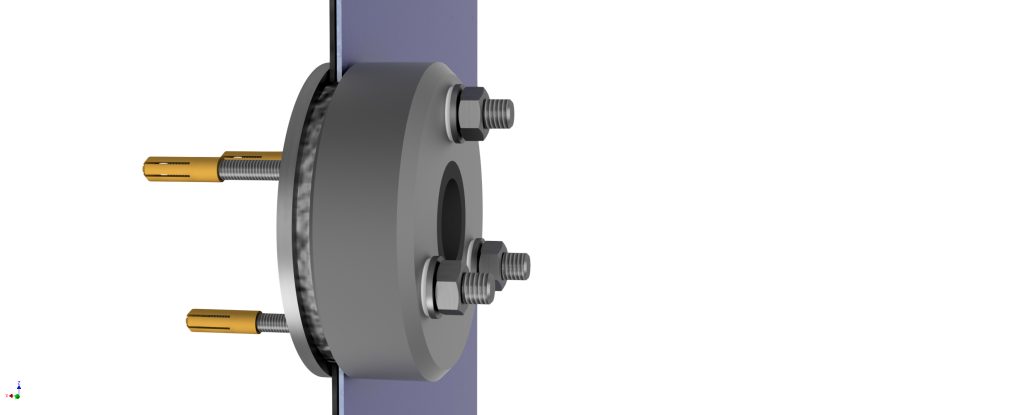
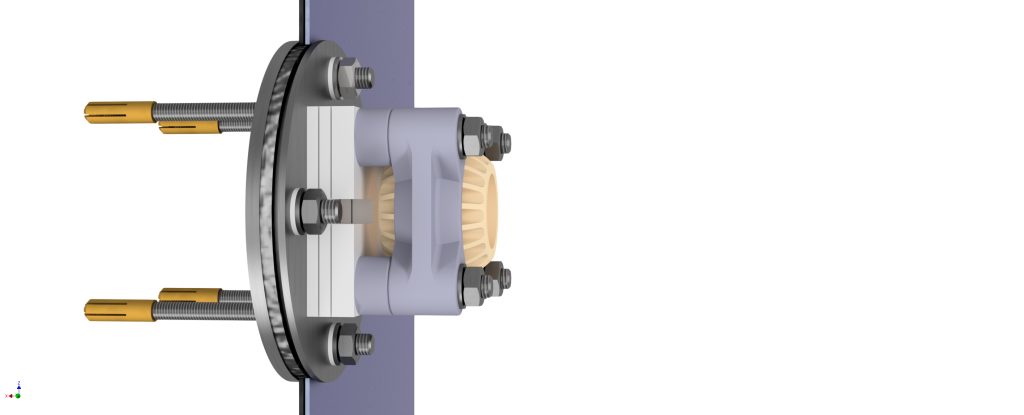
Fastening methods depend on the pool structure and waterproofing
At grando, the fastening method is also tailored to the pool structure.
In liner pools, flanges are generally secured using countersunk screws and wall plugs. This mechanical fixing provides the basis for subsequently clamping the liner in place.
For pools with liquid-applied waterproofing, the flanges are equipped with threaded studs. They are attached to the pool wall using a suitable epoxy adhesive.
These different solutions demonstrate why flanges must be considered within the overall system. Their design depends on the pool wall material, the component concerned and the waterproofing system used.
Flanges for stainless steel, PP and PVC
The pool material also plays a decisive role in selecting the fastening method.
In stainless steel pools, flanges are generally welded directly to the pool wall. This creates a strong, durable connection between the flange and the wall.
In prefabricated pools made from PP or PVC, flange solutions fulfil a particular function. They enable components to be securely attached to the pool wall while ensuring reliable sealing.
Here, the flange and its mating component are installed together, with the pool wall positioned between them. This creates a connection in which mechanical attachment and sealing are combined within a single structural arrangement.
The specific design is tailored to the material and construction of the prefabricated pool.
A defined sealing surface as a key advantage
One of the main advantages of flange solutions is their clearly defined sealing surface. It creates a precise interface between the component and the pool’s waterproofing system.
At grando, flange solutions can be specifically adapted to the component and the existing pool structure. This enables secure attachment while providing the conditions required for correct sealing.
This is particularly relevant for components mounted on or passing through the pool wall. Alongside the main structural elements, the many junctions and interfaces are essential to a pool’s long-term performance.
At these points, the flange fulfils a central role: it combines mechanical attachment with a sealing arrangement tailored to the structure.
Small components with major technical importance
A flange therefore does far more than act as a simple fastening element. A suitable flange must fit the component, provide sufficient sealing surface and enable a secure mechanical connection. Its design must also be compatible with the pool type and waterproofing system.
For this reason, grando uses different flange solutions tailored to the specific technical requirements.
Whether the pool uses a liner, liquid-applied waterproofing, stainless steel, PP or PVC, the interaction between design, fastening and sealing is always crucial. These elements must be coordinated to create a lasting, secure and watertight connection.
Conclusion
Flanges are small components with an important technical purpose. At grando, they ensure that different components can be securely connected to the pool wall and reliably sealed.
Each flange solution is tailored to the pool structure, material and waterproofing system. This creates a defined connection that meets the requirements for both mechanical attachment and watertightness.
Flanges therefore make an important contribution to the quality, safety and longevity of grando swimming pool covers.