A slatted pool cover is one of the last things to go into a pool project, and one of the first things anyone notices once it is done. It sits in full view, every day, and it carries the name of the professional who installed it.
That makes it a product where the details genuinely matter. Not just the fit and the finish on the day of installation, but the colour, the geometry and the material quality that determine how the cover still looks and performs years later.
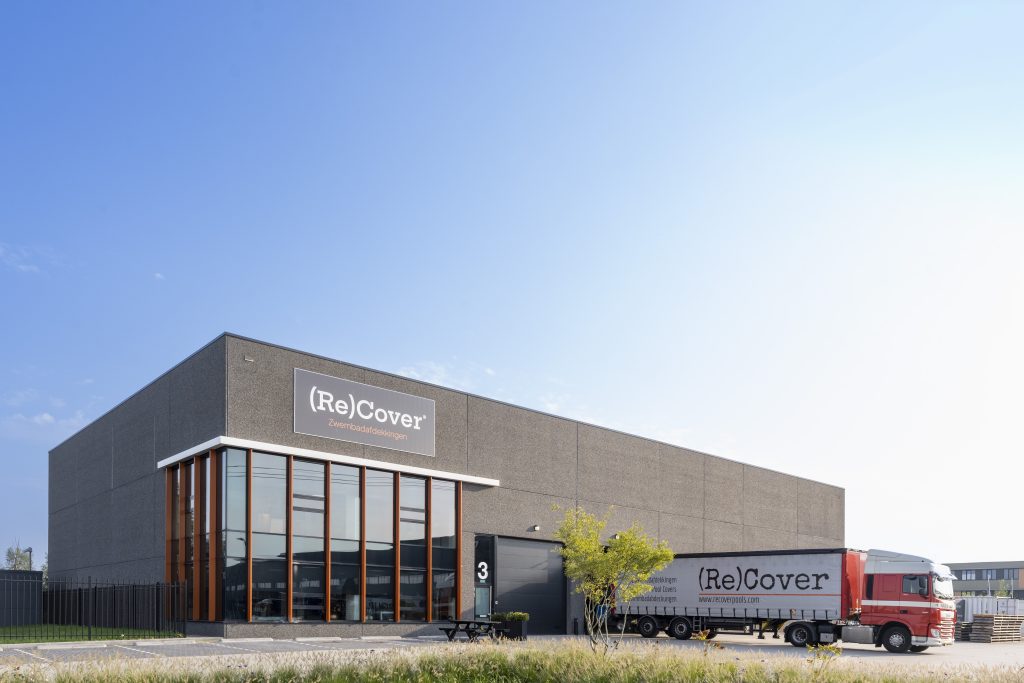
For (Re)Cover, understanding what goes into a cover that holds up over time — in different climates, across different markets, under real conditions — is the core of what the company does. From the raw material specification to the finished cover leaving the facility in Waalwijk, every decision is made with long-term performance in mind.
A Specialist By Choice
From the beginning, (Re)Cover has deliberately kept its focus narrow. The company specialises in slatted pool covers , while working with specialised partners for drive mechanisms, roller systems and supporting constructions.
This approach gives pool builders and installers the freedom to combine a (Re)Cover cover with the technical systems that best suit their project, market and local requirements.
Rather than trying to manufacture every component of a complete pool-cover system, (Re)Cover concentrates on the part it knows best. For the company, specialisation is not about doing less — it is about having the time, knowledge and experience to go deeper into one thing.
And that depth starts with a surprisingly fundamental question: what actually makes a good slat?
The Personal Side Of Doing Business
There is another part of the (Re)Cover story that is less easy to put into a product specification. It is the way the company works with its customers.
(Re)Cover supplies pool builders, installers, distributors and other pool-cover producers, but the relationship is intended to go beyond simply placing an order and receiving a delivery. The philosophy is straightforward: If you call us, you get us on the phone.
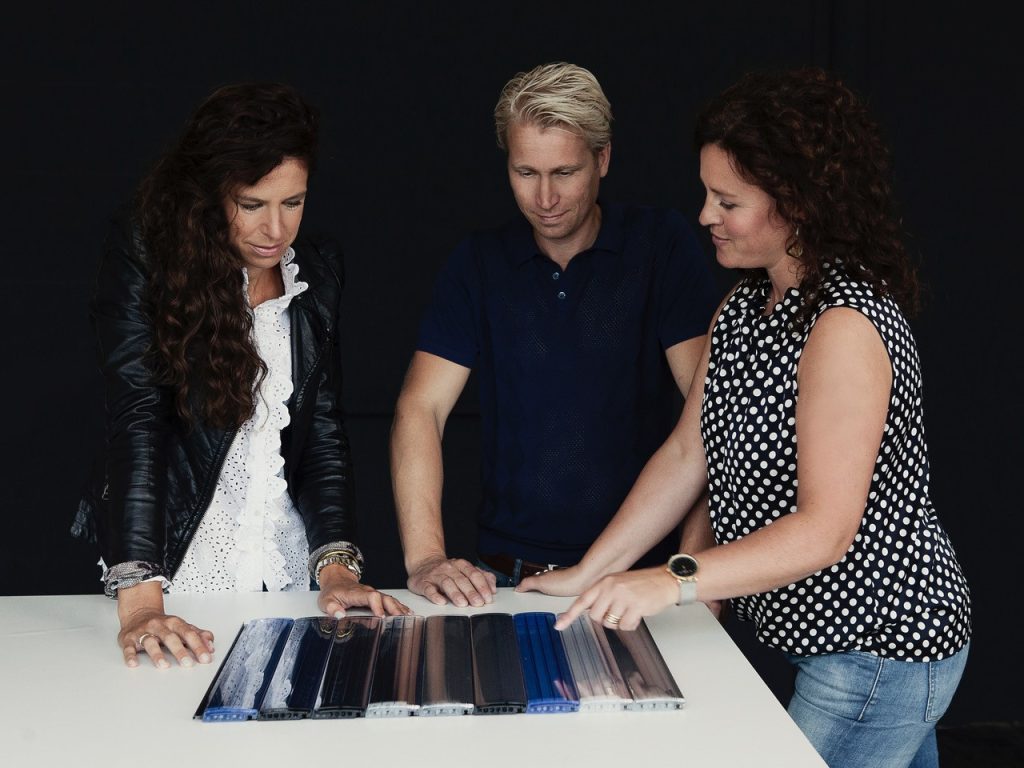
That personal approach matters particularly when products are made to specific requirements. Customers may need help with production planning, logistics, packaging, samples or marketing. They may have questions about technical details or be looking at ways to increase their volumes. (Re)Cover aims to be part of those conversations.
The objective is not simply to sell another cover. It is to understand where a customer wants to go and work out what is needed to help them get there.
Sometimes that means adjusting production planning. Sometimes it means investing in capacity or finding a more efficient way to handle larger volumes. Sometimes it is simply sharing knowledge built up through years of working with different projects and markets.
Our job is not to sell a cover. It is to help our customers build a stronger business.
Why Made-To-Measure Is Not A Luxury
A slatted pool cover is always made to measure. No two pools are exactly alike, and the cover is typically one of the last elements to be fitted. Installed only once the pool structure, surrounding terrace and finishing details are in place. By that point, the dimensions are fixed, and the cover has to match them precisely.
That also means timing matters. Pool professionals need a supplier who can respond quickly and reliably at the end of a project, so the final stage does not become a bottleneck.
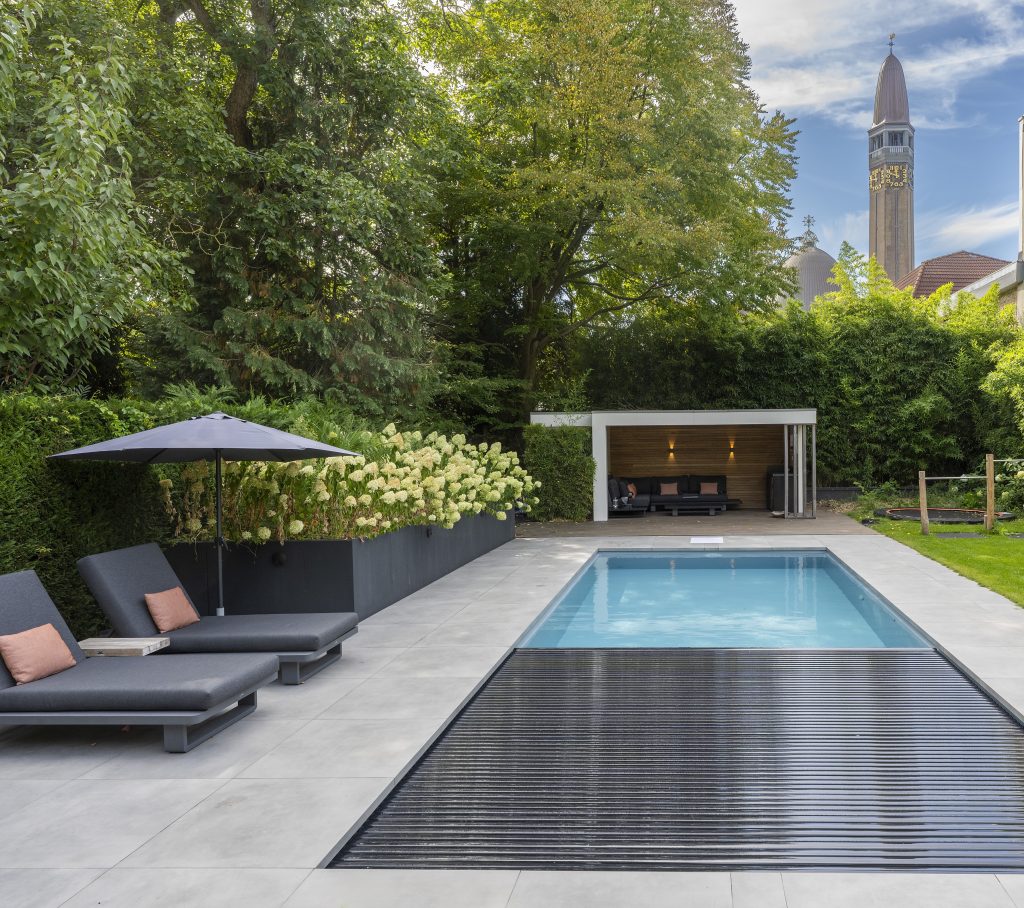
But a pool cover is not simply a technical component to be ticked off a list. It is one of the most visible parts of the finished result. It is in full view, seen every day, by the pool owner and their guests. So it needs to look right, fit perfectly and hold its colour and appearance over time.
For (Re)Cover, this shapes everything. Around 30% of covers are fully assembled at its facility in Waalwijk, while the remaining 70% are produced by over manufacturers using (Re)Cover profiles, end caps and sealant. In both cases, the end result is a made-to-measure cover: the question is simply who carries out the final production and local distribution.
What stays consistent is the underlying standard. The profiles need to perform. The colour needs to last. And the fit needs to be right, not just on the day of installation, but years later.
But What Actually Goes Into A Good Cover?
A new pool cover can make an excellent first impression. The profiles look crisp, the colours are fresh and everything fits exactly as it should. But a new sample reveals very little about how that same cover will perform five or ten years later.
That is the real challenge. A slatted cover has to withstand sunlight, temperature changes, water, chemicals and repeated mechanical forces, while retaining both its appearance and its performance.
For (Re)Cover, long-term quality comes from understanding how all these factors interact and making the right choices at every stage. And it starts with something fundamental: the material.
Polycarbonate Is Not Simply Polycarbonate
(Re)Cover’s main material focus is polycarbonat, with two different profile geometries complemented by a smaller PVC range. Polycarbonate offers a strong combination of properties for long-term use in swimming pools, but the material itself is only part of the story.
The formulation of the raw material, UV protection, colour stability and impact resistance all influence how a slat performs. So do the profile geometry and extrusion precision, including the internal stresses that can be introduced during production.
These differences are not always visible when comparing two brand-new slats. Time is a much better test: years of sunlight, temperature fluctuations, chemicals and mechanical forces gradually reveal how a material and profile perform in real conditions.
That is why understanding materials is such an important part of (Re)Cover’s expertise — not just knowing what a slat is made of, but understanding how those choices affect its performance over the long term.
Designed With Different Climates In Mind
For outdoor plastics, UV radiation is one of the biggest long-term challenges. Years of exposure can lead to discolouration, brittleness and a gradual loss of mechanical performance. How quickly that happens depends not only on the climate and solar intensity, but also on the quality and formulation of the material itself.
When defining its polycarbonate specifications, (Re)Cover looked beyond conventional pool-cover requirements, drawing on standards and material knowledge from more demanding applications such as automotive and façade technology.
The goal was never to develop a slat for a single type of climate. It was to create a profile capable of maintaining its performance across very different conditions, from moderate Northern European weather to markets exposed to much higher levels of heat and solar radiation.
Because long-term performance means preparing for more than what happens outside the factory.
Testing Is Part Of The Process
Developing the right profile is only the starting point. The real question is how it holds up over time.
That is why (Re)Cover tests its polycarbonate slats using a range of methods, including ISO-certified accelerated ageing tests. The process makes it possible to track long-term behaviour and compare its own profiles with others available on the market, looking at factors such as UV resistance, colour stability and material degradation.
So far, the results have remained strong, with the profiles meeting (and in some cases exceeding) the performance targets set during development. It is a useful way of checking that decisions around material formulation, UV protection, geometry and extrusion are translating into the results expected in the field.
Then there is hail. Every five years, the slats undergo independent testing and certification through the Swiss VKF hail register. (Re)Cover’s polycarbonate profiles have consistently achieved the highest applicable hail-resistance classification in their category.
But testing is not simply about passing a test or collecting a certificate. It provides a way to monitor quality, compare materials, assess new formulations and keep refining the product.
Because with a cover designed to last for years, quality is not something you check once. It is something you keep checking.
The Technical Side Of The Cover
A slatted cover may look simple on the surface, but underwater it faces very different forces. Because the profiles contain a significant amount of air, pulling the cover below the water creates pressure on both the slats and their connections.
That makes every detail matter. The material needs the right geometry, the geometry needs precise extrusion, and the finished slats need to be assembled correctly.
But the product is only one part of the equation. Installation design, operating conditions and the surrounding pool technology also influence how a cover performs over time.
For (Re)Cover, good craftsmanship is ultimately about making sure all these elements work together.
Craftsmanship Continues On The Production Floor
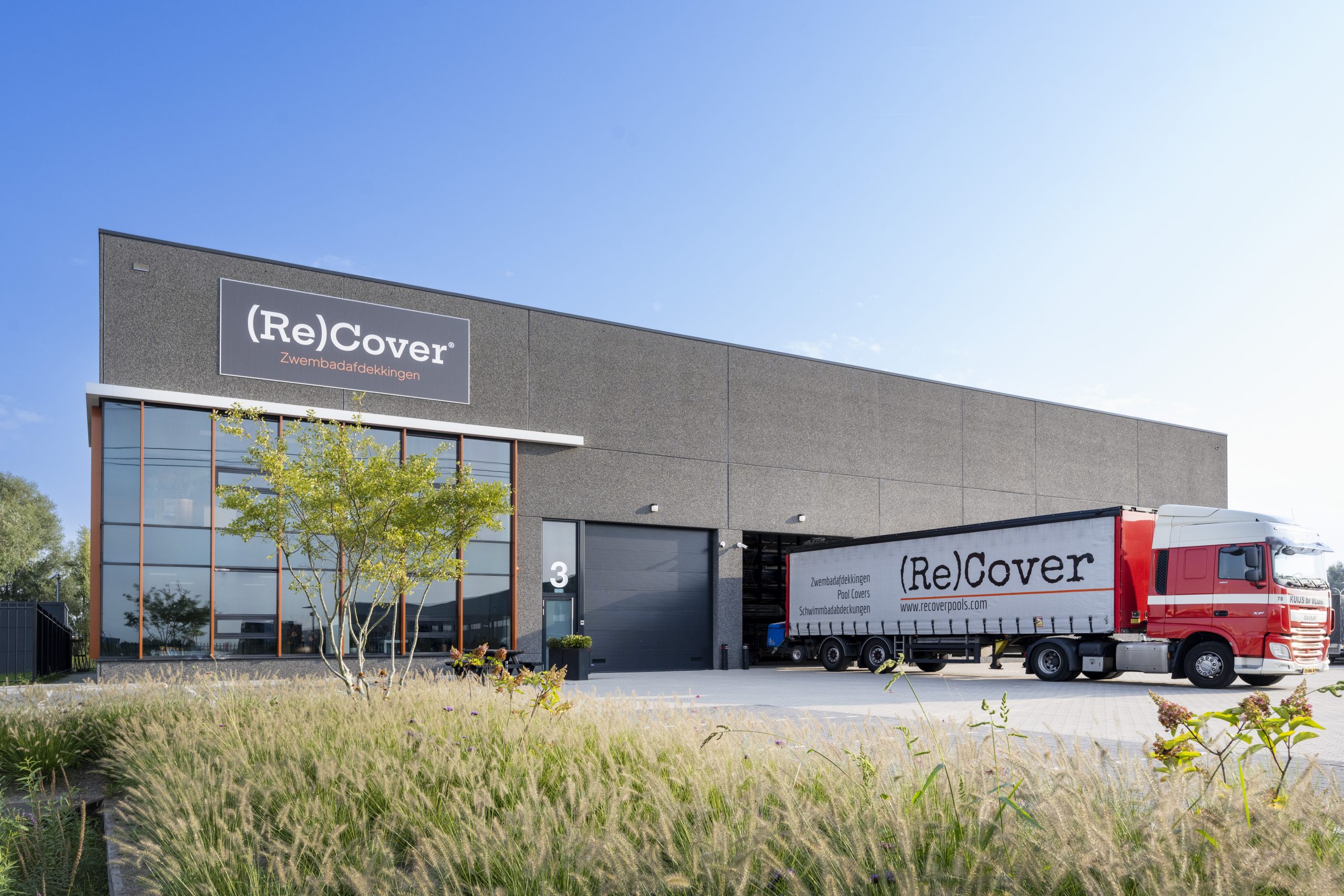
The attention to detail does not stop with the profile. At (Re)Cover’s facility in Waalwijk, around one third of the covers supplied are made to measure, with production covering everything from precise dimensions and consistent colour to assembly, sealing and final quality checks.
The process is carefully planned, with a target lead time of no more than 10 working days. Even details that might seem minor can make a difference: the end caps, for example, are designed to minimise drying time during assembly while maintaining a reliable seal.
Traceability is part of the process too, with production and quality information recorded throughout. None of this may be obvious once a cover is installed, but that is often the point. Good craftsmanship is in the details you do not have to think about.
The Real Test Is Not Day One
So, what makes a good pool cover? At first glance, the answer might seem straightforward: good materials, accurate dimensions, an attractive finish and reliable construction. But at (Re)Cover, the answer goes further.
A good cover is designed with its future performance in mind. Its materials are tested and monitored, its geometry and extrusion carefully considered, and its assembly controlled and traceable. Where required, it can also be made to fit the actual project rather than forcing the project to fit a standard product.
For a pool professional, that long-term reliability matters. A cover is something they put their name and reputation behind. As (Re)Cover puts it: “The colour, dimensions, integration and long-term performance need to be right — not just at installation, but ten years from now.”
That is perhaps the simplest way to describe craftsmanship in a slatted pool cover. It is not about making something that looks right on day one. It is about making something that continues to perform long after day one has been forgotten.
The Numbers Behind (Re)Cover
Founded in 2014, (Re)Cover is based in Waalwijk, the Netherlands, where it also carries out its in-house cover production. Today, a team of around 10 people supplies approximately 2,500 pool covers each year, with around 30% made to measure.
The company’s reach extends well beyond the Netherlands, with customers in more than 30 countries outside the country. Around 10% of the business comes from the Benelux, 40% from the rest of Europe and 50% from outside Europe — meaning roughly 90% of its business is generated beyond the Benelux.
Its customers include pool builders, installers, distributors and other pool-cover producers. Despite this international reach, (Re)Cover’s product focus remains deliberately clear: polycarbonate slats in two profile geometries, complemented by a smaller PVC range.
The company specialises in the cover itself, while drive mechanisms, roller systems and supporting constructions are supplied through specialised partners. This keeps the focus firmly on the materials, profiles and production expertise behind the slatted cover.
From Making Covers To Sharing What You Know
Spending more than a decade specialising in one product inevitably leads to one thing: knowledge. Materials, extrusion, production planning, different climates and markets — and the practical challenges pool professionals face as projects grow in size and complexity.
At (Re)Cover, that experience is increasingly becoming part of its international relationships. Around 90% of its business is now generated outside the Benelux, with products reaching more than 30 markets. Working across different regions and customer groups also brings a valuable exchange of perspectives, requirements and production needs.
And increasingly, the conversation goes beyond the finished cover. With partners abroad, (Re)Cover is sharing technical experience, production knowledge and practical support — including the lessons learned from years of working with slatted covers.
Because perhaps the next step for a specialist is not simply knowing how to make something well, but knowing how to help others make it well too. That is the next chapter of the (Re)Cover story — and we’ll explore it in the next article.