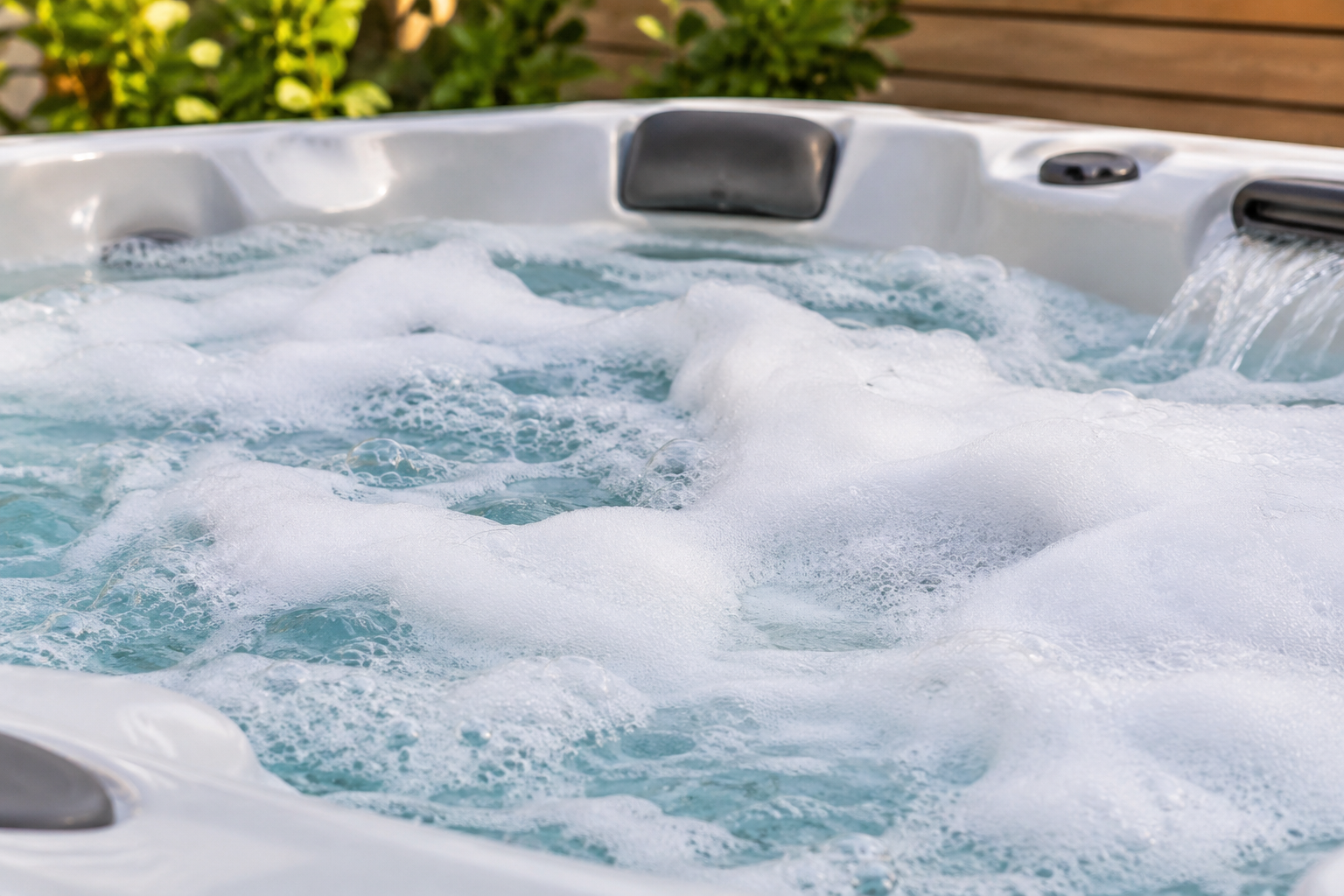
A hot tub is the perfect place to unwind and enjoy a relaxing hydrotherapy session. However, when excessive foam starts appearing on the water’s surface, the experience can quickly become less enjoyable. While bubbles produced by the jets are perfectly normal, persistent foam is usually a sign that something isn’t quite right.
This is a fairly common issue and can have several causes, from cosmetic residue to poor water maintenance. Fortunately, there are several ways to tackle it and, more importantly, prevent it from coming back.
Why Is My Hot Tub Water Foaming?
Foam forms when certain substances in the water cause air bubbles to linger on the surface rather than disappear quickly. Since hot tub jets constantly introduce air into the water, even small amounts of contaminants can lead to noticeable foaming.
One of the most common causes is the accumulation of personal care products. Shampoo, shower gel, moisturisers, sunscreen, makeup and body oils can all enter the water during use. Detergent and fabric softener residues in swimwear can have a similar effect, even when bathing suits appear perfectly clean.
Filtration and water chemistry also play an important role. A dirty, clogged or worn-out filter cannot remove contaminants effectively, allowing dirt and other substances to accumulate. Meanwhile, unbalanced pH, low total alkalinity or insufficient sanitiser levels can make it harder to maintain good water quality. Regular use also contributes to the gradual build-up of organic matter and other residues.
Another factor to consider is the level of total dissolved solids (TDS). These include salts, minerals and chemical residues that accumulate over time, particularly as water evaporates and fresh contaminants are introduced. Unlike larger particles, dissolved solids cannot be removed through conventional filtration. When their concentration becomes too high, they can contribute to cloudy water, make water chemistry harder to balance and increase the likelihood of foaming..
How to Get Rid of Foam in Your Hot Tub
If foam has already appeared, the first step is to identify what’s causing it. Simply getting rid of the foam won’t solve the problem if the underlying issue remains.
1. Clean the Filter
Remove the filter and rinse it thoroughly to get rid of accumulated dirt and debris. If it’s particularly dirty, you may need to give it a deeper clean, following the manufacturer’s instructions.
If the filter is damaged or has lost its effectiveness, it’s best to replace it. A properly maintained filter is essential for keeping your water clean.
2. Check Your Water Chemistry
Test the water to check its pH, total alkalinity and sanitiser levels. As a general guideline, the pH should usually be kept between 7.2 and 7.6, although you should always follow the manufacturer’s recommendations.
If any of these levels are outside the recommended range, adjust them before continuing with your regular maintenance routine. It’s also important to make sure your water is properly sanitised using chlorine, bromine or another system compatible with your hot tub.
3. Partially Drain and Refill the Hot Tub
If the foam doesn’t disappear or keeps coming back after cleaning the filter and balancing the water, too many contaminants may have built up.
In this case, partially draining and refilling the hot tub can help reduce their concentration. If the problem persists or dissolved solids levels are particularly high, it’s best to drain the hot tub completely, clean the interior and refill it with fresh water.
4. Use a Foam Reducer as a Temporary Fix
Foam reducers, sometimes called defoamers, are products formulated to eliminate excess foam from hot tub water. They work by helping the bubbles break down, clearing the water’s surface and restoring its appearance. They can be useful for dealing with occasional foaming, particularly when a quick solution is needed.
However, their effect is only temporary. Although they remove the visible foam, they don’t eliminate the oils, detergent residues and other contaminants responsible for it. If foaming becomes a recurring problem, the focus should be on improving water treatment and filtration rather than relying on foam reducers.
How to Prevent Foam from Coming Back
Prevention is the best way to keep your hot tub water clean and foam-free. Showering before use, rinsing swimwear thoroughly and avoiding fabric softeners help prevent cosmetic and detergent residue from entering the water. It’s also best to avoid applying body oils and moisturisers before a soak and keep the hot tub covered when not in use.
Regular maintenance is equally important. Check the pH, total alkalinity and sanitiser levels, and clean the filter according to how often you use your hot tub. Finally, replace the water every three to four months, or more frequently if heavy use makes it necessary.
Is Foam in a Hot Tub Normal?
No. Although the jets produce bubbles while the hydromassage system is running, these should disappear quickly once the system is switched off. If a layer of foam remains on the surface, it’s a sign that substances have built up in the water and need to be removed.
As well as being unpleasant, persistent foam may indicate that the water needs cleaning or that the treatment system isn’t working as it should. It’s therefore best to address the problem before using the hot tub again.
Ultimately, keeping your water clean, monitoring its chemistry and looking after your filtration system are the keys to preventing foam. With a straightforward maintenance routine and a few simple hygiene habits, you can keep your hot tub in excellent condition without constantly having to resort to quick fixes.