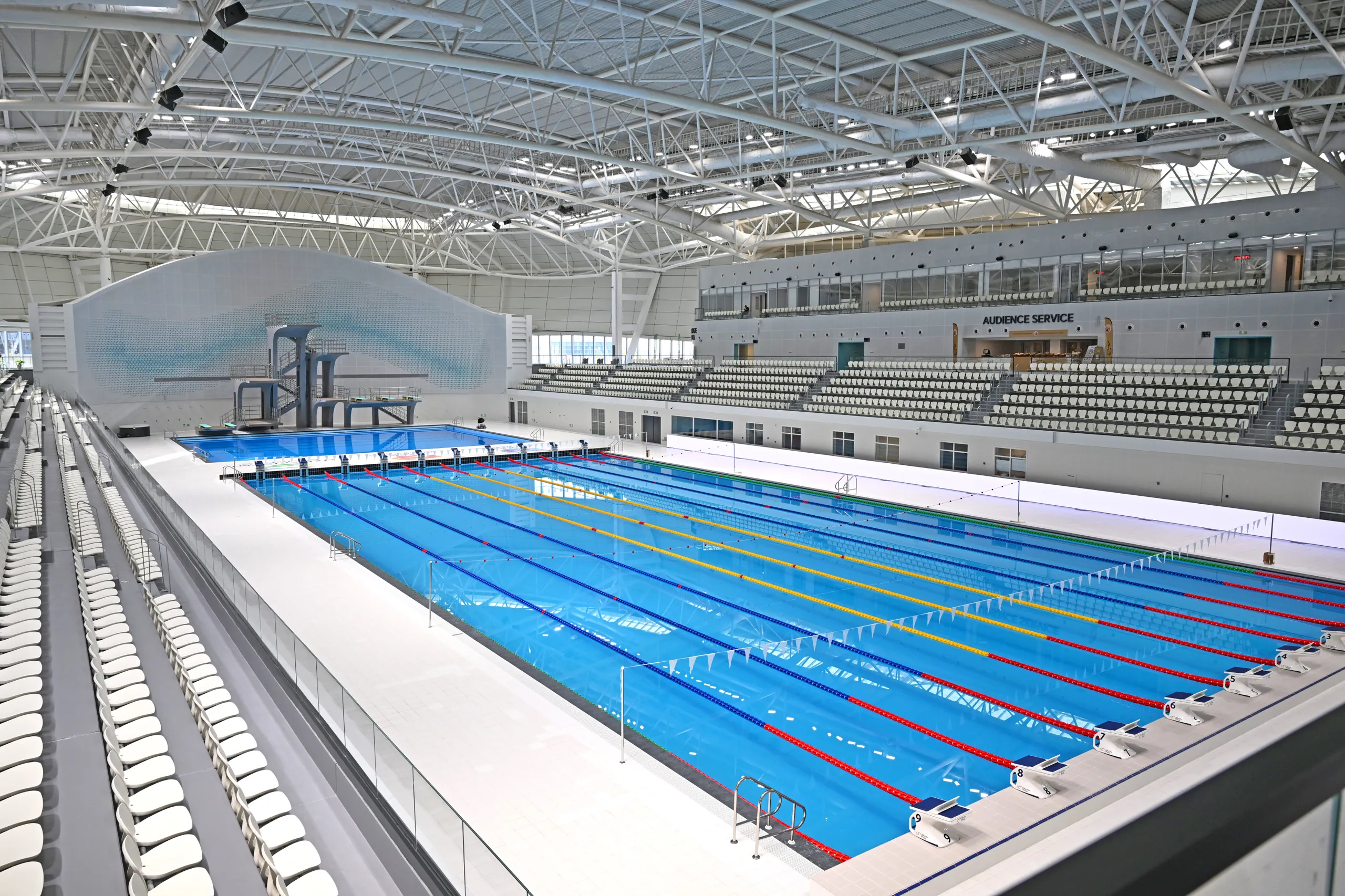
From the first breakthrough in 1995 at Canet-en-Roussillon to this October’s record in Tashkent, Italian technology has accompanied history-making swimming for three decades, at major events and in everyday facilities alike.
On October 10, in Tashkent, swimmer Egor Kornev broke the world record in the 50m butterfly during a stop of the World Aquatics Swimming World Cup. It was the 200th record of its kind set in a pool built by Italy’s Myrtha Pools, controlled by the Colletto family.
A Full Circle
The story began on June 1, 1995, in Canet-en-Roussillon, France, when Russian swimmer Denys Pankratov improved the world record in the 200m butterfly, starting a series that has never stopped.
World Aquatics CEO Brent Nowicki read the result as proof of what happens when the world’s best athletes find facilities worthy of their talent: between the Baku and Tashkent stops, in fact, several world and continental records were set. He described Myrtha Pools as a reliable ally whose expertise carries real weight in the growth of the sport.
Roberto Colletto, head of Myrtha, said his pride lies in bringing Italy to the top of aquatic sports, the result of swimmers who feel at ease in the water and of three decades of collaboration with the international federation.
Pools for Many Purposes
Swimming fans often associate Myrtha with pools built for major occasions and then removed. The data tell a different story: more than 40% of these records were set in permanent facilities, mostly public ones, including the venues of both the first and the 200th record.
It remains true, however, that the company’s modular system has made it possible to turn unexpected venues into stages for swimming. Examples include the Prater Stadium in Vienna and Lucas Oil Stadium in Indianapolis, as well as large indoor arenas such as Mandalay Bay in Las Vegas, Paris La Défense Arena and the Aspire Dome in Doha, designed by architect Roger Taillibert. Unforgettable was the pool set up in 1995 on the sands of Copacabana, in Rio de Janeiro, for the Short Course World Championships.
Once the events were over, many of these structures got a second life, reassembled permanently in sports complexes serving residents and young athletes, leaving a lasting legacy for the host communities.
The Map of World Records
The 200 records were set in 20 countries across four continents. The country with the most records (28) is Australia, thanks to the many competitions held on its soil and the performances of its athletes, followed by the United States (27) and Canada (24).
In addition, 122 records came in pools built for World Aquatics competitions, a sign of Myrtha Pools’ close and lasting bond with the governing body of world swimming. A partnership that, in Nowicki’s words, is strengthening the future of aquatic sports.
Image credit: UZBEKISTAN NOC/insidethegames.biz