Decisions about the size of public swimming pools reveal a problem that Italian municipalities face without the comparative tools that guide the decision elsewhere. In Australia, business cases spell out exactly how much more it costs to choose a 50-metre pool. In Italy, the bill often only arrives once construction has already started.
The news from Lilydale, Australia, is a good starting point for a topic that also affects Italian municipalities closely. The town council approved a business case for a new aquatic centre, choosing to build a 25-metre pool instead of a 50-metre one. The goal was to save around $10 million in taxpayer money, as well as to keep long-term running costs down.
This is not an isolated case. Australia has produced highly detailed comparative studies on this exact choice. In Batemans Bay, the advisory firm Otium calculated that a 50-metre pool would cost around $6 million more to build than a half-length pool, and up to $300,000 more per year to run. In Rosebud, another business case estimated a gap of $8.6 million in construction costs and $132,000 per year in additional operating losses.
The situation in Italy
Italy does not yet have equally accurate public comparative studies. However, real construction projects from recent years allow us to reconstruct similar orders of magnitude.
In Ravenna, the original €13 million project for the municipal swimming facility rose to around €15 million once it included a 50-metre Olympic pool (plus two smaller pools), stands for 1,300 spectators, and a wellness and fitness centre.
The project was initially approved, but its timeline was later revised. Operational priority went to the 25-metre pool, which recently reopened, ahead of the 50-metre one. This choice helped protect costs, but it also disappointed competitive swimming clubs.
In San Benedetto del Tronto, the cost of the new Primo Gregori Olympic pool alone is €3.8 million. These figures don’t include changing rooms, stands, or ancillary facilities. This confirms that the length of the main pool alone shifts the investment by several million euros, even before factoring in higher running costs.
The cost that matters most over time
Available data confirms that ongoing running costs are the real deciding factor for management. An industry guide on opening an indoor pool estimates that a 25×10 metre pool requires around €600,000 in total investment. On top of that, annual costs include €20,000-25,000 for cleaning and administrative staff, and €70,000-100,000 for swimming and aquagym instructors, plus heating costs for the pool and changing rooms.
Doubling the length of the pool means increasing the volume of water that needs heating and chemical treatment. It also means larger ancillary spaces and more lifeguards and instructors to ensure safety in the water. In the Australian cases, these items add up to hundreds of thousands of euros per year.
A question of transparency
Pool size isn’t a matter of prestige. It’s a matter of matching real local demand—resident numbers, competitive clubs, school groups, and elderly users—with long-term investment sustainability.
The key difference from Australia is this: there, decisions stem from public business cases, with explicit comparative figures made available to citizens before the council vote. In Italy, the data almost always emerges after the fact, buried inside a tender that’s already written or an executive project that’s already approved.
Sources: ausleisure.com.au, aboutregional.com.au, mpnews.com.au, ravennaedintorni.it, ansa.it, comeaprire.it
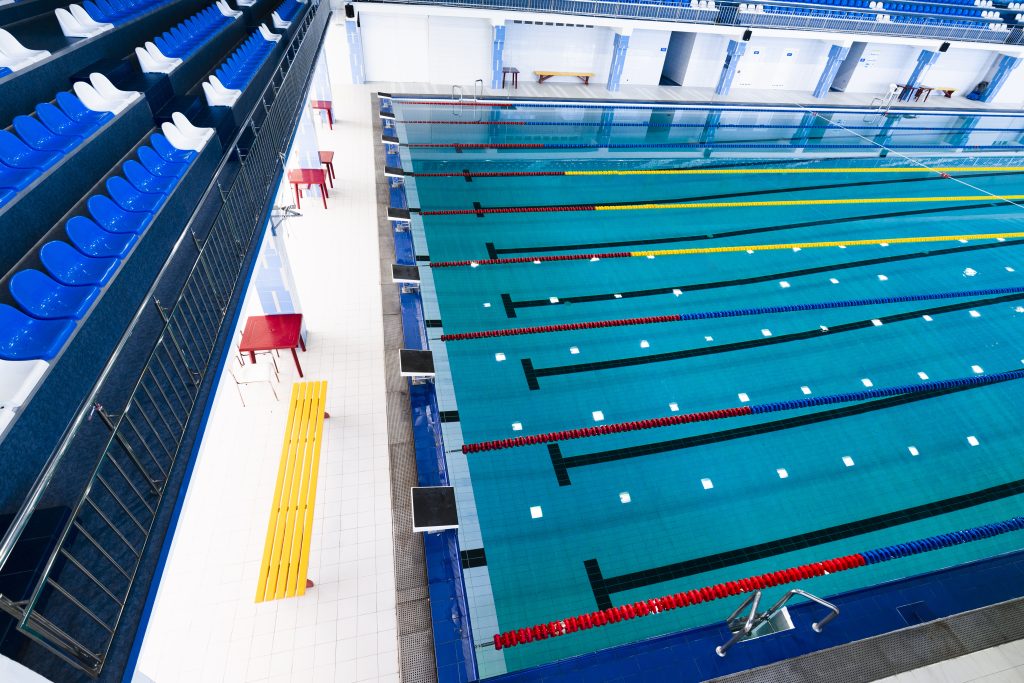
Image by drobotdean on Magnific