Every summer, the same scene unfolds. A local prefectoral order is issued, authorities tighten water usage restrictions, and your phone starts ringing off the hook. Concerned clients all ask the same question, wondering whether they still have the right to use their pool.
Filling, draining, topping up after a leak, or routine maintenance, every small everyday task suddenly becomes a source of stress. As a professional, you need to provide precise guidance to prevent your clients from facing heavy fines while still protecting the structural integrity of their pool.
The main difficulty on the ground stems from the fact that there is no single nationwide rule across France. Indeed, everything relies on prefectoral orders issued at the departmental level or directly by river basin. Consequently, you might easily work in two neighboring towns and have to apply completely opposite directives during the exact same month of August.

These measures follow a precise scale of severity. At the simple vigilance level, authorities issue common-sense recommendations to conserve water. As soon as the status shifts to alert or heightened alert, the first restrictions kick in, particularly regarding watering schedules and pool filling. Finally, when the crisis level is reached, the hammer falls and topping up private pools is in principle strictly forbidden. This is why monitoring local regulations on a daily basis becomes an absolute priority as soon as warm weather arrives.
Essential Exceptions to Master in the Field
Fortunately, the regulatory framework maintains a degree of logic and accounts for very useful special cases. On one hand, the initial filling of a pool whose construction began prior to the publication of the order usually remains authorized. This prevents structural damage and directly protects the builders’ operations.
On the other hand, topping up the water level to repair a proven leak or to maintain the necessary flow for proper filtration system operation remains widely tolerated, provided you can prove the sanitary urgency. By clearly explaining these nuances to a owner, you deliver real added value while saving them from making hasty decisions.
Preventive Maintenance as a Must-Have Solution
Rather than waiting for water shutdowns, the best approach remains prevention. A pool that is properly maintained throughout the months naturally consumes far fewer resources. This makes it the ideal time to educate your clients on suitable equipment options.
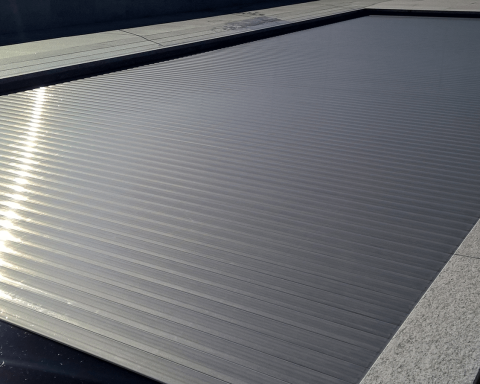
Thermal covers and automatic shutters, for instance, limit evaporation caused by extreme heat and wind, which drastically reduces the need for water top-ups. For their part, modern filtration systems require fewer backwashes and thus save hundreds of liters during every cleaning cycle. Finally, installing rainwater harvesting systems appeals to more and more homeowners who care about their environmental footprint.
In this way, a regulatory constraint transforms into a concrete opportunity to promote durable equipment.
Staying Ahead of the Game Through Anticipation
To approach the summer season stress-free, the key is to anticipate local restrictions rather than suffer from them. Taking the initiative by regularly checking official platforms and exchanging information with colleagues in your area allows you to react quickly as local situations evolve.
In a climate where drought episodes are becoming the norm, your ability to guide clients with accuracy and practical insight serves as your best business card.