There was a time when a pool built discreetly without prior declaration could fly under the radar of tax authorities for years. That era is officially over. Thanks to aerial imagery combined with artificial intelligence, French tax services now detect undeclared pools with formidable efficiency. This shift directly impacts pool professionals, who frequently face questions from clients during construction projects.
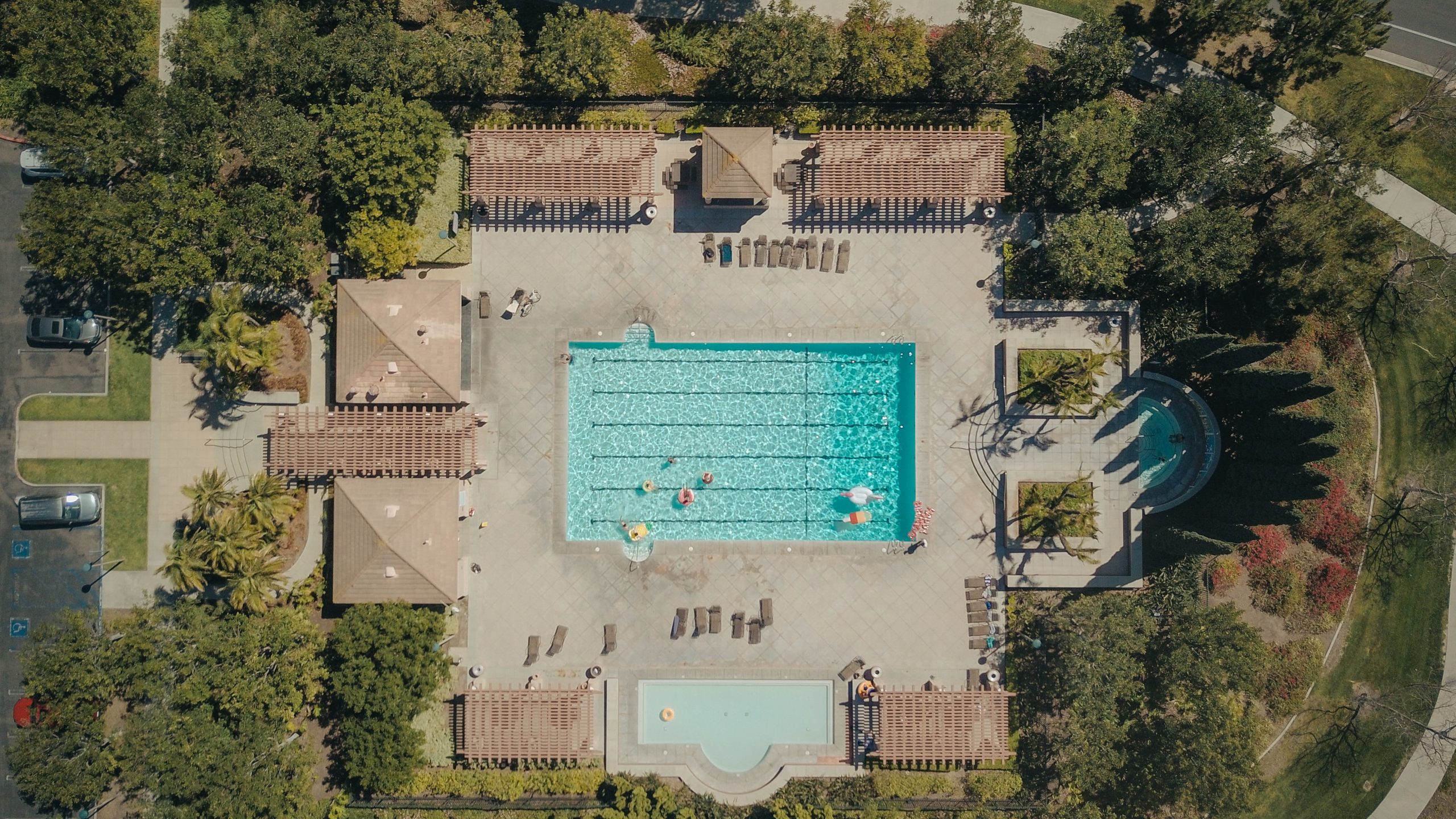
The principle behind the technology sounds relatively simple on paper, yet proves remarkably effective in practice. Tax authorities cross-reference regularly updated aerial photographs of the territory with existing land registry data through an artificial intelligence algorithm designed to identify the characteristic shapes of pool basins. When a pool shows up on satellite imagery without appearing in the owner’s official tax filings, a verification procedure triggers almost automatically.
This automated monitoring generated over twenty thousand tax adjustments in a single year, highlighting the massive extent of past under-reporting. Furthermore, this trend shows no signs of slowing down, as detection algorithms grow increasingly precise with each aerial survey. For property owners, believing they can stay off the grid simply by keeping a low profile has become a exceptionally risky gamble.

The Real Financial and Legal Risks for Property Owners
The consequences of maintaining an undeclared pool extend far beyond a basic property tax adjustment. Property owners face retroactive tax reassessments spanning several years alongside late payment penalties. For a large pool hidden for several seasons, the final bill can reach substantial amounts. Every pool exceeding ten square meters must be declared within ninety days following construction completion, a deadline that also dictates eligibility for a two-year property tax exemption.
Beyond purely financial penalties, an undeclared pool creates serious complications in other areas, particularly regarding insurance coverage. Home insurance policies that fail to explicitly list the pool may deny coverage for damage related to its existence. This exposes the owner to financial liabilities far greater than the original tax obligation itself.
The Key Role of Pool Professionals in Risk Prevention
This environment presents a vital opportunity for pool builders to showcase their expertise. Many homeowners remain unaware of exact administrative procedures, incorrectly assuming a verbal mention at city hall suffices to legalise their installation. Systematically reminding clients about the required tax forms and strict filing deadlines prevents costly surprises while building deeper trust between the business and the customer.
This diligence protects both the homeowner and the pool contractor. Clear communication regarding reporting duties shields the business from future complaints if an uninformed owner attempts to blame the installer for their own oversight. Incorporating a written summary of administrative obligations into final project handovers serves as a simple, highly effective safeguard for both parties.

Positioning Your Business as a Trusted Adviser
Addressing tax compliance allows pool contractors to strengthen their role as comprehensive advisers beyond technical execution. Clearly explaining the administrative aspects of pool ownership in plain, accessible language sets leading businesses apart from competitors who merely complete the physical installation.
As official monitoring tools continue to advance, transparency becomes a powerful commercial differentiator for clients seeking complete peace of mind throughout their project.