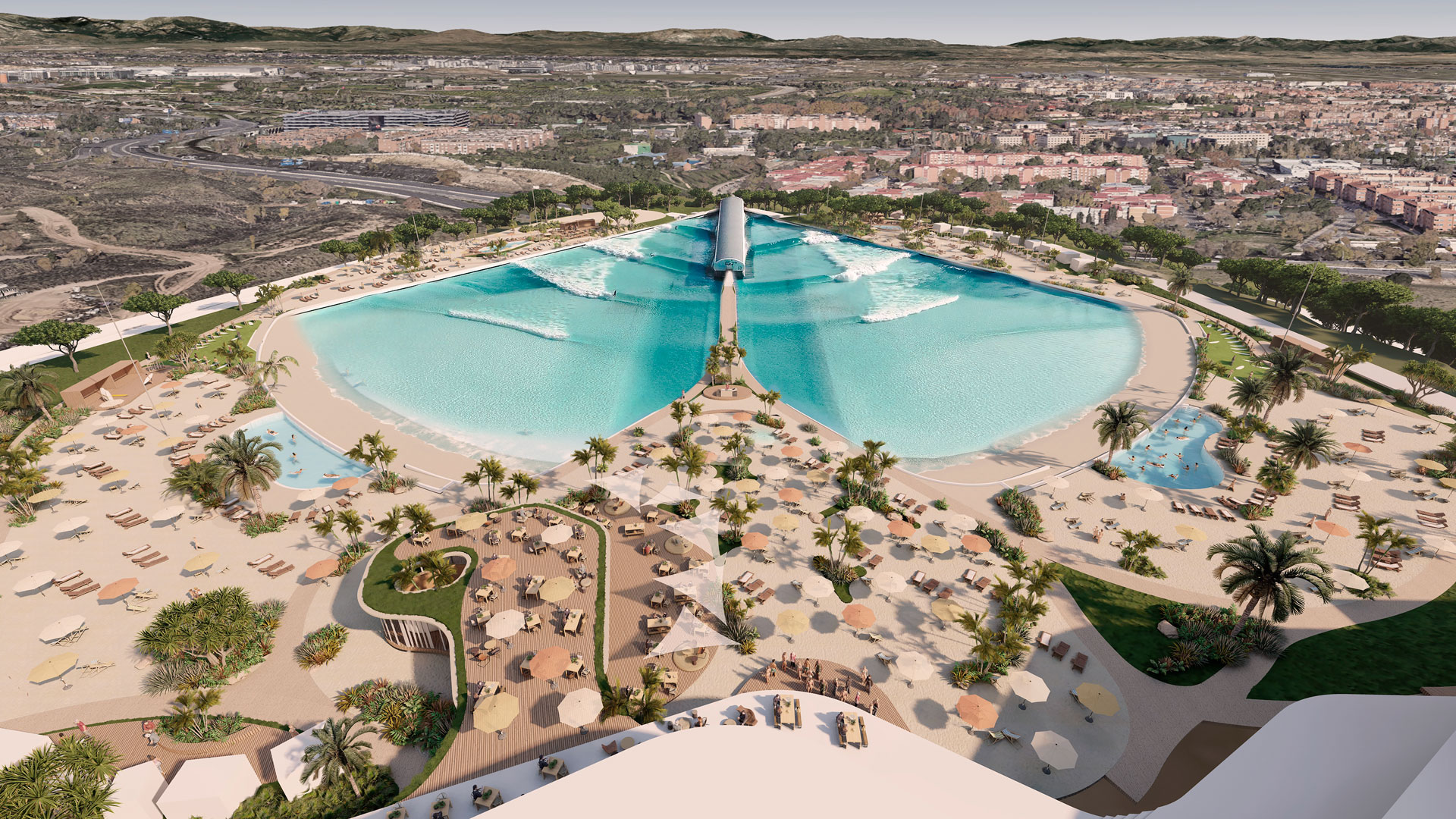
Madrid is getting ready to host a landmark project in European urban sport: what’s being promoted as the “largest wave pool in Europe”, a large-scale artificial surfing complex valued at more than €60 million (around $70 million) and scheduled to open in spring 2027.
The project, known as Gemswell Surf Madrid, will be located within the Atlético de Madrid Sports City, about 15 minutes from the city centre and close to Adolfo Suárez Madrid–Barajas Airport. It’s being developed by Stoneweg, Teras Capital, and Atlético de Madrid itself, and will use technology from the Basque company Wavegarden, one of the global leaders in artificial wave systems.
The development is set to become a new benchmark for urban surfing in Europe, combining sport, leisure, and training in a single destination. Alongside its main surf lagoon, the complex will include multiple pools, training areas, recreational facilities, and wellness-focused spaces. It’s designed to attract professional surfers, beginners, families, and casual visitors alike, positioning itself as both a sports hub and a lifestyle destination.
Wavegarden and the technology behind the project
At the core of the complex will be technology developed by Wavegarden, a company based in Spain’s Basque Country that has become one of the most influential names in artificial wave engineering. Its Wavegarden Cove system will generate all surfable waves inside the main lagoon. This technology recreates controlled surfing conditions within a closed-loop environment, allowing consistent wave production regardless of ocean conditions. Beyond the sporting experience, it also enables a highly optimized use of resources, particularly water, which is central to the project’s long-term sustainability strategy.
Water treatment and closed-loop sustainability system
One of the most important aspects of the facility is its water management system, designed to operate as a closed circuit. Instead of continuously consuming fresh water, the system keeps water within the installation and continuously treats and recirculates it.
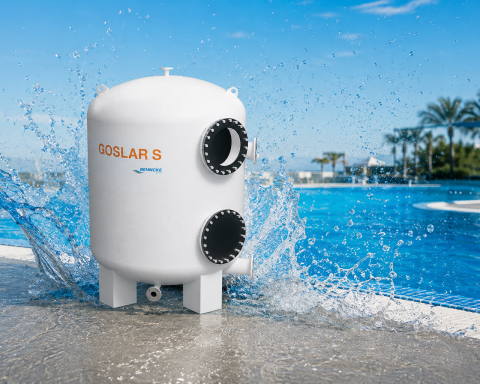
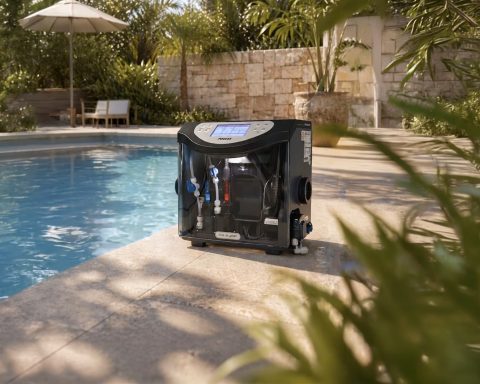
The treatment process involves several stages. First, mechanical filtration removes debris and suspended particles from the water. After that, the water undergoes disinfection and chemical balancing processes that ensure safe and stable conditions for users. Key parameters such as pH level, salinity, and turbidity are constantly monitored and adjusted when necessary.
Once treated, the water is returned to the lagoon and reused repeatedly. This reduces overall water consumption and significantly limits waste compared to conventional large-scale recreational water facilities. The system is also designed to operate continuously and efficiently, minimizing energy losses linked to pumping, circulation, and filtration processes. In addition, the infrastructure has been engineered to reduce evaporation losses and improve energy efficiency across the entire water management cycle, reinforcing its sustainability credentials.
A high-capacity surf lagoon designed for performance and scale
The main lagoon will cover approximately 23,000 square meters, making it one of the largest artificial surf environments in Europe. It will be divided into two main areas: one designed for beginners and another for more advanced surfers, allowing sessions to be tailored according to skill level.
The system will be capable of generating more than 20 different types of waves, reaching heights of up to two meters. Surf sessions will last around 60 minutes and will accommodate up to 120 surfers at the same time, carefully distributed across zones to ensure safety and optimal wave usage.
This controlled environment is expected to improve access to surfing for people who live far from the coast, while also providing consistent training conditions for professional athletes and surf academies.
Sports infrastructure and lifestyle facilities
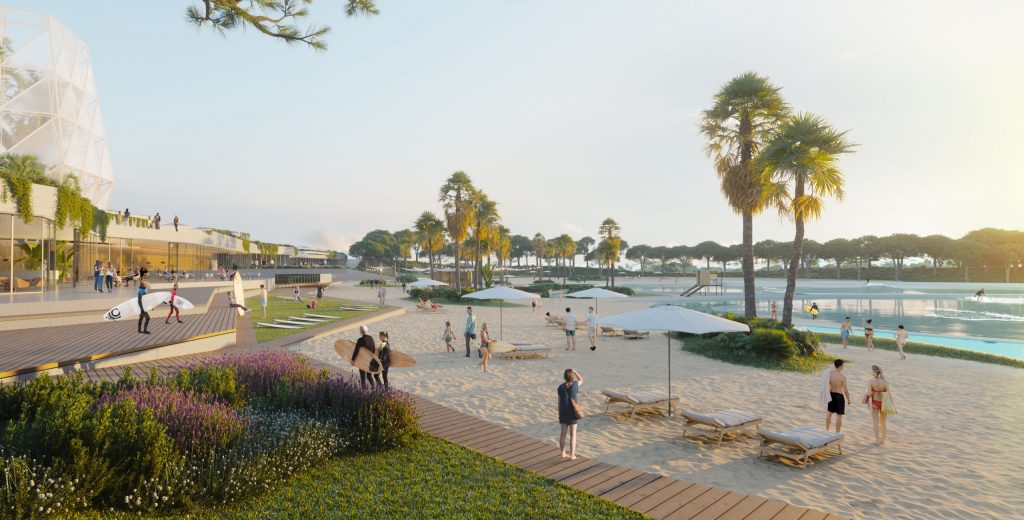
Beyond the surf lagoon, the complex will feature four infinity pools arranged around the main water area, along with a 700-square-metre board sports zone. The design also includes volleyball courts, balance training areas, and outdoor recreational spaces that extend the sporting experience beyond surfing itself.
Inside the complex, a multi-purpose indoor space will host activities such as yoga, pilates, and functional fitness training. A dedicated surf academy will also be part of the development, focusing on education, training programs, and athlete development pathways. Together, these facilities aim to create a complete sports and wellness ecosystem rather than a single-purpose attraction.
Tourism and urban attraction impact
The project is expected to become a major tourism driver for Madrid, attracting both international surfers and visitors interested in new urban sports experiences. With an estimated half a million visitors per year, it aims to significantly strengthen Madrid’s position as a year-round sports destination, independent of coastal conditions and seasonal limitations.
Beyond surf enthusiasts, the complex is designed to appeal to a broader audience, including families, amateur athletes, and tourists seeking leisure activities linked to sport and wellness. Its location within the future Ciudad del Deporte, close to major transport hubs, further enhances its accessibility and reinforces its potential as a high-traffic destination. The combination of artificial surfing, entertainment facilities, and training spaces is expected to diversify Madrid’s tourism offering, adding a new type of attraction that blends sport, technology, and urban leisure in a single venue.
Construction progress and long-term vision
Construction work on the project is already underway, with earthmoving operations, foundational works, and early structural development progressing on site. The building that will house the wave-generation machinery and the surf academy is currently under construction.
Project developers have emphasized the steady progress of the works, describing each stage as a step closer to the final operational facility. The vision is to transform Madrid into a leading European destination for artificial surfing and urban sports innovation. Looking ahead, Gemswell Surf Madrid is expected to play a broader role in the growth of inland surfing, helping to expand access to the sport beyond coastal regions while integrating advanced water technology, sports science, and sustainable infrastructure into a single large-scale urban project.
Inside the build: pumps, tiles, and water systems powering the lagoon
The construction of Gemswell Surf Madrid is being delivered by SANJOSE Constructora, alongside the architectural design of DNA Architects and engineering firm Conurma Ingeniería, which together oversee the full execution of the project from structure to technical installation.
Wave generation technology is supplied and implemented by Wavegarden, whose patented Cove system integrates wave creation, hydraulic control, and system engineering. This same platform also manages the lagoon’s pumping and water quality systems, including filtration, circulation, and treatment, all coordinated with Gemswell Ventures’ operations team.
As a result, water quality management is not a separate system but fully embedded within Wavegarden’s technology, ensuring stable and safe conditions throughout continuous operation. The mosaic tile lining of the lagoon is provided by specialist construction partners working with the contractors, ensuring durability, safety, and the distinctive visual finish of the artificial surf environment.