A public-private partnership is transforming the celebrated swimming complex built in the 1960s. The project reflects a wider trend now reshaping many public pools across Italy.
An important chapter in Bergamo’s sporting history is being rewritten. The Italcementi swimming centre has been a landmark for local swimmers and families for decades. It is now the focus of a major renovation. The project will completely redesign the pools, spaces and services. At the same time, it will preserve the architectural value of the original building.
A Building Born to Celebrate an Anniversary
The complex was built in the 1960s. It was a gift from the cement company Italcementi to the city, marking the firm’s hundredth anniversary. Its construction was bold for its time. Overhanging portals used experimental techniques. Glass walls rose more than ten metres high. An entrance canopy extended outward into open space for over ten metres.
The pool opened to the public in 1966. It was transferred to the municipality in 1972. The company continued to manage the facility until 1994. After that, public management gradually took over.
A Public-Private Deal to Save the Complex
Decades of heavy use had taken their toll. The building showed clear signs of wear. Heat loss, outdated systems and non-compliance with national sports regulations were all pressing issues.
To address these problems, a group of companies and technical experts submitted a proposal in 2023. The plan called for a public-private partnership. It aimed to renovate the complex and manage it for the following twenty years.
The initiative was recognised as being in the public interest in early 2024. The contract was then awarded through a European tender. This led to a financial leasing agreement between the parties involved.
Two Distinct Zones for the New Aquatic Centre
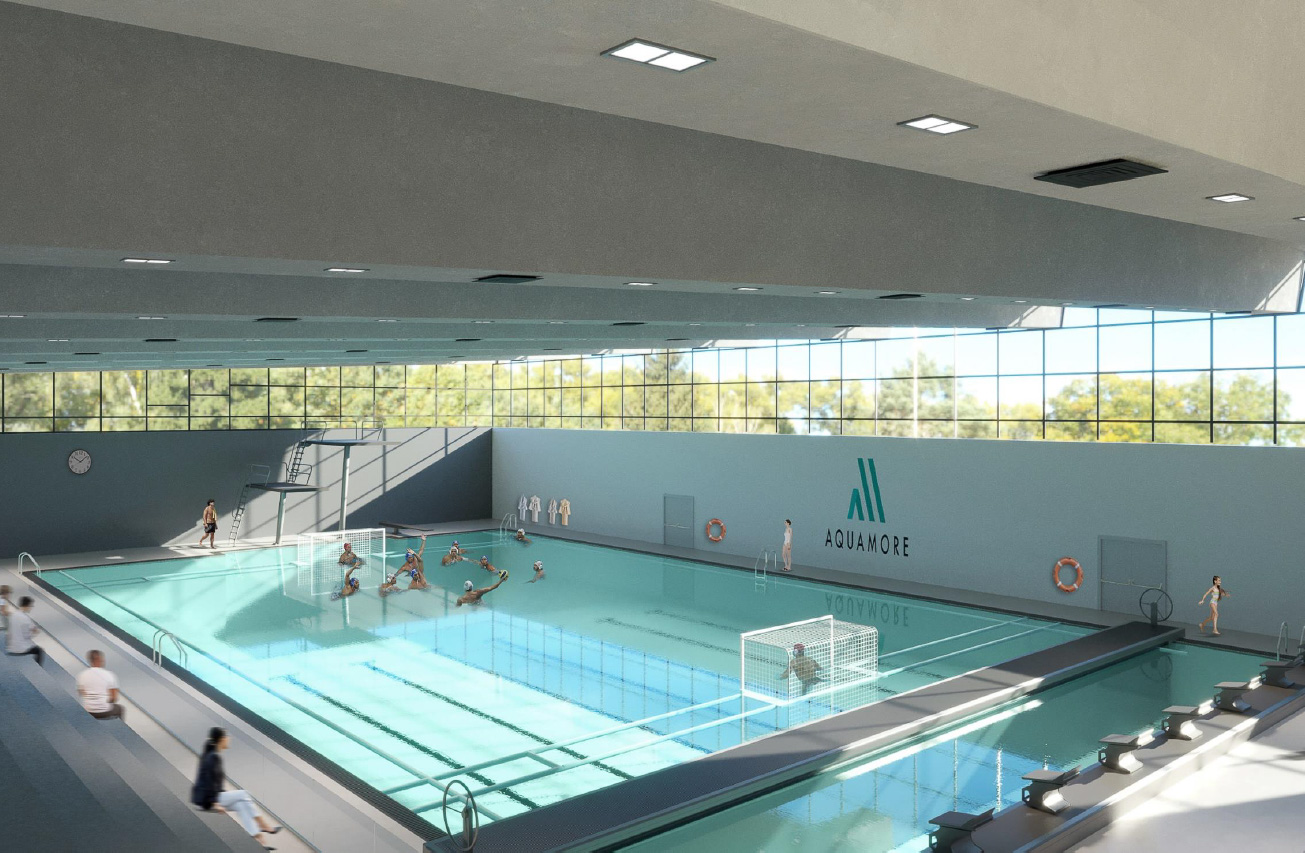
The project was designed by Tekn&co. Construction work began in June 2025. At its core is a plan to split the indoor pools into two areas, each with a different purpose.
The space currently used as a gym will become a dedicated competitive sports area. It will host swimming, water polo and diving. The new pool will measure almost 39 metres. A new diving platform will meet federal standards. New stands will comply with CONI regulations.
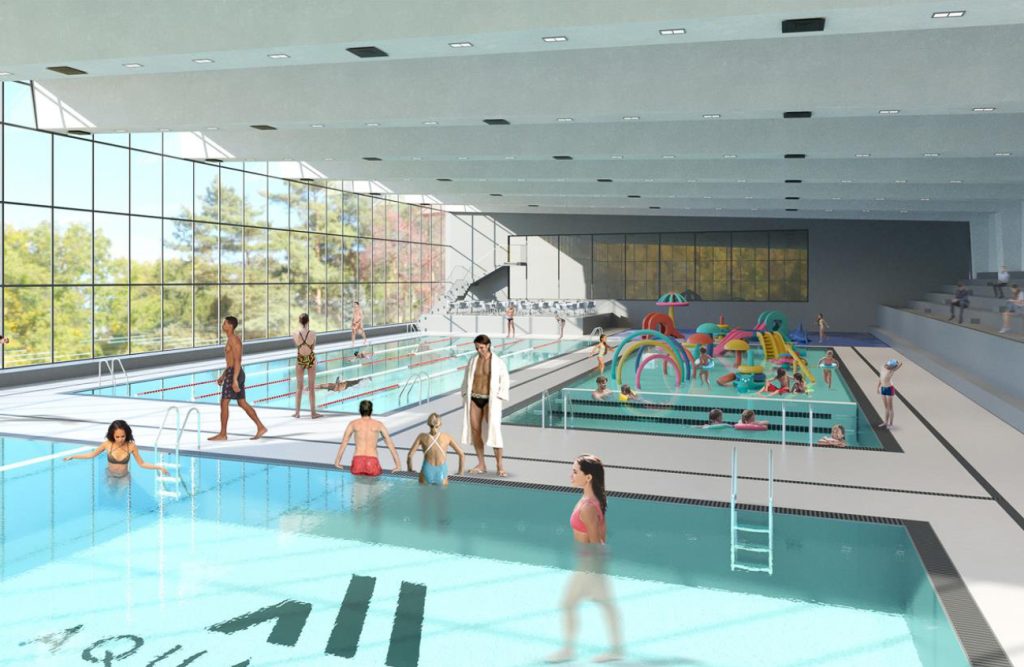
The second area will focus on leisure, recreation and amateur swimming. It will include a pool for free training, a shallow-water zone for young children, a relaxation area and a playful water plaza.
New Entrances, Changing Rooms and Services
The entrance areas will also be redesigned. Current changing rooms will be replaced with new facilities, separated by gender. An additional lift will guarantee full accessibility for people with disabilities. It will work alongside the existing ramp.
One of the most notable additions is a wellness area. It will be located beneath one of the stands. The space will include a sauna, a Turkish bath, vascular walking paths and relaxation zones. This addition follows a broader European trend. It extends the facility’s offering well beyond swimming alone.
Outdoor Areas Are Part of the Plan Too
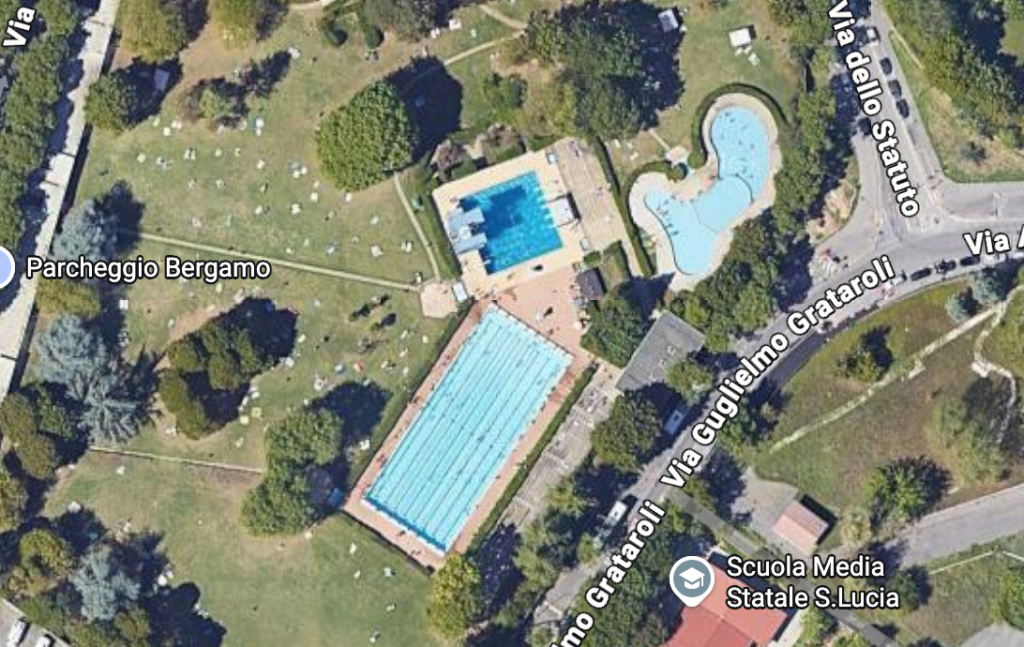
The renovation is not limited to the main building. The outdoor pools in the summer park will also be upgraded. This includes an Olympic-size pool, a diving pool and a children’s pool. All three will receive new technical systems.
Partial renovations are also planned for the outdoor changing rooms. Together, these upgrades will cover nearly every pool in the complex. The only exception is the indoor competitive pool. The children’s pool will also gain new water features, including a splash swing and two slides.
A Trend Spreading Across Italy
Bergamo’s case is not an isolated one. The reopening is expected within a year, with management handled by co-financing partner Aquamore. Many public swimming facilities across Italy face similar challenges. Built decades ago, they are now falling short on energy efficiency and regulatory compliance.
As a result, more and more of these facilities are becoming the focus of similar deals. Private capital is stepping in alongside municipal governments. This helps fund renovations that would otherwise be difficult to finance with public resources alone.
The public-private partnership model, combined with long-term management contracts, is becoming one of the most common paths forward. It allows historic pools to be brought back to life. At the same time, it protects buildings of significant architectural value. And it helps bring sports services in line with today’s standards.
Sources: bergamonews.it, sporteimpianti.it, bergamo2030.it, tekneco.eu
Image credits: tekneco.eu