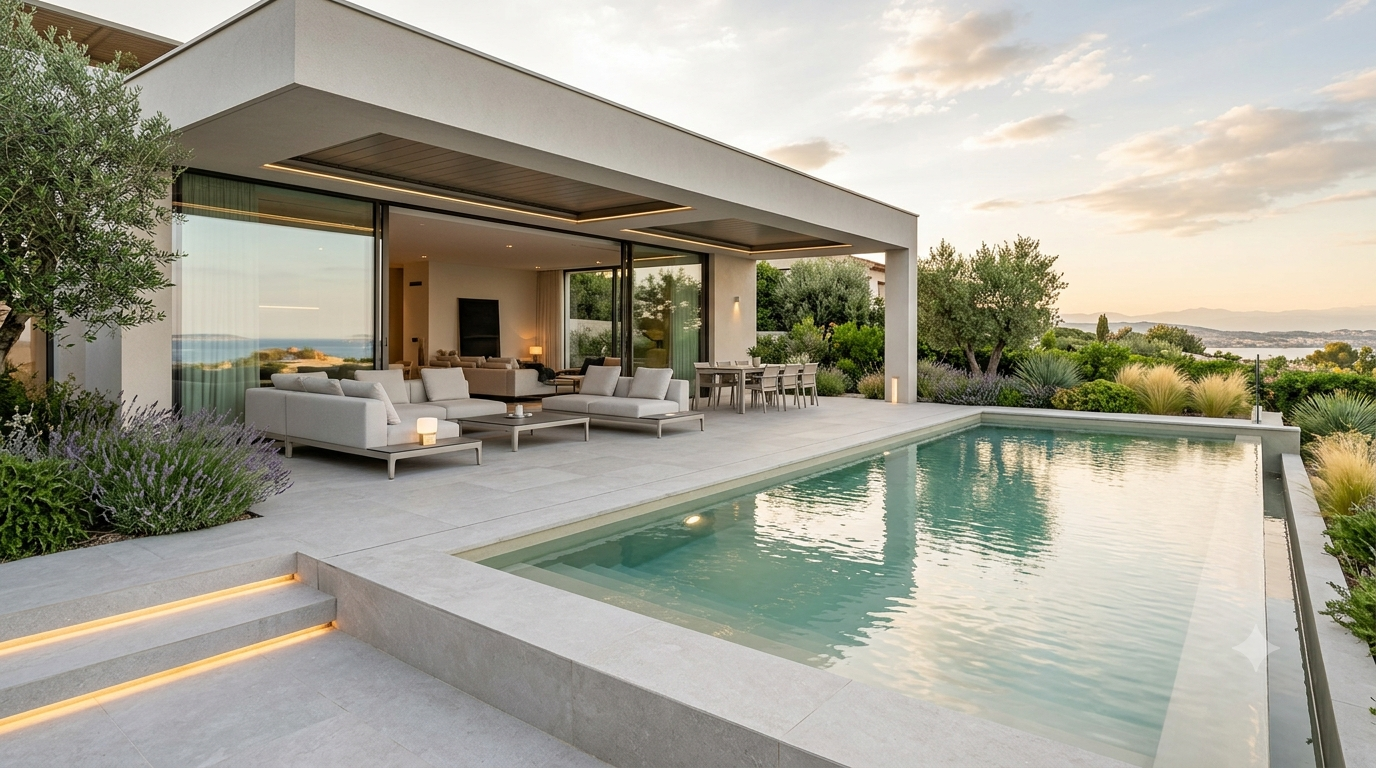
The world of pools and spas is undergoing a major reinvention, driven by a new generation of homeowners. No longer viewed as just sports equipment or a simple leisure feature, the pool has evolved into a natural extension of the home. In 2026, seamless landscape integration, minimalist lines, and architectural lighting design stand out as the defining signatures of the most successful projects, whether in new constructions or renovations.
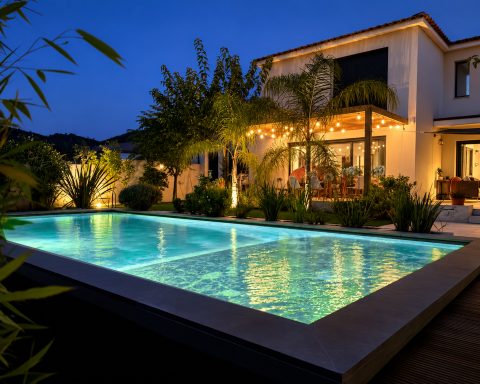
The days of relegating the pool to the far corner of the backyard are over. Today, it sits at the absolute center of outdoor living. Patios, outdoor lounges, and dining areas are designed to flow directly into the water, sharing identical finishes, flush floor levels, and color palettes that mirror the house’s facade. The goal for architects is clear: blur the boundaries so that the pool entirely merges with the home’s architecture.
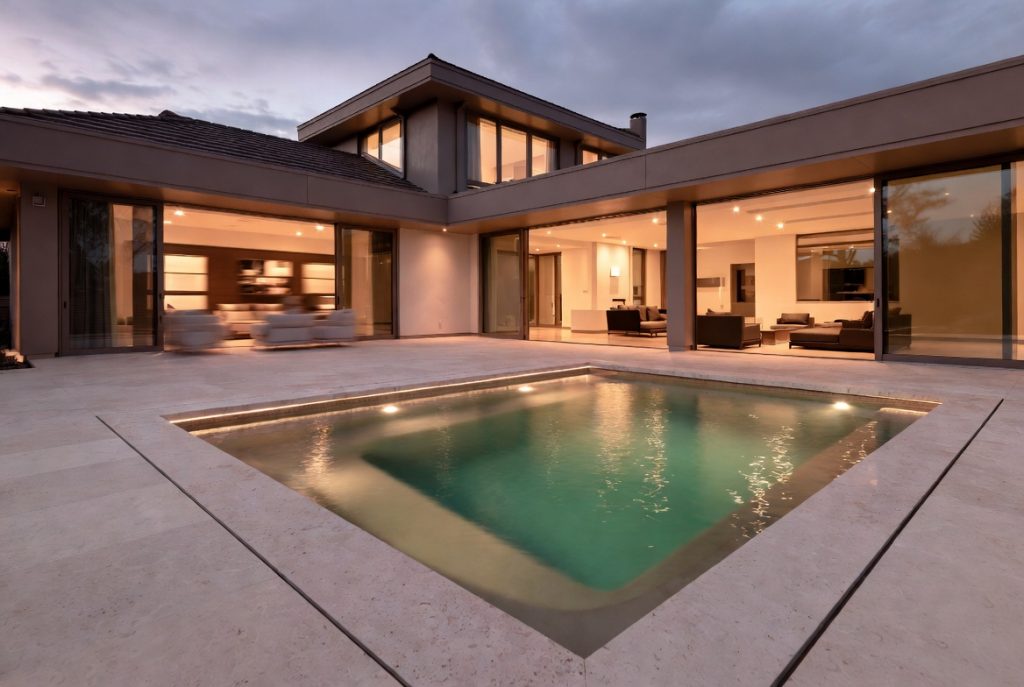
Compact Formats, Maximum Performance
Driven by shrinking urban lot sizes and a sharper focus on water and energy conservation, the “mini-pool” continues its rise to fame, backed by global pool industry guidelines on sustainability. Far from being a compromise, these compact pools now pack the exact same high-end features as their larger counterparts, including swim-jets, hydrotherapy nozzles, and premium lighting.
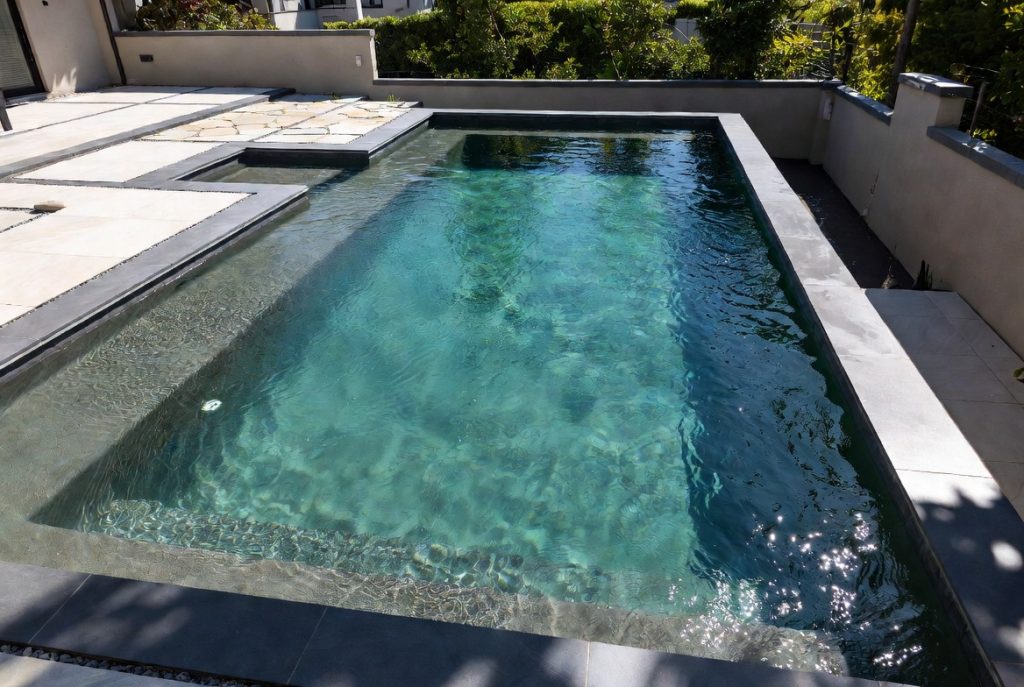
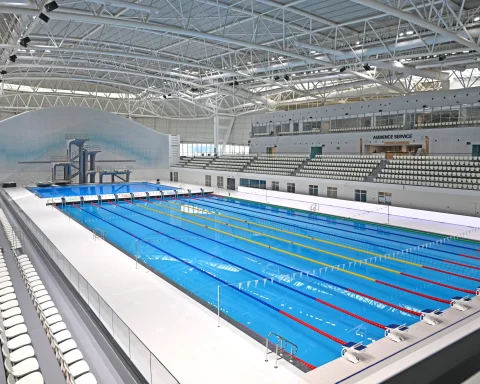
Following a similar logic, the lap pool is winning over owners of long, narrow lots, brilliantly pairing athletic functionality with an ultra-contemporary aesthetic.
Sleek Lines and a Return to Natural Hues
The free-flowing, rounded shapes of past decades are giving way to rigorous geometric forms. Perfect rectangles, sharp angles, and understated coping now dominate modern projects, beautifully echoing the contemporary architecture of the surrounding homes.
On the color front, dark or bright blue liners are stepping aside for softer, mineral tones: sand, light grey, or lagoon green give the water a natural, soothing, and timeless appearance.
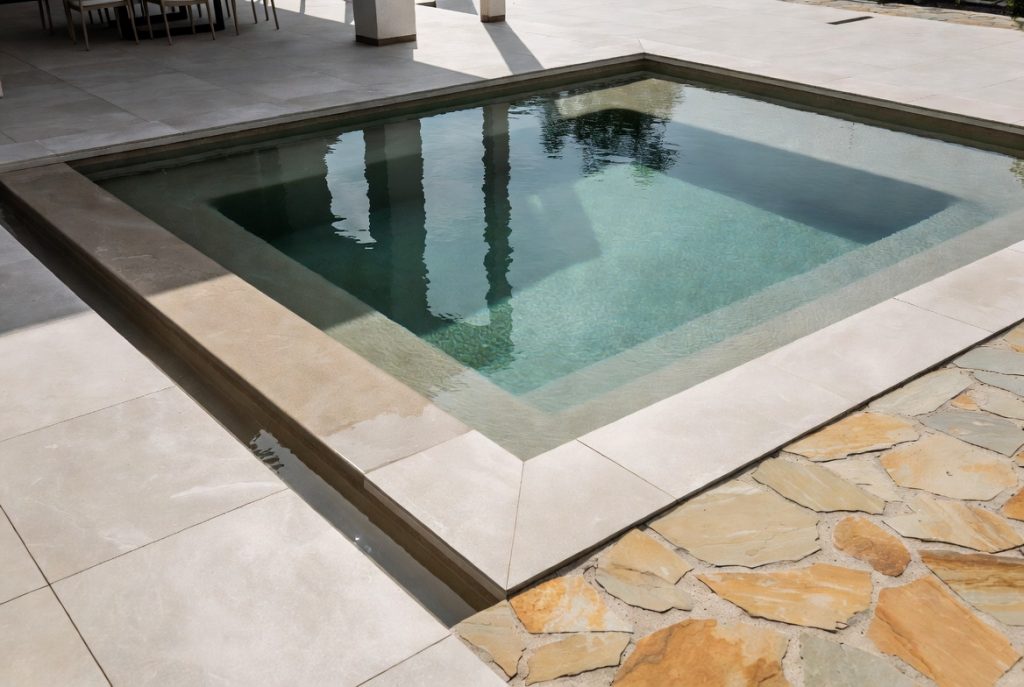
Lighting as an Architectural Tool
A pool is no longer designed to be appreciated solely by day; it transforms into a striking visual canvas as soon as night falls. Submerged LED spotlights make it possible to adjust the mood with a single click, switching from dynamic lighting for an evening with friends to a dim, intimate atmosphere perfect for unwinding.
This staging now extends far beyond the pool walls, illuminating terraces, plant beds, and pathways to showcase the entire garden.
Wellness Integrated Right from the Blueprint
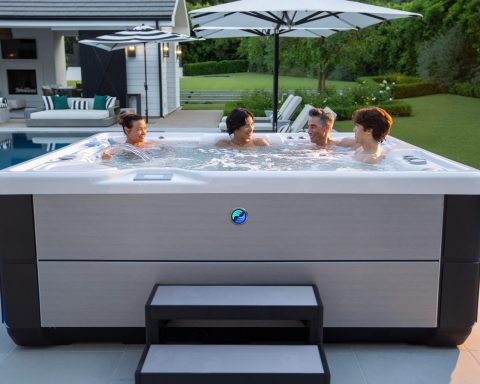
The line between the swimming pool and the spa is becoming increasingly blurred. “Dual-zone” projects are multiplying, pairing a heated section dedicated to relaxation and massages with a main pool kept at standard temperature for swimming laps.
Submerged shelves—those shallow areas where water just grazes the skin—have also become a must-have feature to extend the experience of absolute relaxation, even for those who don’t wish to swim.
Noble and Sustainable Materials
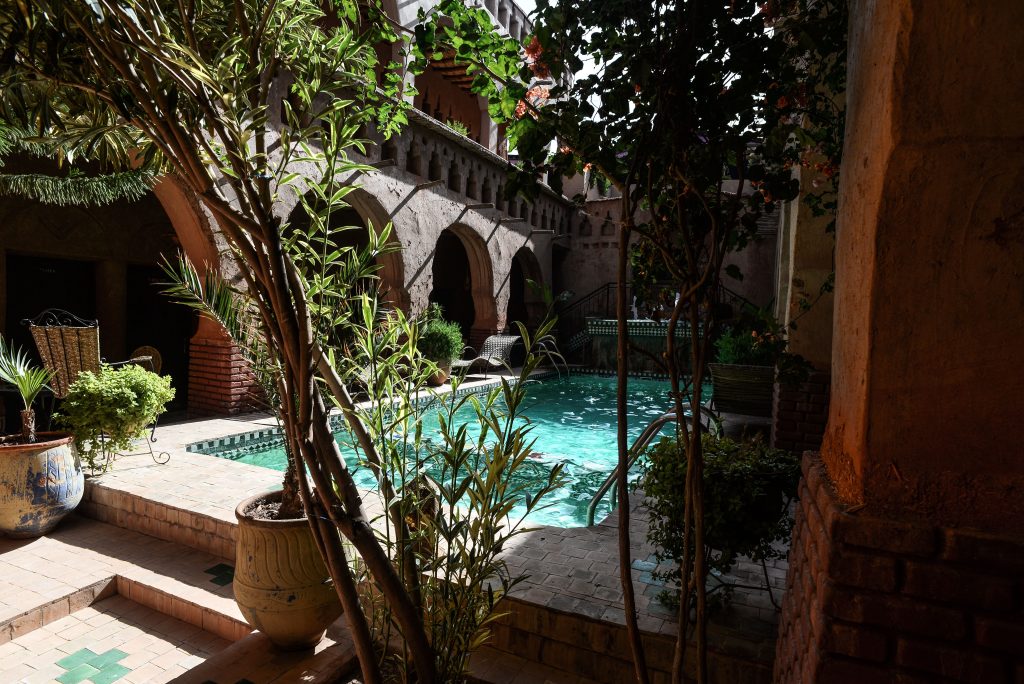
While concrete remains the structural benchmark for its sheer durability and design flexibility, finishes are shifting resolutely toward high-end, sustainable options. Natural stone, mineral coatings, and large-format porcelain tiles satisfy both the aesthetic demands and the growing environmental awareness of clients.
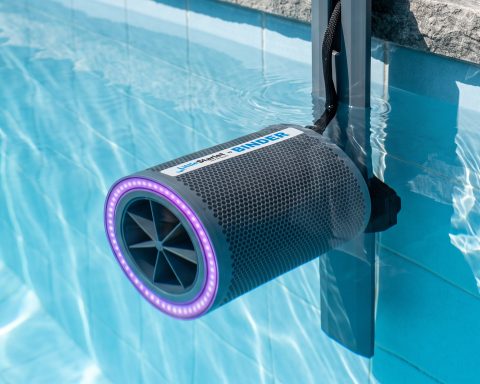
This quest for sustainability also extends to smart, connected equipment, which has become indispensable for managing filtration and energy usage as closely as possible to actual needs.
In 2026, the pool definitively breaks free from its traditional, brief summer role. It has established itself as a true year-round living space, built to last and designed to blend elegantly into daily life.