Díaz-Flor Pool Becomes a Benchmark for Aquatic Innovation
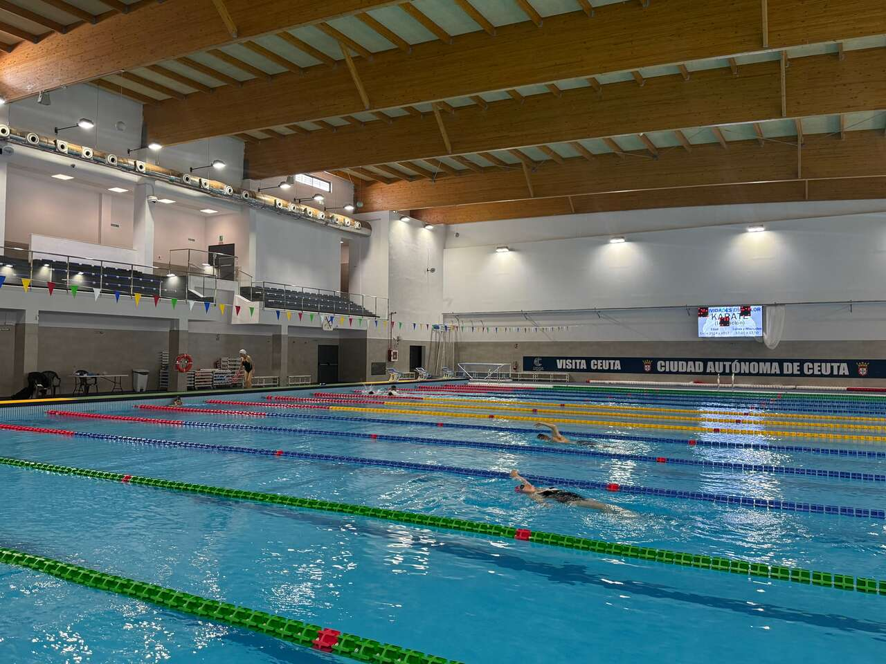
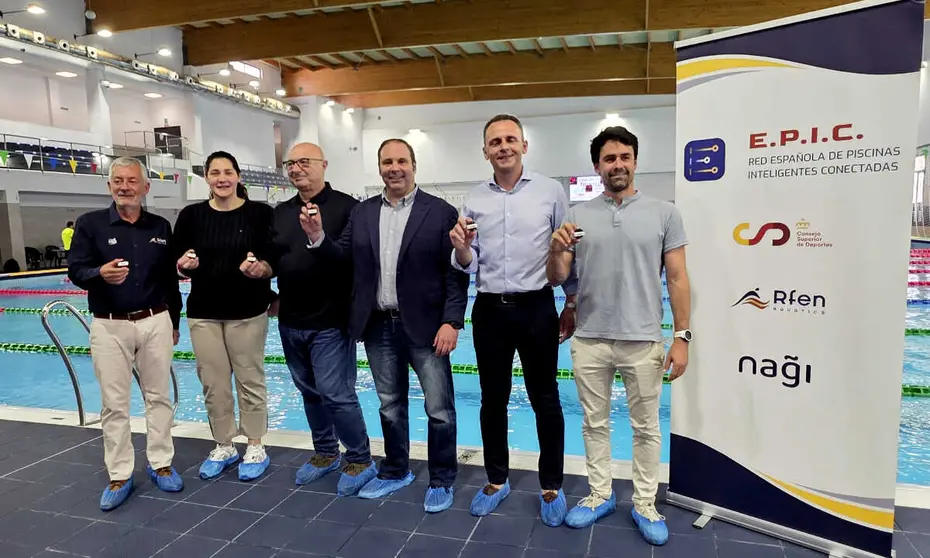
The Autonomous City of Ceuta has taken a major step forward in modernizing its sports facilities with the installation of the NAGI Smartpool system at the José Ramón López Díaz-Flor Sports Complex. Thanks to this technology, the facility has joined the Spanish Network of Connected Smart Pools (EPIC), an initiative developed in collaboration with the Royal Spanish Swimming Federation (RFEN Aquatics) and Spain’s Higher Sports Council to bring digital transformation to aquatic facilities.
The implementation of this system represents much more than the addition of a new piece of technology. It reflects a new approach to safety, facility management and the overall swimming experience. While digitalization has become commonplace in sports such as cycling, athletics and fitness—where smart devices routinely track performance metrics—the aquatic environment has traditionally posed greater technical challenges due to the difficulty of transmitting signals underwater.
With this project, Ceuta joins a growing number of Spanish cities embracing innovative technologies designed to improve swimmer safety, enhance training and optimize the day-to-day management of public swimming pools.
A System Designed to Respond During the Most Critical Seconds
One of the most significant features of the NAGI system is its ability to detect potentially dangerous situations in real time. In a drowning emergency, every second matters, making any technology capable of reducing response times an invaluable addition to pool safety.
The process is simple for users. Upon entering the facility, swimmers can collect a small electronic device free of charge and attach it to either their swimming goggles or swim cap. From that moment onwards, the system continuously monitors their activity while maintaining constant communication with a network of antennas installed around the pool.
If a swimmer remains underwater longer than the preset safety threshold, the system identifies a potential emergency. It immediately begins a verification sequence and, if the swimmer does not resurface, automatically sends an alert to the lifeguard team.
Lifeguards receive the notification simultaneously on both a tablet and a smart wristband that vibrates instantly. The alert not only signals a possible emergency but also pinpoints the swimmer’s exact location within the pool, allowing for a much faster intervention. Importantly, the technology is not intended to replace lifeguards. Instead, it acts as an additional layer of protection, supporting pool staff by detecting situations that could otherwise go unnoticed, particularly during busy periods.
Designed for Every Pool User
One of the key strengths of the project developed in Ceuta is that it is not limited to elite athletes or competitive swimming. Every visitor using the Díaz-Flor pool can access the device free of charge and benefit from its features.
This means the system can be used during children’s swimming lessons, adult fitness sessions, rehabilitation programmes, recreational swimming or competitive training, making it suitable for a wide variety of users.
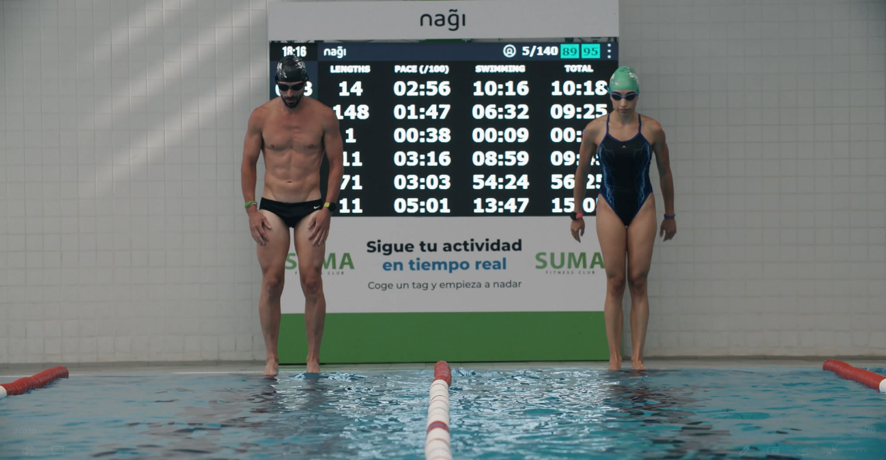
Beyond its safety capabilities, the device also records performance data that can be viewed on display screens installed around the pool. Swimmers can instantly check information such as the distance covered, number of lengths completed, total swimming time and average speed during each session.
For recreational swimmers, this represents a significant improvement, as similar performance tracking has traditionally been available only in sports like running or cycling.
From Elite Performance to Recreational Swimming
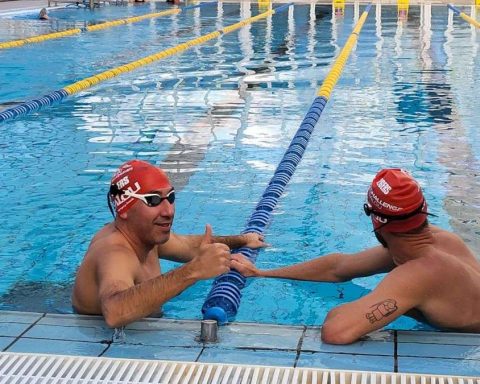
The technology now available at Díaz-Flor Pool originated from collaboration with Club Natación Caballa, one of Ceuta’s leading swimming clubs. Initially, the system was developed to provide advanced performance analysis for coaches and elite athletes, allowing detailed monitoring of training loads, movement patterns and heat maps generated during competitions.
These insights enable coaches to design more effective training programmes while objectively evaluating each swimmer’s progress. Automated data collection also eliminates much of the manual recording traditionally required during training sessions. Following its success in high-performance sport, the technology has now been adapted for everyday pool users, making advanced swimming analytics accessible to everyone rather than just professional athletes.
Digitalization Is Also Transforming Pool Management
The deployment of the NAGI system is part of a much broader trend that is reshaping aquatic facilities across Spain.
Modern smart pools combine connected sensors, digital platforms and automated management systems to monitor every aspect of a facility in real time. Their objective is not only to improve swimmer safety but also to increase operational efficiency while simplifying maintenance.
Today, connected sensors can continuously monitor key water quality parameters including pH, chlorine concentration, water temperature, conductivity, turbidity and even the energy consumption of filtration equipment.
This information can be accessed remotely via computers, tablets or mobile devices, enabling maintenance teams to respond quickly whenever any parameter falls outside the recommended range.
Smarter Filtration Systems Improve Efficiency
Technological innovation is also transforming pool filtration systems, helping operators reduce operating costs while maintaining excellent water quality.
Variable-speed pumps are becoming increasingly common because they automatically adjust their output according to the actual filtration demand. Unlike conventional pumps that operate continuously at full power, these systems optimize electricity consumption while extending equipment lifespan and reducing operating noise.
Advanced filtration management systems are also capable of automatically adapting filtration cycles based on factors such as the number of swimmers, water quality readings and ambient temperature. By avoiding unnecessary filtration cycles, facilities can significantly reduce energy consumption while improving overall efficiency. Another growing trend is the replacement of traditional filter sand with recycled glass filter media. Glass provides superior particle retention, reduces bacterial growth and requires less water during backwashing, making it a more sustainable solution for modern swimming pools.
Automated Water Treatment
Another essential component of smart pools is the automation of water treatment.
Modern dosing systems continuously monitor parameters such as pH, free chlorine and Redox potential before automatically adjusting chemical dosing whenever values move outside predefined limits.
This type of automation helps maintain consistently balanced water quality, reduces unnecessary chemical consumption and minimizes the need for manual intervention by maintenance staff. In addition to improving operational efficiency, automated water treatment enhances swimmer comfort by ensuring stable bathing conditions throughout the day.
Ceuta’s Wider Strategy for Sports Digitalization
The introduction of the NAGI system is not an isolated initiative. The Ceuta Sports Institute is currently implementing a broader digital transformation strategy aimed at progressively modernizing the city’s sports infrastructure.
Among the projects already announced are a new mobile application for booking sports facilities and digital video scoreboard systems designed to enhance the experience for both athletes and spectators. This approach reflects a wider trend across Spain, where digital technologies are increasingly being used to optimize public resources, improve user services and enhance safety in sports facilities.
A Model That Could Be Adopted by Other Swimming Pools
The experience at Díaz-Flor Pool demonstrates that intelligent technologies are no longer exclusive to elite training centers. The combination of real-time monitoring, connected sensors, automated management systems and sports performance analytics is gradually becoming the new benchmark for modern aquatic facilities.
Ceuta has already indicated that similar solutions could eventually be evaluated for deployment at other aquatic venues, provided that each facility’s characteristics allow the technology to be properly adapted. If this trend continues, systems like the one installed at Díaz-Flor are likely to become increasingly common in municipal pools, sports centers and even private facilities, improving swimmer safety while making pool management more efficient.
Setting the Direction for the Next Generation of Swimming Pools
Ultimately, Ceuta’s investment goes far beyond installing a new piece of technology in a public swimming pool. It represents a commitment to creating safer, smarter and more connected aquatic facilities where digital innovation supports both swimmers and professionals. As these technologies become more widespread, projects like the one at Díaz-Flor Pool are likely to serve as a model for future developments across Spain, demonstrating how digital solutions can improve safety, optimize operations and enhance the overall swimming experience.