In Italy, Professione Acqua offers a service that verifies the regulatory compliance of pool suction systems, preventing the risk of entrapment.
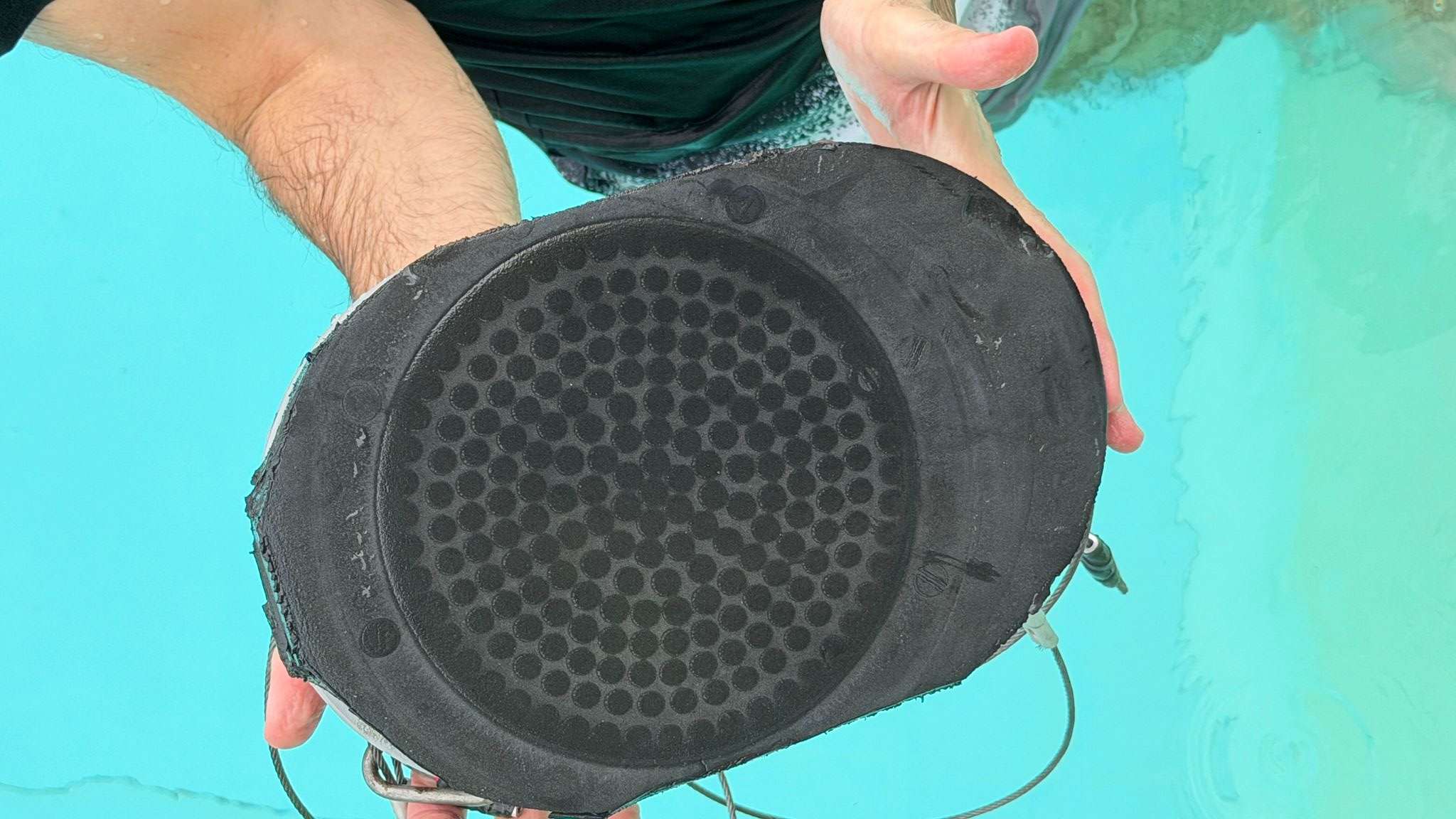
The safety of pool bathers depends on a variety of factors: water quality, upkeep of the systems, adherence to the rules. Yet there is one crucial element that, despite its importance, often ends up on the margins of attention: the suction outlets.
It is chiefly on this front that the Pool Safety Test operates — the service devised by Professione Acqua to assess the true safety of a pool’s suction systems.
How it works
Through targeted testing, the service measures the risk that a person — or their hair — might become trapped by submerged suction outlets, whether those linked to the filtration circuit or those paired with water attractions. The checks are carried out both on the pool floor and along its walls, in line with what is established by:
- Annex A of UNI EN 16713-2/2015
- The annexes of UNI EN 13451-3/2017
- UNI EN 13451-3/2024
The technical provisions currently in force leave no room for interpretation: a suction device can be deemed safe and remain in operation only after passing these tests. Whenever doubt arises over the true reliability of a component, subjecting it to direct verification allows uncertainty to be replaced with objective data.
The issue is especially relevant for systems built before the introduction of current regulations, or for facilities where physically intervening on the devices would prove difficult or prohibitively expensive. In such cases, a targeted test makes it possible to establish whether the existing system can continue operating safely, sparing the need for invasive work. Should the outcome prove favourable, the resulting document stands as concrete proof that the verification has taken place.
When a Simple Component Becomes a Trap
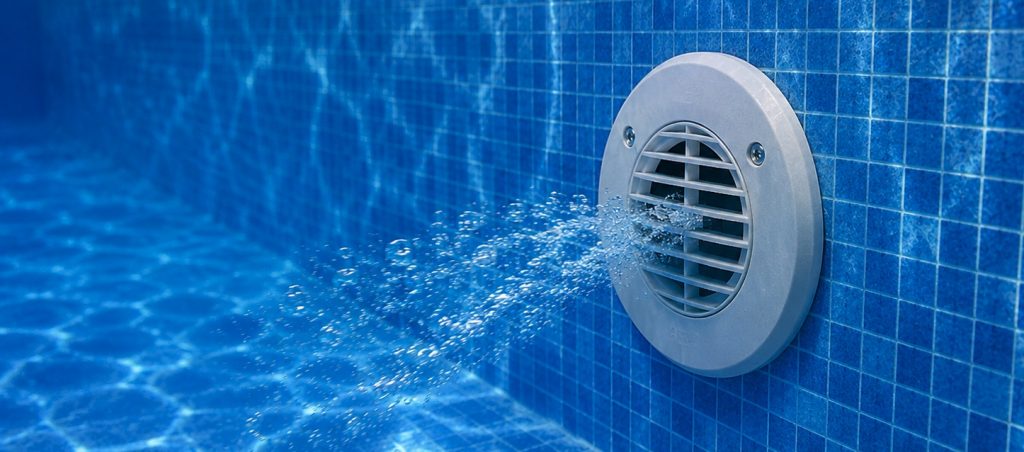
The suction outlets are part of the system that allows water to be drawn out, purified, and returned to the pool. When a person’s body ends up blocking a suction point, an intense pulling force is created — comparable to that of a suction cup — capable of holding its victim in place.
This scenario becomes more likely when:
- The protective grille is missing, damaged, or unsuitable;
- The installation fails to meet technical safety standards;
- The suction has been poorly calculated and designed;
- Maintenance work is not carried out consistently;
- Someone lingers too long near the suction point.
Locks of hair, swimwear, or limbs can thus become trapped, making the return to the surface difficult or even impossible.
The size of the pool has no bearing on its level of protection: even modestly sized pools, in fact, can conceal dangers if the suction mechanism is non-compliant or malfunctioning. Moreover, data gathered by Professione Acqua shows that the presence of water features — more complex to design than a simple water treatment system — increases the risk of encountering poorly implemented suction systems.
Preventing the Risks: Design and Good Habits
Ensuring a safe environment hinges above all on two factors: how the system is designed and how regularly it is inspected. Well-calibrated protective devices on the suction outlets, correctly sized components, and the adoption of anti-entrapment technical solutions are requirements that allow for no compromise.
Alongside these, a few behavioural precautions matter too — all the more so where children are present:
- Avoid lingering or playing near the drainage outlets;
- Always tie back long hair before entering the water;
- Promptly report any grilles that are broken, missing, or damaged.
These are simple gestures within everyone’s reach that, combined with a certified and compliant system, genuinely help reduce the likelihood of an accident.
Image credit: Professione Acqua