Artificial Intelligence AI continues to integrate into our daily lives and the swimming pool sector is no exception. In 2025 AI is an essential engine for innovation transforming pools into truly intelligent more efficient and above all safer spaces. AI is revolutionizing the aquatic world by addressing safety maintenance and design while emphasizing the importance of new European legislation particularly the European AI Regulation AI Act effective since August 2024.
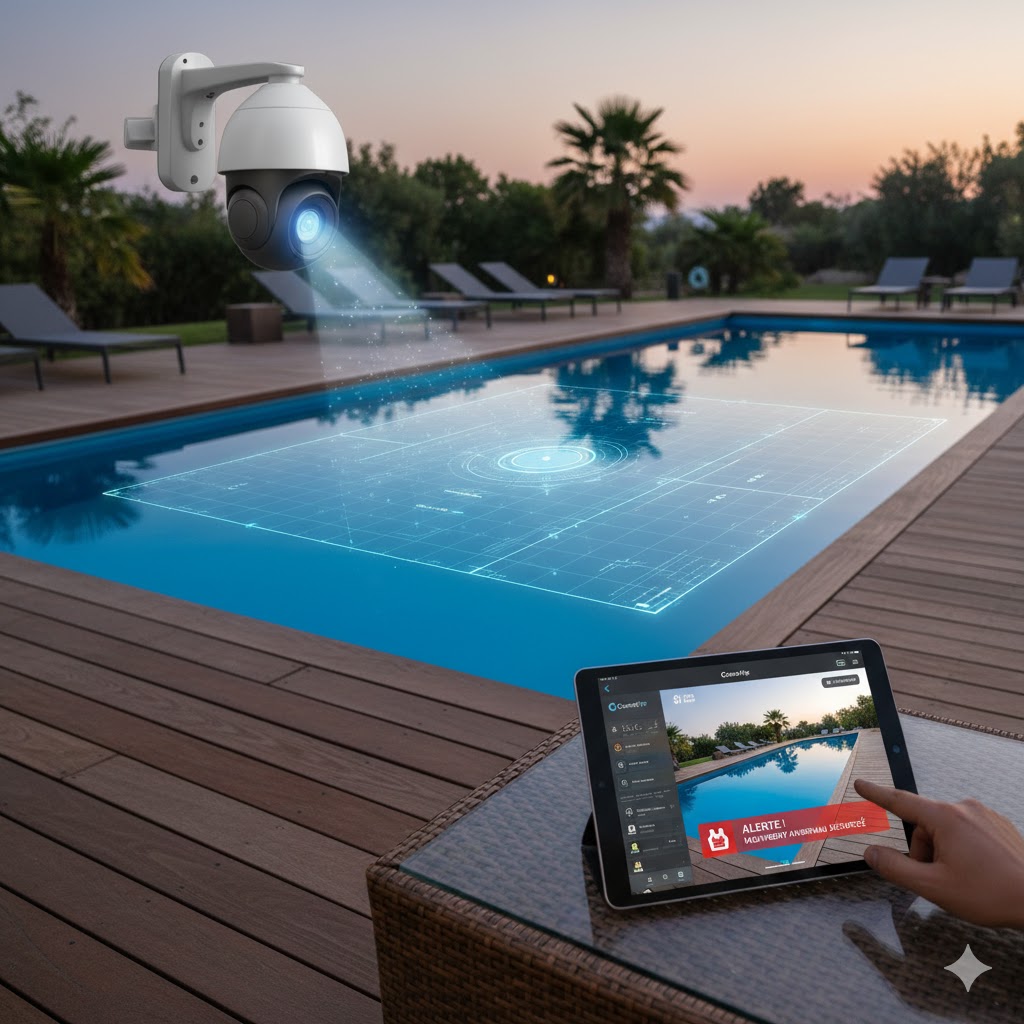
Safety around water points remains an absolute priority. AI brings proactive solutions that go beyond traditional perimeter alarms. Systems such as smart cameras equipped with computer vision algorithms following the example of solutions like CamerEye or Mylo are now capable of detecting abnormal movements or potential drowning situations in real time. By analyzing shapes and behaviors in the water these devices instantly alert owners via a mobile application acting as an essential complement to human vigilance. According to sector experts the integration of these technologies significantly reduces intervention time in the event of a critical incident.
The AI Act and Pool Safety
The European AI Act directly impacts these devices. It classifies AI surveillance systems for pools as “high risk” if they act as safety components to prevent drowning (*L’Annexe III du Règlement sur l’Intelligence Artificielle).
Regarding compliance and supervision Member States such as Belgium must designate their national authorities by August 2 2025 to oversee these systems. Manufacturers are subject to strict obligations regarding risk assessment and algorithm transparency. In France these rules align with the reinforcement of the 2003 law now imposing annual controls for AI alarms and stricter standards for automated covers and fences. Non compliance with these regulations exposes offenders to penalties of up to €45000. These measures effective since February 2025 for the prohibition of unacceptable risk AI aim to ensure that innovation respects fundamental rights while accelerating its adoption.
Pool Maintenance Reimagined
Traditional maintenance often tedious is giving way to intelligent and predictive systems. Just like new generation autonomous robotic cleaners that integrate ultrasonic mapping navigating independently learning from previous cleaning cycles and optimizing their routes for complete coverage without human intervention.
Chemical management is now optimized thanks to connected sensors that monitor water quality in real time. They control smart pumps to automatically and precisely adjust pH or chlorine levels. This fine control not only saves energy and chemical products but also allows for the prediction of potential imbalances or breakdowns reducing unforeseen repair costs. In 2025 these technologies make pools more ecological and easier to manage with mobile applications for remote control.
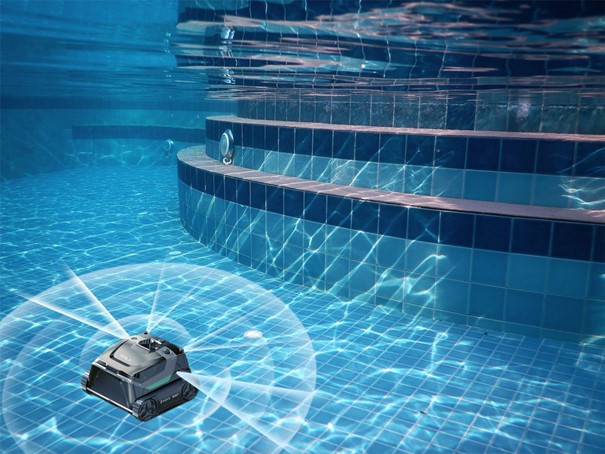
According to the AI Act on GPAI General Purpose AI in Belgium the AI Act requires a conformity assessment for General Purpose AI models GPAI used in these smart sensors with an obligation to notify the Commission for systems with systemic risk. In France the 2025 update to the water quality regulation Decree of May 2021 integrates these connected tools. It mandates the use of water recovery systems and certified thermal covers thus aligning innovation with environmental sustainability objectives.
AI in Design and Visualization
For construction and renovation professionals AI is becoming a powerful tool for visualization and planning. AI assisted design tools such such as PoolPlanner AI or Vondy make it possible to generate ultra realistic and personalized 3D renderings from simple textual descriptions. For example by requesting an “oval pool with a waterfall and LED lighting” the AI instantly produces photorealistic images helping clients visualize their project before construction.
This not only accelerates the design process but also facilitates the integration of sustainable elements such as weather resistant materials for pools adapted to climate challenges. The AI Act applicable from 2025 requires increased transparency for design tools based on generative AI with codes of practice published in April 2025 to prevent bias in designs and data usage. In France the new 2025 standards for private pools integrate the use of these tools for environmental impact simulation favoring low carbon footprint projects. (See the article “Pool renovation 2026: transforming an old pool into a connected, modern pool”)
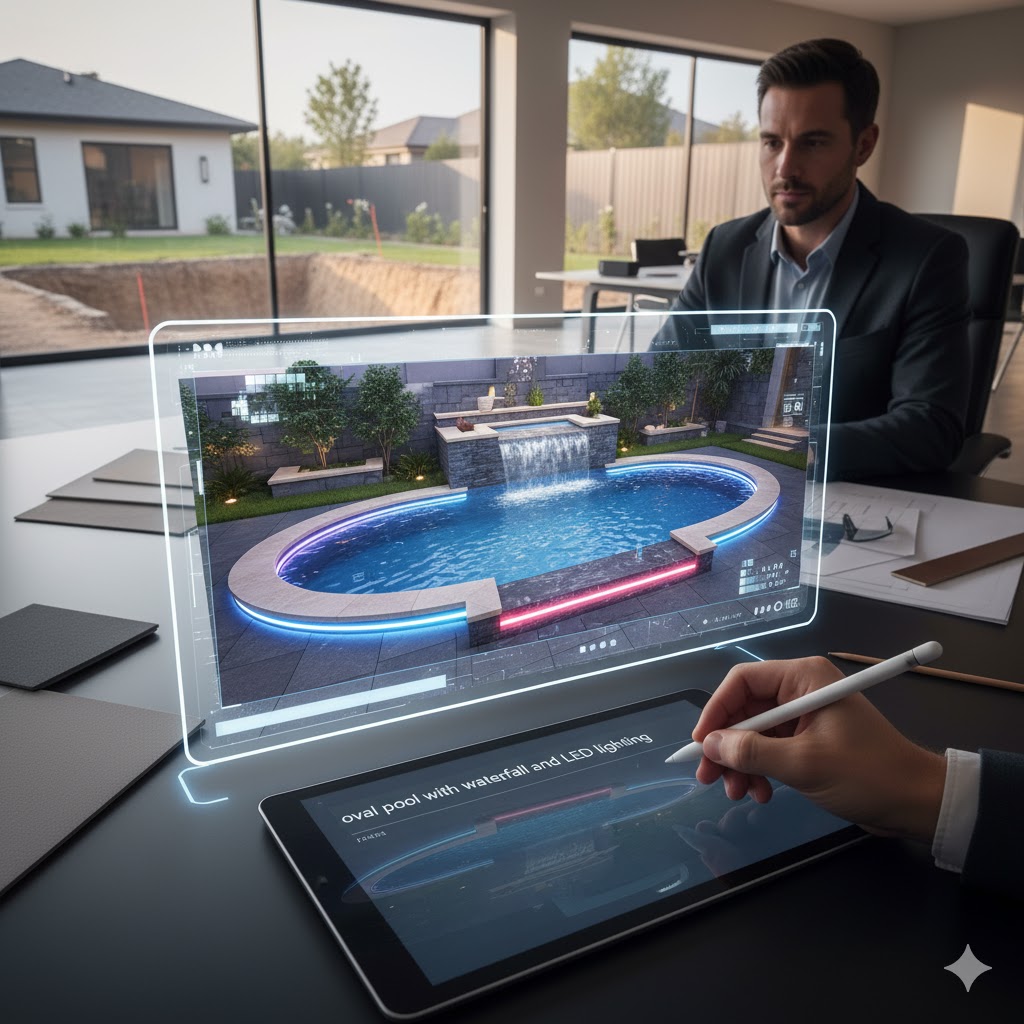
The integration of AI in the pool universe marks a fundamental change. It promises installations that are not only safer and optimized for maintenance but also a more fluid and highly personalized design process for clients. For professionals in the sector, whether they are manufacturers installers design firms or distributors, this wave of innovation is accompanied by an essential requirement the in depth mastery of new European regulations particularly the AI Act. Adopting AI is no longer enough it is imperative to integrate these technologies in a compliant ethical and secure manner.
*Annex III of the Artificial Intelligence Act (AI Act), point 6: Safety of consumer products and services. Includes surveillance systems designed to prevent serious accidents, including drowning.