Study on the environmental and economic impact of infrastructural inefficiency and the dividend of technological transition (Report 2024-2026).
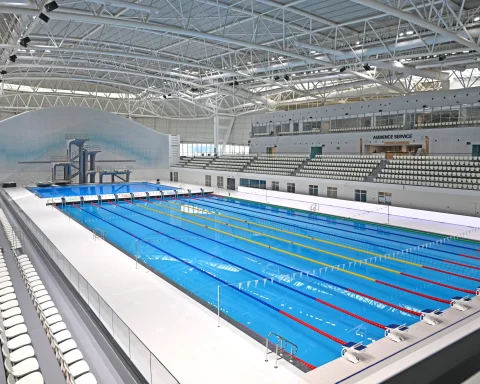
The current network of public swimming facilities in Italy reflects a marked technological anachronism. According to the Sports Facilities Census 2023 and analysis by Assopiscine (2024 report), approximately 60% of public complexes were built before 1990. This obsolescence results in a systemic inability to manage water resources: where modern international standards require near-sealed circuits, aging structures show hidden water losses caused by the deterioration of concrete materials and pipework.
Technical data from the Wbox Observatory (2023-2024 analysis) estimate that a facility that has not been upgraded may lose up to 25% of its total water volume per month through undetected structural leaks — a figure that becomes alarming when projected across the national territory.
Operational Inefficiency: The Cost of Backwashing
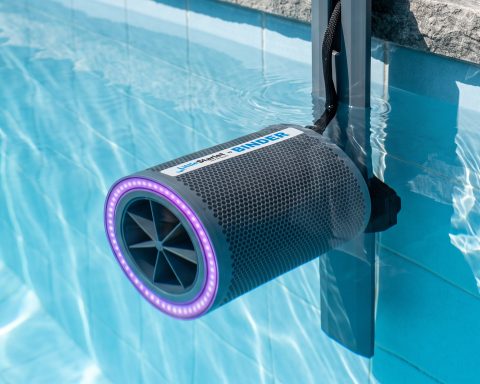
Beyond passive losses, the most critical issue lies in outdated filtration protocols. In facilities using traditional sand filtration systems, maintaining water safety requires high-impact backwashing cycles. Each operation discharges between 3 and 5 cubic metres of treated water into the sewage system (Assopiscine 2024): for a 25-metre pool, annual waste exceeds 1,800 cubic metres. Diatomite or dynamic ultrafiltration systems (2025 Standard) can reduce this figure by 80%.
Cost-Benefit Analysis: The Modernisation Dividend
Upgrading facilities is not merely an environmental obligation, but a financial recovery strategy for public bodies. Projections from Assopiscine (Sustainability Report 2025) and ENEA calculation models (2024) show a significant reduction in operating costs after intervention:
- Thermal savings: reducing cold water top-up (which must be heated from approximately 15°C to 27°C) generates energy savings of around 14 kWh per cubic metre preserved.
- Management efficiency: integrating real-time monitoring systems and recovering backwash water reduces current expenditure by between EUR 18,000 and EUR 28,000 per year per facility (2025 market assessment).
- Chemical optimisation: greater system stability reduces the use of chemical reagents and disinfectants by 15-20%, further lowering the environmental impact of wastewater.
National Context: Water Stress and the Italy-EU Gap
The inefficiency of public swimming pools is part of a broader picture of national fragility. The ISPRA Report 2024 shows an 18.4% reduction in annual water availability compared to the historical average (based on 2023 data, published in November 2024). With a distribution network that loses an average of 42.4% of the water it carries, according to ISTAT (2022 data, published March 2024), the additional burden of inefficient sports facilities is no longer considered acceptable from a sustainability and operational safety standpoint.
The water balance of Italian facilities is markedly below the averages of northern and central European countries. According to the study “Sustainable Water Sources for Swimming Pools” (March 2026) and Eurispes data, Italy holds the EU record for total freshwater abstraction for drinking purposes, and ranks among the top three in Europe for per capita abstraction, with 155 cubic metres per inhabitant per year, behind only Ireland (200 cubic metres) and Greece (159 cubic metres), compared to a European average of between 45 and 90 cubic metres per capita (ISTAT 2024 data).
While countries such as Germany and France have made filter backwash water reuse standard practice, Italy’s per capita investment in water infrastructure stands at approximately EUR 70 per year, compared to a figure that reaches or exceeds EUR 100 in leading European countries (sector estimates based on ARERA 2024 data), compounded by regulatory fragmentation that slows the implementation of EU Regulation 2020/741 on water reuse.
In APAC countries and Northern Europe, the adoption of high-efficiency filtration has already cut waste by 40%, making Italy’s inefficiency a clear outlier within the EU Water Resilience Strategy 2025.
Conclusions
The obsolescence of Italy’s public swimming pool infrastructure represents a structural daily loss of water and economic resources across hundreds of facilities. Available data show that modernisation is a financially sound management decision: intervention costs are fully offset by operational savings in the medium term, with measurable benefits for both facility budgets and territorial water availability. Delaying this transition is a choice with a cost.
Image credits: Freepik
Sources: ISTAT (March 2024): Statistics on water resources and distribution infrastructure; ISPRA (November 2024): National hydrological balance report (2023 data); Assopiscine (2024/2025): White Paper on facility efficiency and Sustainability Report; ARERA (2024): Integrated Water Service cost analysis; ENEA (2024): Guidelines for energy efficiency in sports facilities; Wbox Observatory (2023-2025): Technology report on swimming centre management costs; UNI (Standard 10637:2024): Technical requirements for water circulation and treatment systems; MDPI/ResearchGate (March 2026): Sustainable Water Sources for Swimming Pools; European Commission (June 2025): Water Resilience Strategy (COM/2025/280); Eurispes: A Leaking System: the State of Water in Italy